NASA Says $4 Billion Roman Telescope Is Ready for August 30 Launch
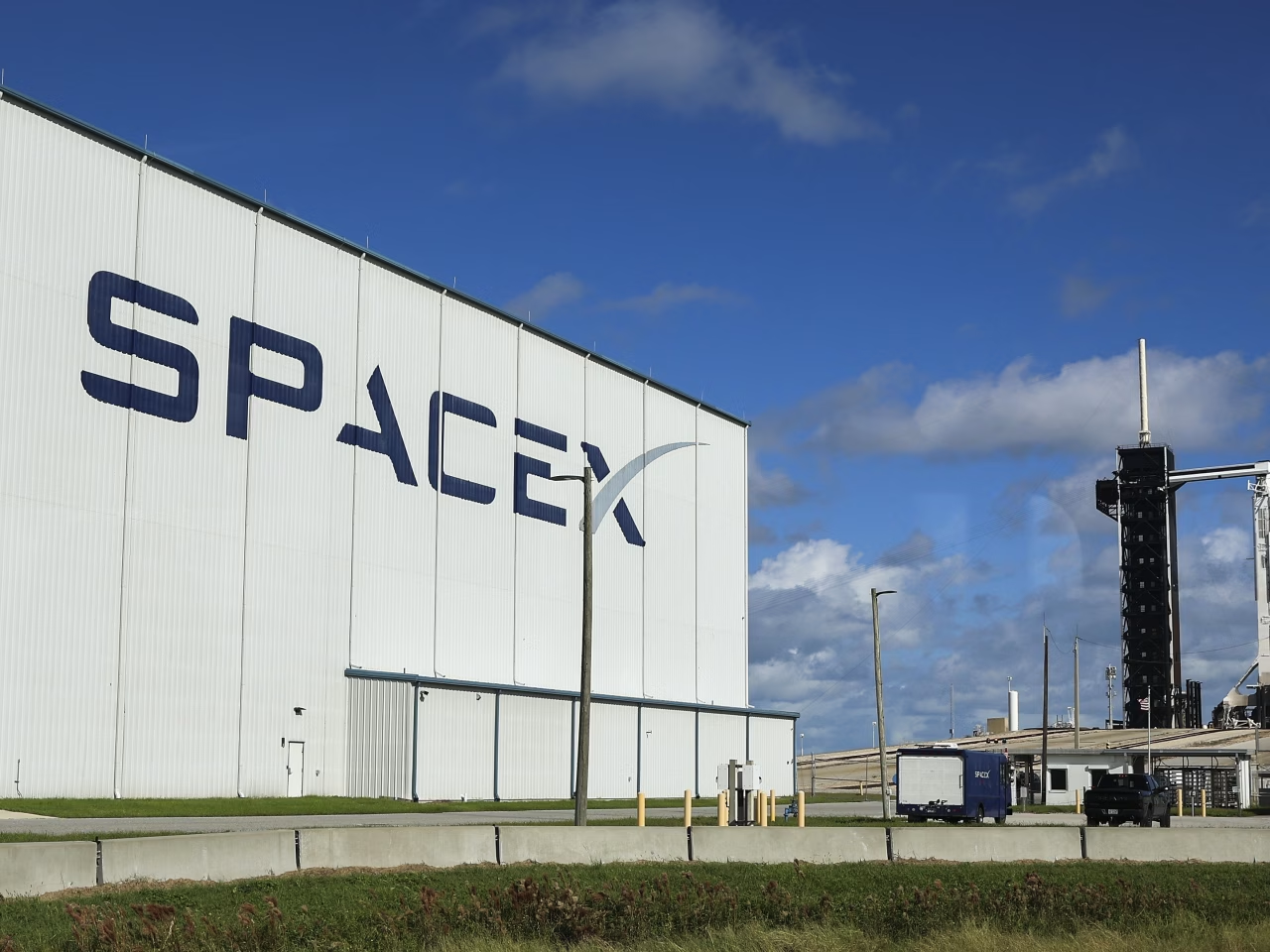
NASA officials said on July 29 that the $4 billion Nancy Grace Roman Space Telescope is ready for its scheduled launch aboard a SpaceX Falcon Heavy at 7:26 a.m. EDT on Aug. 30. The target is nine months ahead of schedule, according to NASA, and follows the completion of spacecraft fueling at Kennedy Space Center in Florida. NASA’s latest mission update says technicians loaded Roman with 290 gallons of hydrazine on July 25.

Launch readiness does not mean the observatory is sitting untouched until liftoff. Technicians still must attach Roman to hardware connecting it with the rocket’s upper stage and encapsulate the spacecraft inside Falcon Heavy’s protective payload fairing. Encapsulation was expected approximately three weeks after the July 29 briefing. The fairing will shield Roman from aerodynamic loads and heating during ascent.
The distinction matters because fueling and encapsulation are among the final major processing steps for a spacecraft that cannot be easily accessed once enclosed. NASA has not provided a contingency date if the Aug. 30 attempt is delayed, and the available information does not identify completion of a formal launch-readiness review. The confirmed position from Roman project manager Jackie Townsend is that the observatory itself is ready for launch.
A roughly 100-day trip to Roman’s operating orbit
After separation from the rocket, Roman is expected to deploy and check its spacecraft systems, open its aperture cover and begin sending data to Earth. It will travel toward an orbit around the Sun-Earth second Lagrange point, known as L2, approximately one million miles from Earth. Final insertion into that orbit is planned around mission day 100.
Roman’s hydrazine supply supports course corrections during the transfer as well as momentum management and station-keeping after arrival. NASA says the spacecraft carries enough fuel for its five-year primary mission and potentially another five years of extended operation. Fuel quantity is only one life-limiting factor, but that margin gives mission controllers room to maintain the observatory’s orientation and orbit over an extended science campaign.
L2 places Roman in the same broad operating region used by the James Webb Space Telescope. From that distant location, Roman can maintain a relatively stable observing environment without Earth repeatedly blocking large portions of its view. The engineering cost is distance: communications, navigation and spacecraft autonomy become more consequential when the observatory operates far beyond practical servicing reach.
Roman is designed for survey speed, not merely sharper pictures
Roman’s central advantage is the combination of approximately Hubble-class sensitivity and image sharpness with a substantially wider view. Its primary Wide-Field Instrument is a 300-megapixel infrared camera built around 18 large-format detectors. NASA says an individual Roman image will cover a patch of sky approximately 50 times wider than an image from Webb.
That field of view changes the type and scale of work the observatory can perform. Roman senior project scientist Julie McEnery said one month of Roman observations could survey the Milky Way at a scale that would require about a century with Hubble. The main survey is expected to image approximately two billion galaxies, supporting research into the universe’s large-scale structure as well as studies of dark energy and planets beyond the solar system.
The data system must keep pace with that optical reach. Roman is expected to generate more than 500 terabytes annually, exceeding the approximately 400 terabytes Hubble has produced over roughly 35 years. NASA’s ground architecture is designed to downlink about 1.4 terabytes of science data per day through multiple antenna contacts, after which dedicated operations centers will process, calibrate, archive and distribute the observations.
Roman also carries a coronagraph technology demonstration. The instrument uses masks, detectors and deformable mirrors to suppress a star’s glare so nearby planets and surrounding material can be imaged. It is not the mission’s main wide-field survey camera; its role is to demonstrate precision starlight-control techniques that could inform later space observatories.
Roman’s Aug. 30 target is therefore more than an early launch date. It moves NASA to the point where a wide-field optical system, a high-volume communications network and a roughly 100-day commissioning plan must work as one observatory. Hubble and Webb remain powerful tools for detailed observations, but Roman is engineered to scan much larger areas quickly. Its real measure of performance will be whether the entire system can reliably turn that enormous field of view into calibrated, usable data at the promised pace.
By David Whitaker — Associate editor for AMI’s aerospace and drone systems desk, translating flight systems, aircraft programs, spaceflight, and UAV developments into accessible technical stories.