Golden Dome Could Cost $1.2 Trillion and Still Be Overwhelmedturk
The Congressional Budget Office says the planned U.S. missile-defense system known as Golden Dome would cost about $1.2 trillion to develop, deploy, and operate over 20 years, while still being vulnerable to a full-scale attack from a peer or near-peer adversary. That new assessment, reported this week and tied to the architecture envisioned under the administration’s executive order, puts a far sharper public price and performance limit on a program previously described as costing $175 billion over time.
The gap matters because Golden Dome is not being sold as a narrow upgrade. It is framed as a national shield against ballistic and cruise missiles, built across land, sea, and space with space-based sensors and interceptors as key elements. According to the CBO, acquisition costs alone would exceed $1 trillion. That means the hardest part of the program is not only paying for more interceptors or radars, but stitching together a layered system of systems that can detect, track, assign, and engage threats quickly enough across the entire United States, including Alaska and Hawaii.
That is where the engineering and procurement story gets more complicated than the headline number. The CBO said the notional system it analyzed would be much more capable than what the U.S. fields today and could fully engage an attack from a regional adversary with limited capabilities, such as North Korea. But it also warned that the same architecture could be overwhelmed by a full-scale attack from Russia or China. In plain terms, this is an official reminder that missile defense is not a binary question of having a shield or not having one. Capacity, sensor coverage, interceptor inventory, and battle-management speed all matter, and the cost of buying enough margin for worst-case scenarios rises fast.
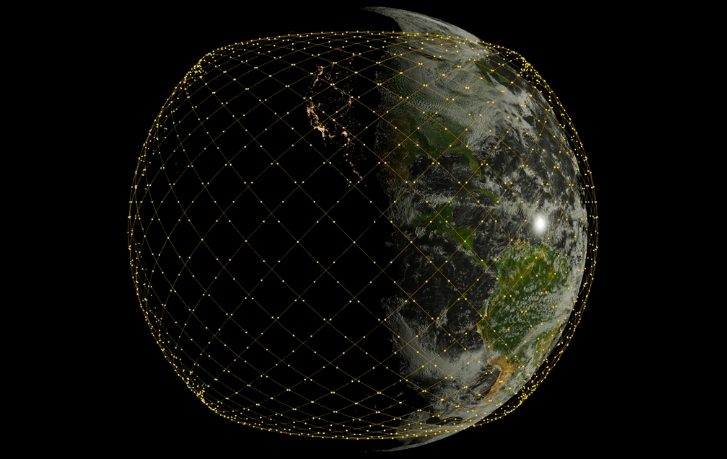
Space is a major reason the estimate climbs so high. The administration’s concept includes space-based warning, tracking, and interception, and the CBO assessment says interceptor layers and a space-based missile warning and tracking system are part of the bill. A separate Space Development Agency update shows how quickly the space segment is already expanding: the agency recently awarded about $1.75 billion for 36 additional missile-warning and missile-defense satellites for Tranche 3 support, with launch availability expected by the end of 2028. That does not make Golden Dome operational by itself, but it shows the Pentagon is already funding the sensor backbone needed for persistent tracking.
The same public record also shows why cost estimates vary so widely. President Donald Trump had previously said the program would need an initial $25 billion investment and cost $175 billion over time. More recently, Golden Dome program manager Gen. Michael Guetlein has said the Pentagon’s figure is closer to $185 billion and has argued that the CBO was not estimating the architecture DoD is actually building. He has also said space-based interceptors may not make it into the final design if they cannot be fielded at scale and at an affordable cost. That is an important boundary condition: if the most expensive layer is reduced or removed, the overall bill could fall, but so could some of the system’s intended reach and responsiveness.
There is also a maturity issue behind the sticker shock. Missile warning and tracking constellations are one thing; a large, reliable intercept architecture is another. The Space Development Agency’s Tranche 3 work points to a hybrid missile-defense architecture pursuing global stereo coverage through proliferated satellites and a common ground system. That is useful for resilience and tracking continuity, but it does not erase the command-and-control burden. A homeland missile shield at this scale has to fuse data from multiple sensors, manage handoffs across services and domains, and support enough interceptor inventory to avoid being saturated. Those are integration and sustainment problems as much as procurement problems.
That helps explain why the CBO’s warning about being overwhelmed is as important as the cost estimate itself. Defensive systems can improve coverage against limited raids and still fail the larger political promise if the public hears “shield” and assumes near-total protection. Even supporters of Golden Dome will have to contend with that mismatch. The official estimate suggests the program may buy a stronger defense against smaller or less sophisticated attacks, but not an impenetrable barrier against the largest peer salvos.
For U.S. readers, that leaves Golden Dome looking less like a single breakthrough product and more like a long-duration integration campaign with a massive sustainment bill, uncertain final architecture, and sharply diminishing returns at the top end of the threat spectrum. In aerospace terms, the CBO did not just hand Washington a bigger number. It highlighted the central design truth of homeland missile defense: coverage is expensive, persistence is harder, and worst-case protection is the costliest promise of all.
By David Whitaker — Associate editor for AMI’s aerospace and drone systems desk, translating flight systems, aircraft programs, spaceflight, and UAV developments into accessible technical stories.