FCC Robot Restriction May Reach Household Models, Not Existing Devices
A connected robot vacuum can map rooms and exchange data with remote services, yet that does not automatically mean it has been banned. The Federal Communications Commission’s July 28 addition of foreign-produced advanced robots to its Covered List blocks qualifying new models from obtaining equipment authorization, while leaving previously authorized products and devices already in consumers’ homes unaffected. The FCC explains that distinction in its official guidance on the new restrictions.

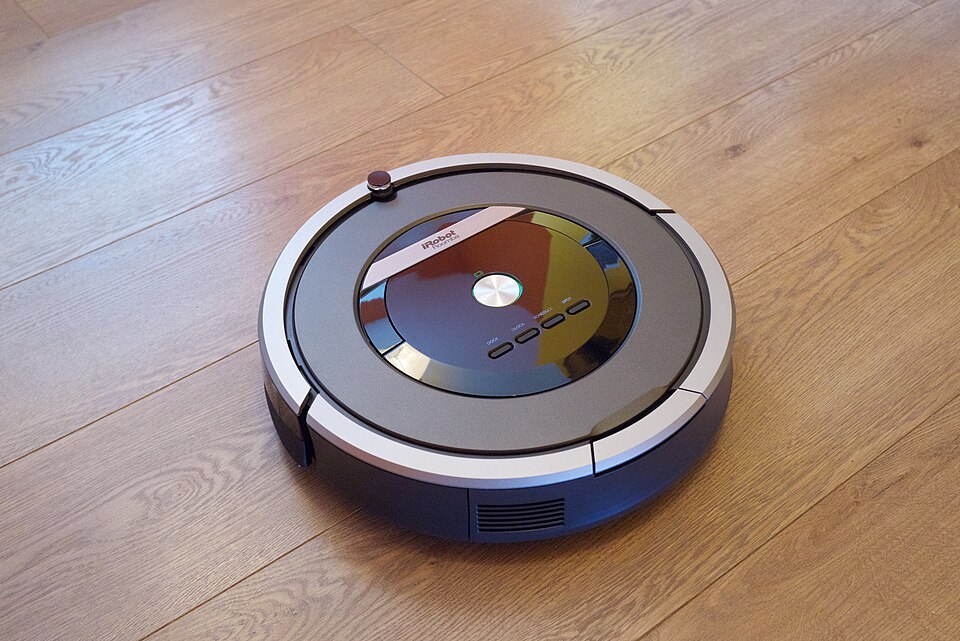
The unresolved issue for consumers is the boundary around household machines. The definition is broad enough that some robot vacuums, robotic lawn mowers and other connected products may satisfy it. But neither the product label nor the presence of Wi-Fi alone decides the matter, and the action does not categorically prohibit every foreign-made household robot or the Roomba brand.
A technical test, not a product-name list
To count as an “advanced robotic device,” a machine must meet several conditions together. It must move on the ground, operate at a distance from a human supervisor through commands or sensor data, and weigh more than 4.4 pounds when combined with any ground or docking station. It must also contain an environmental sensor, wired or wireless networking capable of at least 200 kilobits per second, and local or remote software controlling functions such as navigation, perception, data collection or remote command.
That combination explains why the household boundary matters. Some robot vacuums use cameras or LiDAR to build floor plans, navigate around obstacles and return to a dock. Robotic lawn mowers may combine GPS, cameras and artificial-intelligence-assisted navigation. Connected pool cleaners can provide mapping and smartphone control, while mobile security robots may carry cameras, microphones and internet links. AI companion robots can add voice recognition and cloud-based processing.
These are variations of the same control architecture: sensors observe the environment, software converts observations into movement decisions, motors provide actuation, and a network link connects the machine to an app or remote service. Mobility changes the risk calculation because a robot can collect spatial data across a property rather than remaining at one fixed point. Cloud processing and remote updates also extend the system boundary beyond the physical machine.
That architecture supports the FCC’s stated cybersecurity concern, but it does not settle whether a particular consumer model is covered. Weight, network performance, software functions, production origin and prior authorization status all matter. Several categories are expressly excluded, including connected vehicles, rail-only vehicles, uncrewed aircraft, unmanned underwater vehicles, specified medical and mobility-assistance devices, and fixed industrial or medical robots.
The immediate effect is on product pipelines
Covered equipment cannot receive the FCC authorization generally needed before a new electronic device may be imported, marketed or sold in the United States. The restriction is therefore primarily a market-access barrier for future models, not a shutdown order for robots operating in homes today.
Previously authorized models may continue to be imported, marketed, sold and used. Consumers do not have to discard products they lawfully purchased. A limited waiver also allows qualifying software and firmware changes to previously authorized devices through at least January 1, 2029, including vulnerability patches and updates needed to preserve functionality.
For prospective buyers, the longer-term tradeoff is between reducing exposure to connected, sensor-rich foreign supply chains and preserving product choice. If a future household model meets every technical element and is foreign-produced, it could be kept out of the U.S. market unless it secures Conditional Approval. That could affect model refreshes even while an older, previously authorized version remains available.
The policy is country-neutral. “Foreign-produced” turns on whether a product qualifies as a domestic end product under the incorporated Buy American standard, not simply the nationality of its brand. A U.S.-headquartered company could therefore face the restriction for a model manufactured abroad, while the analysis may differ for a product meeting the domestic standard.
This production-based approach also shifts compliance work deeper into robot manufacturing. Companies may need model-level records covering assembly locations, component origin, software and firmware provenance, networking capability and authorization history. A familiar retail name is not enough to establish whether a machine is covered, particularly where brands use multiple factories or sell related models with different internal hardware.
Security protection carries an access cost
The Consumer Technology Association supported protecting national security and technology supply chains but called for targeted, transparent rules that avoid unnecessary cost and disruption. That concern reflects the practical fairness question: a broad category can address shared system risks, but unclear product boundaries can delay launches or reduce competition even where an individual model’s risk has not been publicly detailed.
Manufacturers can seek Conditional Approval for a device or class of devices. Applications require information about ownership, supply chains, software, manufacturing and plans to establish or expand U.S. production. The submission deadline is January 1, 2028, but no agency review timeline has been stated. Until approvals and further implementation guidance clarify the boundary, existing household robots stay in place while some next-generation models face a new and potentially decisive U.S. market-access test.
By Jonathan Barrett — Editor for AMI’s future mobility and autonomous systems section, with two decades covering robotics, e-mobility, drone-vehicle convergence, and transport mechanical systems.