


FCC Approves Reflect Orbital’s Three-Mile Nighttime Sunlight Test Despite Warnings
A satellite designed to redirect sunlight onto a roughly three-mile-wide area at night has cleared a key federal hurdle despite unresolved concerns about observatories, wildlife and neighboring communities. On July 9, the Federal Communications Commission approved communications supporting Reflect Orbital’s limited, short-duration Eärendil-1 demonstration.
The authorization is not blanket approval for the California company’s proposed commercial service or a larger satellite constellation. Instead, the FCC determined that the public-interest benefits of making radio spectrum available for a limited test outweighed the risks raised in the licensing record. The commission described the concept as “potentially groundbreaking technology,” but it also concluded that optical-astronomy impacts fall outside the scope of its communications review, according to a review of the decision by the American Institute of Physics.
A pointing-and-control test with an unusually visible output
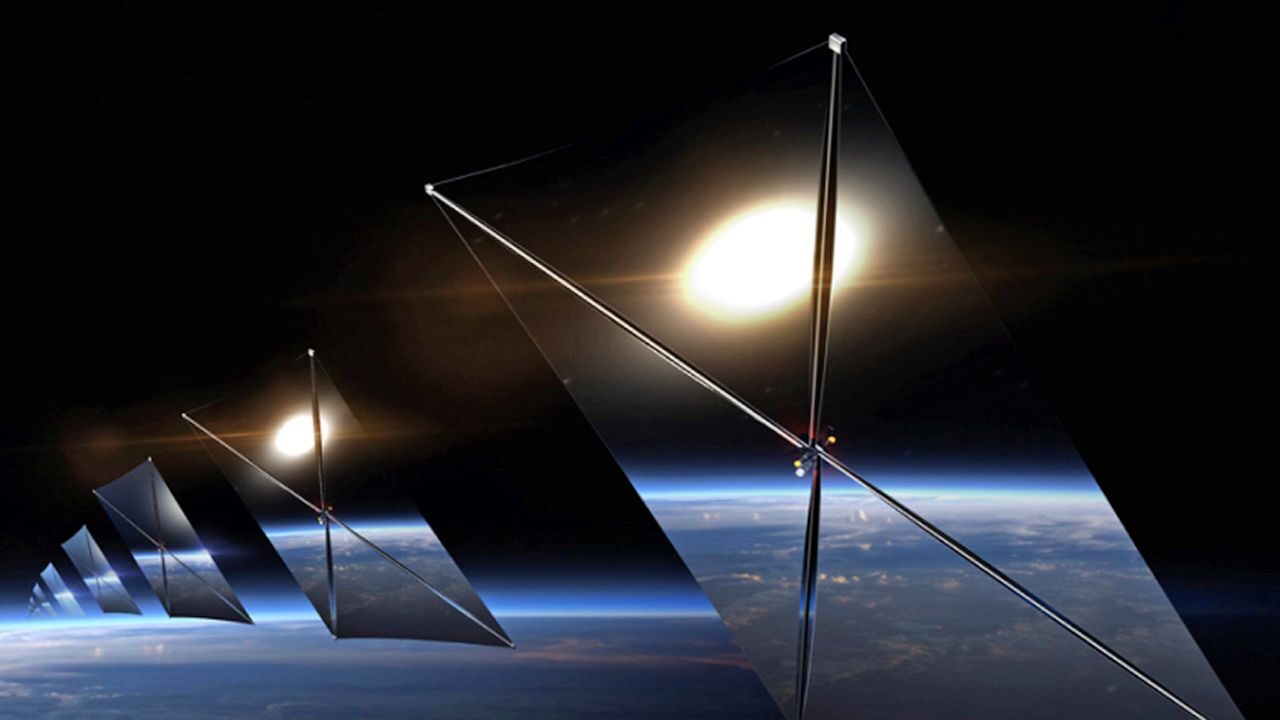
Eärendil-1 is intended to carry a large, thin-film reflector in low Earth orbit. By changing the spacecraft’s orientation, Reflect Orbital plans to direct reflected sunlight toward selected locations for several minutes at a time. The proposed demonstration would cover an area about three miles wide, and the reflector would be repositioned roughly every four minutes as the spacecraft travels around Earth.
Reflect Orbital says the resulting illumination should be about as bright as a full moon. That makes this more than a conventional spacecraft deployment test: pointing accuracy, reflector stability and operational control will determine whether the light stays where intended and whether the satellite can reliably return to a non-illuminating orientation.
The company says its satellites will default to an off state when they are not serving a customer and can be dimmed or shut down. It also says illumination requests will require relevant permits and that operations will avoid observatories, protected habitats, migration corridors and other designated exclusion zones. Reflect Orbital plans to commission third-party environmental assessments and publish the findings.
Those are operating commitments, not independently verified protections. A single short-duration mission may show whether the hardware can deploy, point and redirect light, but it cannot establish how repeated illumination from many satellites would affect ecosystems, human circadian rhythms or the accumulated brightness of the night sky.
The license exposes a regulatory boundary
The central policy issue is that the FCC regulates the spacecraft’s radio communications, while the most disputed output is visible light. The commission found that its rules do not address protection of optical astronomy and declined to use those concerns as a basis for denying or adding conditions to the authorization.
That boundary matters because a technically successful demonstration could move the commercial concept forward without settling which agency should evaluate its broader effects. The National Oceanic and Atmospheric Administration has proposed a voluntary certification framework for novel space activities not covered by another regulator. That process could consider scientific effects such as astronomy and light pollution, but it is not equivalent to a mandatory, comprehensive licensing regime for orbital illumination.
The American Astronomical Society has argued that reflected light could interfere with observations of faint objects and reduce usable telescope time. Astronomer Stacy McGaugh characterized orbital-reflector systems as an existential threat for observational astronomy. That warning concerns the potential expansion of the technology, not a confirmed effect from Eärendil-1, which has not yet conducted its orbital demonstration.
Legal scholar Gregory Radisic sees a narrower potential benefit, particularly for temporary lighting during disasters, while warning that effects on wildlife, natural light cycles and communities require more research. None of Reflect Orbital’s proposed applications including extending solar-farm output after sunset, agricultural lighting and community illumination has been proven by this mission.
Targeted service does not guarantee targeted consequences
Reflect Orbital says “most people and most places will never see this light” because service would be directed only toward permitted customers. Yet a paying customer is not the only potentially affected party. Astronomers may observe through the same sky, wildlife may cross administrative boundaries, and nearby residents may experience changes they did not request.
That creates an access and fairness problem alongside the engineering challenge: who can authorize orbital illumination, how far its effects extend beyond the customer and which institution can impose enforceable limits. Exclusion zones and shutdown capability could become useful controls, but their effectiveness depends on verified pointing performance, clear geographic rules, coordination and transparent reporting.
Reflect Orbital expects Eärendil-1 to launch later this year and hopes to have 36 satellites in orbit by 2027. The first spacecraft can test whether steerable orbital illumination works for a few minutes over a selected area. It cannot, by itself, answer the harder question raised by the approval: who governs darkness when a private service can redirect sunlight after sunset.
By David Whitaker — Associate editor for AMI’s aerospace and drone systems desk, translating flight systems, aircraft programs, spaceflight, and UAV developments into accessible technical stories.


