Heart X1’s 27-Minute Flight Moves Megawatt Electric Propulsion Into Piloted Testing
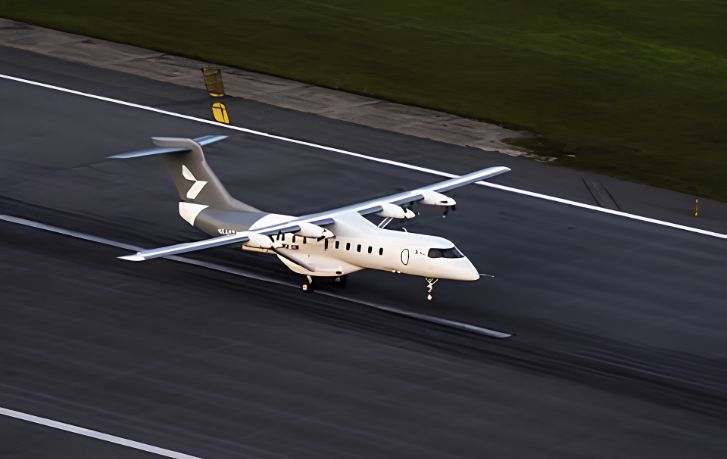
Heart Aerospace has moved its megawatt-class electric propulsion work from ground testing into piloted flight. The company’s full-scale X1 demonstrator completed a 27-minute first flight from Plattsburgh International Airport in New York on August 12, reaching 1,100 feet above ground level while drawing more than one megawatt from its battery-electric propulsion system.
The mission covered taxi, takeoff, climb, airborne maneuvering, and landing. That is a meaningful integration milestone: batteries, power electronics, electric propulsion, flight controls, avionics, and the airframe operated together through a basic flight profile rather than as separate test articles. It does not, however, establish that the system is ready for airline service or that its performance will translate directly to Heart’s planned ES-30 regional airliner.
An experimental flight, not an airliner certification test
X1 flew under a Federal Aviation Administration Special Airworthiness Certificate in the Experimental Category. That certificate permits defined flight-test activity, but it is distinct from the FAA Part 25 certification Heart intends to pursue for the production ES-30.
The difference matters. X1 is a technology demonstrator representative of the ES-30 design, not a certified passenger aircraft. Its immediate job is to generate flight data and exercise Heart’s capability to design, build, test, and operate a commercial-scale electric aircraft. The first mission confirms that the demonstrator could complete its planned initial profile; it does not answer the broader compliance questions associated with a 30-seat transport-category aircraft.
Heart says its X1 development work included structural, propulsion, systems, and taxi testing before flight. In the air, the company can begin comparing modeled aerodynamics and propulsion behavior with measured performance. Those comparisons are essential for refining the design and determining whether assumptions made during simulation and ground testing remain valid under flight loads and operating conditions.
X1 is a bridge to a different propulsion architecture
The production target is the ES-30, a conventional fixed-wing, 30-seat hybrid-electric regional airliner. X1, by contrast, was powered entirely by batteries during its first flight. The demonstrator therefore addresses important elements of electric propulsion and aircraft-level integration, but the ES-30 will introduce the additional work of translating those lessons into a hybrid-electric system and a certifiable production configuration.
That translation is now the central engineering boundary around the milestone. Heart has not provided enough first-flight data to assess useful payload, battery mass, charging losses, thermal performance, energy reserves, range, or endurance in an airline mission. Nor does a 27-minute demonstrator flight establish battery life over repeated commercial cycles or the maintenance burden of the complete production system.
The company said X1 used approximately $5 worth of electricity during the mission. That figure describes purchased energy for one flight, not aircraft operating cost. It excludes factors including payload, charging losses, ground support, maintenance, battery replacement, and route-level utilization. Heart’s projection that the ES-30 could reduce operating costs by more than 40% relative to legacy regional aircraft remains a forward-looking company estimate rather than a result demonstrated by X1’s first sortie.
The next aircraft will carry the certification burden
Heart is developing its first pre-production ES-30 at a pilot manufacturing plant in Los Angeles and plans to begin flight testing that aircraft in 2028. Entry into service is targeted for 2031. Those dates leave the program with a substantial progression from demonstrator data to production-representative hardware, certification testing, manufacturing maturity, and airline operations.
The company describes X1 as the largest battery-electric aircraft yet flown. Its published dimensions include a 106-foot wingspan and a length of 76 feet, with a takeoff weight exceeding 25,000 pounds. No independent record authority or complete comparison set has been provided, so that designation remains Heart’s claim rather than a verified record.
What is confirmed is narrower and more useful: a piloted, full-scale demonstrator completed a controlled flight profile with more than one megawatt of battery-electric propulsion. The next decisive step is scheduled for 2028, when the pre-production ES-30 is expected to begin showing whether that achievement can carry over to the hybrid architecture and certification configuration intended for 30-seat regional service.
By David Whitaker — Associate editor for AMI’s aerospace and drone systems desk, translating flight systems, aircraft programs, spaceflight, and UAV developments into accessible technical stories.