USS Doris Miller Redesign Plan Has No Cost or Revised Schedule
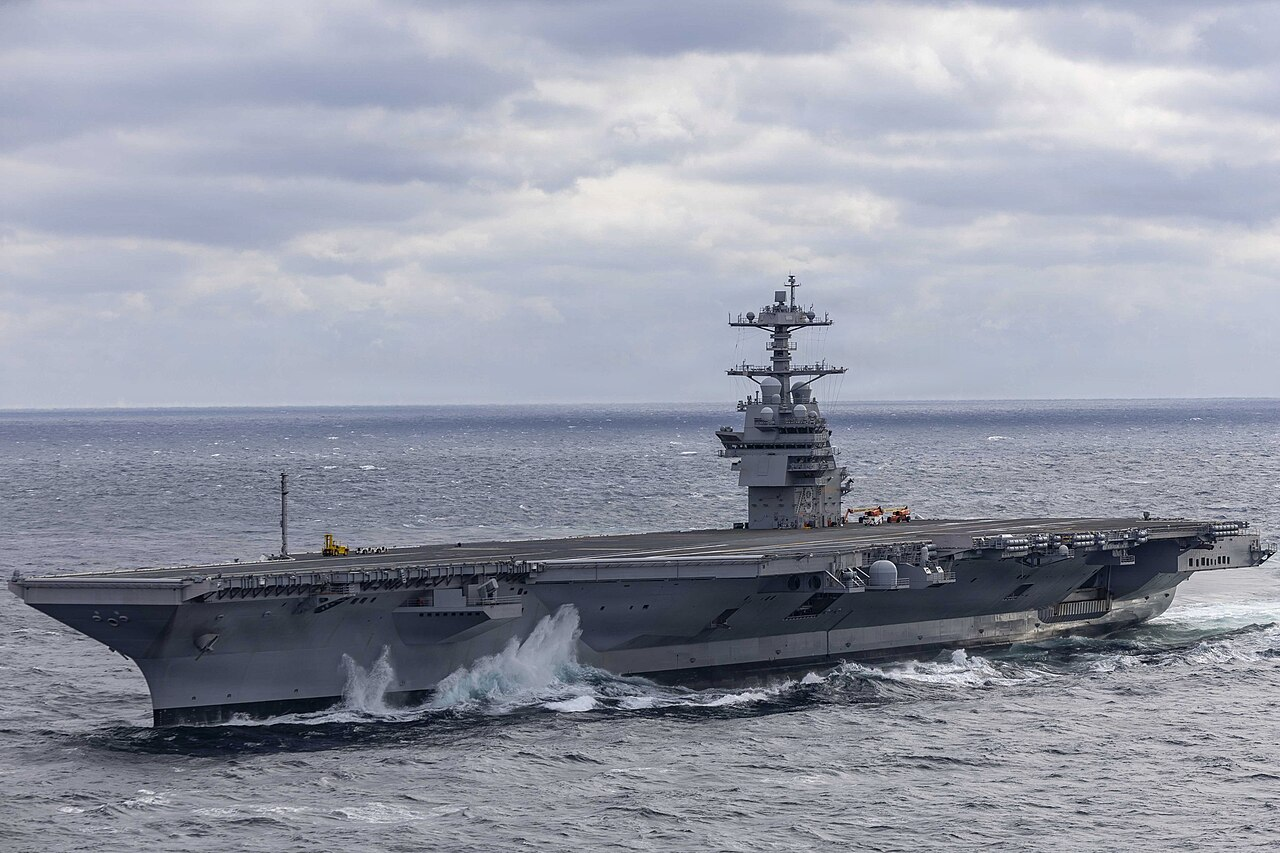
The future USS Doris Miller is now the subject of a potentially extensive systems reversal, but taxpayers and Navy planners do not yet have a price or a revised construction schedule. An August 13 presidential memorandum gives the Department of War 60 days to plan the replacement of the carrier’s electromagnetic aircraft-launch system and electric weapons elevators with steam and hydraulic equipment.

That distinction matters: the memorandum orders a plan, not a completed redesign. It provides no implementation date, awards no contract and appropriates no money. The department must first identify the measures, resources and timeline required for the changes to CVN-81, the fourth Ford-class carrier.
A system change larger than a component swap
The launch system and weapons elevators are major parts of a carrier’s operating architecture. The Electromagnetic Aircraft Launch System accelerates aircraft for takeoff, while the Advanced Weapons Elevators move munitions between storage areas and the flight deck. Replacing both planned technologies changes two central handling functions rather than one isolated piece of equipment.
The directive describes steam and hydraulic systems as part of a broader preference for “proven, reliable, and affordable technologies and ship designs.” It does not, however, provide a comparative engineering assessment, projected savings or lifecycle-cost analysis for the Doris Miller conversion. Those figures are precisely what the 60-day planning process will need to establish before Congress can evaluate the public cost.
General Atomics, which builds the electromagnetic launch equipment, said production for CVN-81 was nearly 50% complete and warned that changing course could introduce cost, schedule and integration risks. That is the contractor’s assessment, not a formal Navy cost finding. Still, the production status makes the timing consequential: the government is considering a systems reversal after substantial supplier work has already occurred.
The first three Ford-class ships—the USS Gerald R. Ford, future USS John F. Kennedy and future USS Enterprise—are to retain electromagnetic launch equipment. The order begins with Doris Miller, leaving the Navy to plan a different systems configuration within the same carrier class. The memorandum does not quantify what that difference would require in design work, construction sequencing, training, maintenance support or supplier arrangements.
Foreign construction comes with a domestic transfer requirement
The carrier provision is one part of a much wider shipbuilding directive. A second mechanism could permit foreign suppliers to build the first two vessels in as many as three selected ship classes overseas. Every subsequent ship in an approved class would have to be built in the United States.
This is not an unrestricted foreign-purchase policy. A participating company would have to build a new U.S. shipyard or acquire ownership or a majority position in an existing one. It would also have to hire and train American citizens, license its shipbuilding methods to U.S. yards, and establish a domestic supply chain for construction and maintenance.
The intended tradeoff is speed and imported production knowledge in exchange for durable U.S. capacity. The public-accountability question is whether the initial overseas hulls would actually produce the required domestic yards, workforce skills and supplier base. No foreign parent design, fleet quantity or construction schedule has been selected, so that result cannot yet be measured.
Each foreign construction contract would require a national-security determination, followed by notice to Congress at least 30 days before signing. The Department of War also has 90 days to prepare an acquisition plan for ships suited to anti-submarine warfare, surface warfare and convoy escort. Those safeguards create decision points, but they do not substitute for appropriations or signed procurement agreements.
Repair capacity is the other half of the directive
The memorandum separately requires a 120-day proposal for a fifth public Navy shipyard focused on nuclear-powered submarine and aircraft-carrier repair. The review must consider access to the Pacific Fleet and may recommend as many as three dry docks sized for every current and planned submarine class. No location has been chosen.
A proposed Component Repair Center would receive new parts, refurbish older components and maintain at least one ship set of spares for the Los Angeles, Virginia, Seawolf, Ohio and Columbia submarine classes. That provision addresses repair throughput at the component level, not just the availability of dock space. Naval Sea Systems Command must also undergo a personnel and organizational review within 120 days.
Shipyards, maritime workers and suppliers could gain from the required domestic investment, while Navy personnel could benefit if added dock and component capacity improves maintenance access. Taxpayers, however, are being asked to assess a carrier systems reversal, initial foreign construction and a new public yard before final budgets exist. All of it remains subject to federal law and congressional funding. The first decisive document will therefore be the Doris Miller plan due in 60 days, when the government must finally attach resources and a timeline to the ordered redesign.
By David Whitaker — Associate editor for AMI’s aerospace and drone systems desk, translating flight systems, aircraft programs, spaceflight, and UAV developments into accessible technical stories.