FAA Clears Boeing 737-7 for Service as Delivery Challenge Takes Over
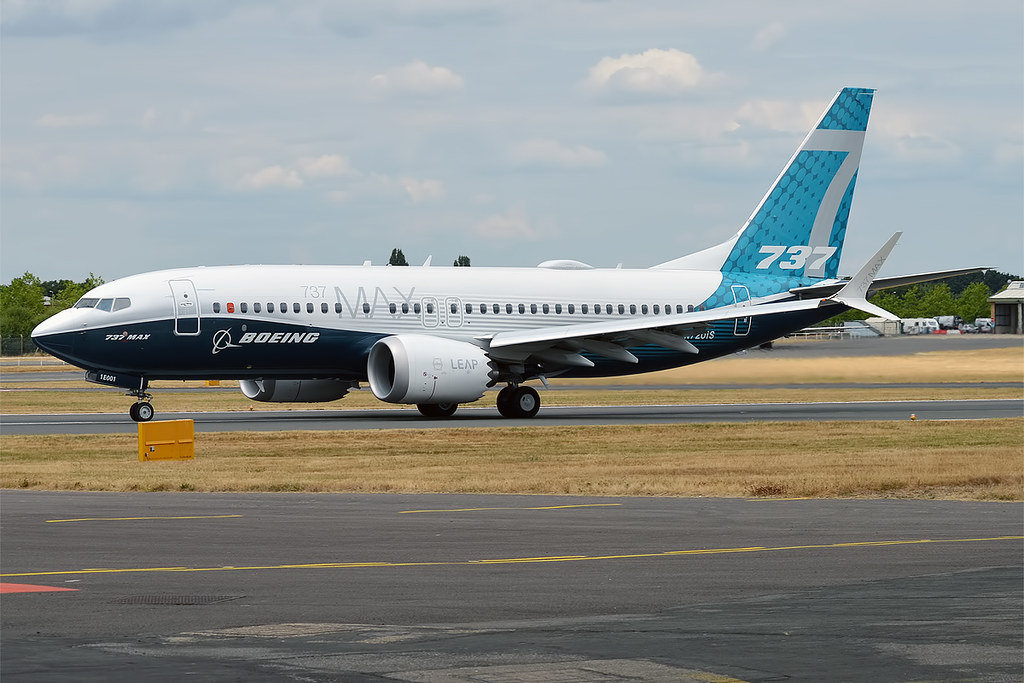
The Federal Aviation Administration issued an amended type certificate for Boeing’s 737-7 on August 3, clearing the smallest 737 MAX model for commercial service after a certification effort that began in 2018. The approval removes the principal design-level regulatory barrier to deliveries, including the first aircraft for launch customer Southwest Airlines.

That is a consequential transition, but not the end of the process. Certification moves the 737-7 from design approval toward production and airline operations; it does not establish a delivery rate, guarantee when Southwest will carry passengers, or confirm that every aircraft coming off the line meets its approved configuration. Boeing and Southwest have said they are preparing for the first delivery, but neither has announced a handover date.
What the FAA approved
An amended type certificate establishes that the 737-7 design complies with applicable requirements. The FAA also updated Boeing’s Production Limitation Record and added the model to the company’s production certificate, authorizing its approved production system to build the variant.
The review extended well beyond flight performance. The FAA said it performed or directly reviewed work involving flight controls, system-safety assessments, human factors, flight-crew alerting and other safety-critical areas. Required changes included updated flight-control software, improvements to crew alerting and a redesigned engine anti-ice system intended to prevent the engine inlet from overheating and potentially weakening surrounding structure.
Boeing reported that the program involved more than 1,000 hours of flight and ground testing. The 737-7 now enters the market as the smallest and longest-range model in the MAX family, typically seating 135 to 160 passengers in a two-class arrangement and offering a stated range of up to 3,800 nautical miles.
Design approval is not aircraft acceptance
The next stage is less about proving the basic design and more about producing repeatable conformity. Each customer aircraft must be completed in the final approved configuration, pass the applicable inspections and receive the necessary aircraft-specific authorization before delivery. Southwest must then complete acceptance, training, maintenance-documentation and operational-readiness work before introducing the model into scheduled passenger service.
This distinction matters because type certification evaluates the design, while production and delivery demonstrate whether that design can be reproduced consistently. The FAA has said its safety inspectors will remain at Boeing facilities around the country to monitor manufacturing, including the company’s Safety Management System and safety culture. Continued oversight means approval is not a withdrawal of regulatory scrutiny; it shifts part of that scrutiny from development evidence to factory execution.
For Boeing, the practical constraint is now the flow of aircraft through final configuration, inspection and customer handover. Certification permits completed and future 737-7s to advance toward delivery, but the available information does not specify how many aircraft are awaiting handover or provide a delivery timetable. It therefore cannot support a firm conclusion about how quickly Boeing will convert its 737-7 orders into delivered airplanes.
Why Southwest’s operational work matters
The 737-7 gives Southwest a smaller-capacity option within the same aircraft family as its larger 737-8s. That can help the airline match seat capacity to routes that do not need a larger jet while retaining the operational benefits of a 737-focused fleet. Passengers, however, will not see that benefit until aircraft are delivered, accepted and incorporated into the airline’s operating system.
Airline induction is a systems-integration task rather than a ceremonial handover. Aircraft configuration, manuals, maintenance programs, spare-parts support, crew preparation and scheduling all have to align. A delay in any one of those areas can separate the first delivery date from the first revenue flight, even though the underlying aircraft type is certified.
The approval also has a defined regulatory boundary: it applies to the 737-7, not automatically to the larger 737-10, which remains in certification. Shared technical work may inform that separate program, but the FAA must complete its own review before the larger model can enter service.
The next decisive milestone is therefore not another forecast. It is the first customer handover, followed by evidence that Boeing can deliver additional 737-7s in approved configuration with consistent quality. Until Boeing and Southwest publish a schedule, the timing of that transition remains unresolved.
By Thomas Caldwell — AMI’s senior editor for mechanical and mobility engineering, covering vehicle electronics, systems integration, electrification, chassis systems, propulsion, and safety policy.