Australian Safety Bureau Investigates Three Sydney Airport Incidents in Three Weeks
Australia’s transport safety investigator is examining three Sydney Airport incidents over roughly three weeks, including a runway crossing that led a Virgin Australia crew to stop its takeoff. The Australian Transport Safety Bureau investigation into the August 9 event remains in its evidence-collection phase, with no cause established.
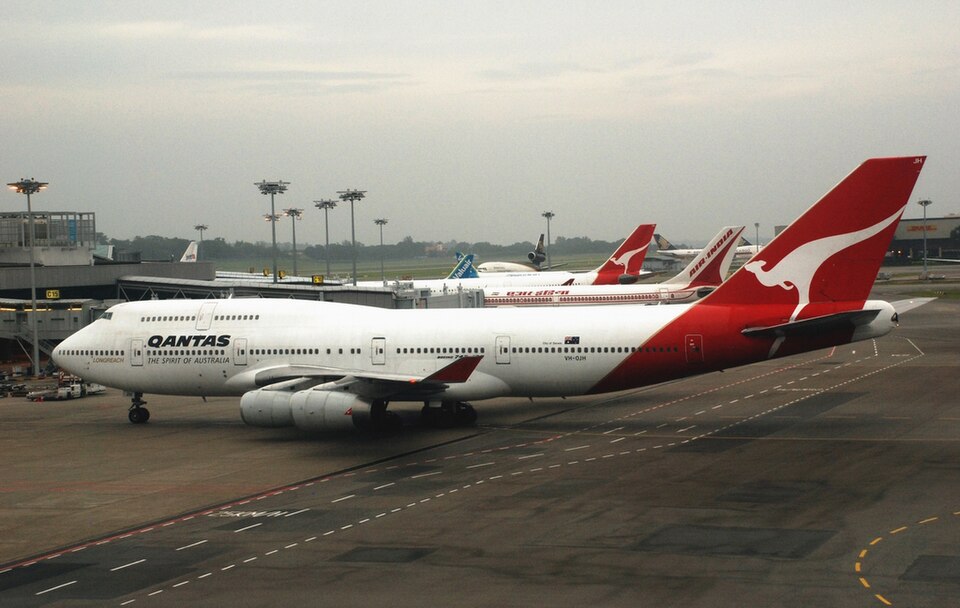
At about 10 a.m., air traffic control cleared Virgin Australia flight VA555, a Boeing 737 bound for Perth, for takeoff on runway 34L. As its crew applied thrust, Qantas flight QF728 another 737 began crossing ahead from a taxiway. The Qantas crew reported receiving clearance to cross. Virgin’s pilots reduced thrust and stopped, while the controller broadcast a cancellation of the takeoff clearance. Airservices Australia CEO Rob Sharp said the Virgin aircraft was stationary and 1,300 metres from the Qantas jet when the clearance was cancelled. Neither aircraft was damaged and no injuries were reported in that event.
The sequence matters because more than one defensive layer appears to have acted: the Virgin crew observed the crossing aircraft, discontinued the takeoff, and the controller cancelled the clearance. ATSB chief commissioner Angus Mitchell said a layer of defence prevented escalation in each of the three recent incidents. That is not yet a finding about why the events occurred; it describes how they stopped short of a collision or more serious outcome.
Three events, but no established common cause
About three hours before the August 9 runway event, a Jetstar Airbus A320 braked suddenly to avoid a Qatar Airways Boeing 777 being towed. A Jetstar cabin crew member was injured during the braking. On July 27, a QantasLink turboprop was still in its landing roll on runway 34L when air traffic control cleared a Qantas 737 to cross that runway. According to the ATSB’s July 27 investigation page, air traffic control detected the conflict and advised both crews; the 737 stopped after the holding point.
Three events in a short period naturally raise a pattern question, but frequency alone does not establish a shared failure. The incidents involved different phases and functions: an aircraft taking off while another crossed its runway, a taxiing aircraft encountering an aircraft under tow, and a runway crossing while another aircraft completed its landing roll. Investigators must determine whether the events share any procedural, coordination, workload or airport-process factor or whether their proximity in time is coincidental.
The distinction is central to layered aviation safety. Runway clearances, crew visual monitoring, radio calls, holding points and controller conflict detection are not interchangeable safeguards. They are intended to overlap so that one mistake or misunderstanding does not automatically become an accident. Mitchell noted that accidents rarely result from one point of failure and typically require multiple things to go wrong.
That principle also creates a difficult investigative question: a defence can work as intended while an earlier control has failed or become ambiguous. Cancelling a takeoff clearance and stopping an aircraft are consequential protections, but investigators still need to establish why incompatible movements were reportedly authorized. The ATSB plans to interview involved parties, retrieve recorded data and review other relevant information. If it identifies a critical safety issue before issuing its final report, the bureau says it will notify the relevant parties so they can act.
Staffing concerns remain an allegation, not a finding
Airservices Australia said its initial reviews had found no systemic issue compromising passenger safety. The Civil Aviation Safety Authority called the latest event a matter of significant interest but declined to speculate while the ATSB investigates. Those positions leave an important tension unresolved: multiple operational defences prevented escalation, yet three separate events were serious enough to prompt formal investigation.
Retired commercial pilot and former ATSB investigator Geoff Klouth has attributed the cluster to deteriorating support systems, staffing pressure, workload and possible fatigue. His assessment is informed professional criticism, not an ATSB conclusion. No official investigation has established that controller staffing or fatigue caused any of the three incidents.
Staffing nevertheless forms part of the operational context. Transport Minister Catherine King said 95 people were expected to be endorsed as air traffic controllers by the end of 2026, six controllers were training in Sydney Tower and another 15 were expected to begin before the end of 2027. She also said roster improvements would start in early September and that a new Sydney Tower simulator had been installed to expand training capacity.
Those measures address capacity and training, but they cannot substitute for the investigation’s reconstruction of clearances, communications and aircraft movements. The decisive next step is the ATSB’s determination of whether these were independent events or signs that one or more defensive layers require procedural, staffing or operational changes.
By Thomas Caldwell — AMI’s senior editor for mechanical and mobility engineering, covering vehicle electronics, systems integration, electrification, chassis systems, propulsion, and safety policy.