NASA Ends Swift Telescope Rescue After Servicing Spacecraft Loses Attitude Control
The spacecraft sent to stabilize NASA’s Swift observatory could not reliably stabilize itself. NASA ended the planned capture and orbital boost on Aug. 19 after persistent attitude-control problems aboard Katalyst Space’s LINK spacecraft. The decision leaves Swift without the intervention intended to prevent its descent into Earth’s atmosphere later in 2026.

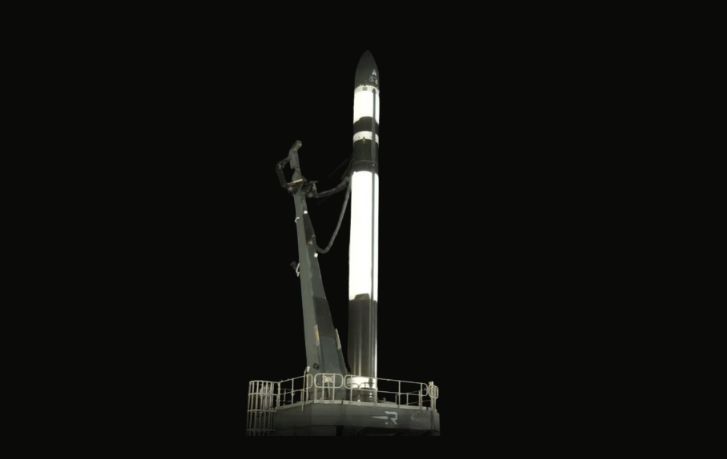
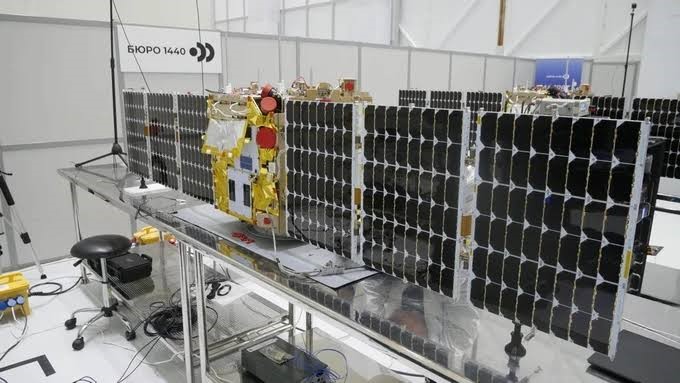
The $30 million rescue attempt was unusually ambitious: design, build, test and launch a robotic servicing spacecraft in less than a year, then approach an aging observatory, find suitable capture locations and raise its orbit. LINK reached space on July 3 aboard an air-launched Northrop Grumman Pegasus XL rocket, but it began spinning uncontrollably roughly three weeks later.
Attitude control was essential to the capture
Attitude control governs a spacecraft’s orientation rather than simply its location in orbit. LINK needed controlled pointing for communications, power generation, navigation and eventual proximity operations around Swift. The requirement would have become particularly demanding during capture, when the servicing vehicle’s three robotic arms were supposed to secure an observatory that was not originally designed with dedicated grappling fixtures.
A preliminary NASA account in late July said two of LINK’s three reaction wheels were not operable and that its cold-gas thruster system had lost some functionality. Reaction wheels change spacecraft orientation by exchanging angular momentum with the vehicle, while the thrusters were intended to provide finer control. Engineers attempted to slow LINK’s multi-axis spin and update its guidance, navigation and control software for the spacecraft’s changed configuration.
Those recovery efforts were not enough to preserve the grapple-and-boost phase. NASA has not provided a complete final failure analysis, so the underlying reasons for the component problems remain unresolved publicly. What is confirmed is the operational consequence: the agency and Katalyst determined that LINK’s continuing control limitations ruled out capturing Swift and raising it safely.
A smaller demonstration remains possible
NASA has not canceled every remaining LINK operation. The agency and Katalyst are evaluating a rendezvous and proximity-operations demonstration near Swift, without capture. That distinction matters. Approaching and maneuvering around another spacecraft can exercise navigation, sensing, guidance software, communications and ground-control procedures, but it does not amount to rescuing Swift or proving the complete servicing chain.
If conducted, the revised demonstration could still generate useful data on how LINK senses and moves relative to another object in orbit. That information may help refine later U.S. satellite-servicing systems, particularly their commissioning and proximity-operations procedures. Its value will depend on what maneuvers LINK can perform with adequate control and what measurements the teams can collect; NASA and Katalyst are still assessing the logistics.
The reduced objective also illustrates why robotic servicing is more than a rendezvous problem. A servicer must arrive with sufficient control authority and redundancy to manage its own configuration before it can safely manipulate or move a separate spacecraft. LINK’s experience does not establish that its remaining demonstration will succeed, and any data gathered would represent only part of the capability originally purchased.
Swift’s deadline drove the compressed program
NASA awarded the Swift Boost contract to Arizona-based Katalyst in September 2025 after increased solar activity accelerated the observatory’s orbital decay. Solar activity can expand the upper atmosphere, increasing drag on spacecraft in low Earth orbit. Swift’s operators had already changed its observing strategy and pointing to reduce drag, but those measures could only buy time.
The compressed schedule left Katalyst less than a year to design, manufacture, test and launch LINK before the rescue opportunity closed. NASA characterized that schedule as a calculated risk carrying two potential returns: extending Swift’s science mission and advancing domestic spacecraft-servicing capability. The first return will not be realized, while the second remains limited to lessons from development, flight operations and any proximity demonstration that follows.
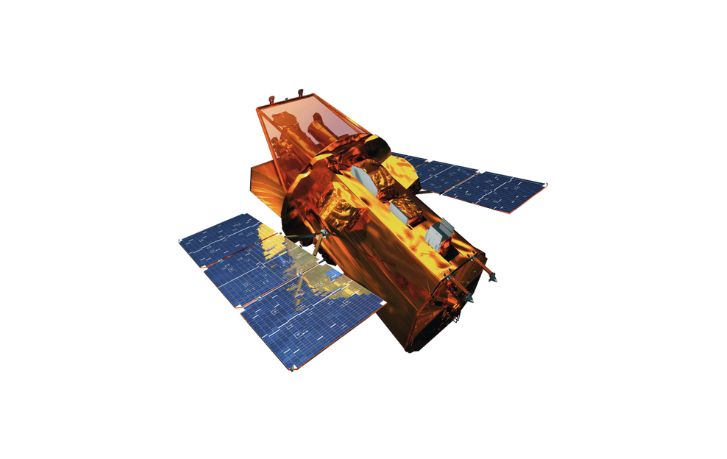
Launched in 2004, Swift was designed for a two-year prime mission but has operated for more than two decades. It detects gamma-ray bursts and can rapidly redirect its X-ray, ultraviolet and visible-light instruments toward short-lived events including supernovae, black-hole ejections and fast radio bursts.
NASA says existing missions will help cover the resulting rapid-response observation gap while it seeks other options. LINK may yet approach Swift, but it will do so as an experimental observer rather than the rescue vehicle that was supposed to keep the observatory aloft.
| More aerospace and engineering stories, right in your MSN feed. Follow AMI on MSN |
By David Whitaker — Associate editor for AMI’s aerospace and drone systems desk, translating flight systems, aircraft programs, spaceflight, and UAV developments into accessible technical stories.