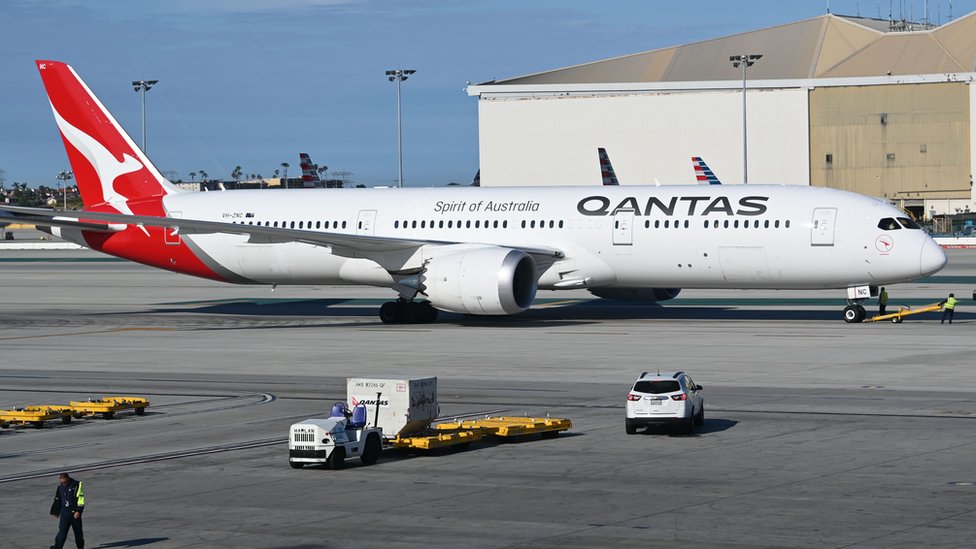
Qantas A380 Flew Twice With Maintenance Lamp Left Inside Its Wing
A Qantas Airbus A380 completed two long-haul passenger flights with a portable maintenance lamp inside its left wing. The aircraft suffered no structural damage, system disruption or other adverse consequence, but the Australian Transport Safety Bureau’s final findings, published on August 18, show that several maintenance safeguards failed to identify the unreturned light before the jet was released to service.
The aircraft, Airbus A380-842 VH-OQK, flew from Sydney to Dallas Fort Worth and returned to Sydney as Qantas flight QF8. It landed at 6:55 a.m. on January 9, 2026. A tool-crib operator reviewing an unreturned-equipment report later that morning identified the discrepancy, and a search located the lamp near an Air Generation Unit heat exchanger.
The physical outcome and the process outcome must be separated. Investigators found that the lamp caused no damage and did not disrupt aircraft systems. They nevertheless concluded that foreign-object control and tool-accountability processes had broken down. The significance is therefore not evidence of aircraft damage, but the inability of multiple controls to stop an aircraft from carrying passengers while a maintenance item remained unaccounted for.
Several checks existed, but they were not independent enough
Engineers had used the light while replacing an outlet temperature sensor on an Air Generation Unit after the A380 arrived in Sydney from Los Angeles on January 7. Foreign-object clearance inspections did not find it. Troubleshooting work contributed to an engineer returning other equipment without recognizing that the lamp remained signed out, and the end-of-shift unreturned-tool check also failed to flag it.
A licensed aircraft maintenance engineer then issued the certificate of release to service. Qantas’s maintenance information system did not prompt the certifying engineer that a tool was still missing or that an unreturned-tool report remained unactioned. An external maintenance organization operating under its own Part 145 approval subsequently performed work in Dallas without detecting the lamp, although that work was another opportunity for discovery rather than the primary tool-accountability control.
From a systems perspective, the distinction is important. A visual foreign-object inspection, a maintainer remembering what was taken into the work area, and a certifier checking that the job is complete may look like overlapping protections. If each step depends on people having the same information and consistently recognizing the same discrepancy, however, one omission can pass through every layer.
The tool-crib record ultimately worked as a traceability mechanism: it preserved the association between the lamp and VH-OQK. But the discrepancy was found during a later report review, after the aircraft had completed both passenger sectors. That timing limited the record’s value as a pre-release barrier. Accountability information only prevents dispatch when it reaches the person authorized to clear the aircraft before that decision is made.
Qantas moved the tool report into the release decision
Qantas has since mandated a review of unreturned-tool reports before an aircraft can receive return-to-service clearance. This changes the report from a retrospective administrative check into a required input to certification. The airline also established a tooling working group to examine its processes and technologies that could improve accountability across maintenance locations.
That procedural change addresses the specific gap identified by investigators: the certifying engineer received no maintenance-system prompt about the missing lamp or outstanding report. It does not eliminate the need for careful foreign-object inspections or accurate tool returns. Instead, it adds a control intended to detect a discrepancy when those earlier human-dependent steps do not.
Human factors remain central because aircraft maintenance can involve confined work areas, task transitions and unexpected troubleshooting. ATSB Chief Commissioner Angus Mitchell said even established processes can be vulnerable when they rely solely on consistent human performance under operational pressure. Tool control systems and procedures must account for this variability, with safeguards to detect and recover from errors, he said.
The investigation did not find that the lamp damaged VH-OQK, and its presence caused no reported passenger or airport disruption. The confirmed safety concern is narrower and more instructive: inspections, tool checks and certification all failed to stop two passenger flights, while a report reviewed only after the A380 returned finally exposed the discrepancy. Qantas’s new pre-clearance requirement places that unresolved-tool information where it has the greatest practical value before release to service.
| More aerospace and engineering stories, right in your MSN feed. Follow AMI on MSN |
By Thomas Caldwell — AMI’s senior editor for mechanical and mobility engineering, covering vehicle electronics, systems integration, electrification, chassis systems, propulsion, and safety policy.