GE Expands Human-Supervised Engine Inspection AI to More Than 12 Sites
An artificial-intelligence model flags turbine-blade images that deserve a closer look. A trained technician then reviews those images and retains authority over component approval and the final maintenance decision. That division of labor defines GE Aerospace’s expansion of its Blade Inspection Tool: automate the search for potential concerns without handing a safety-critical judgment to software.

GE is deploying the tool at more than a dozen of its maintenance, repair and overhaul facilities and customer sites servicing CFM LEAP engines. According to an August 18 update from GE Aerospace, engineers at its Bengaluru technology center are supporting the expansion alongside other engine-service projects.
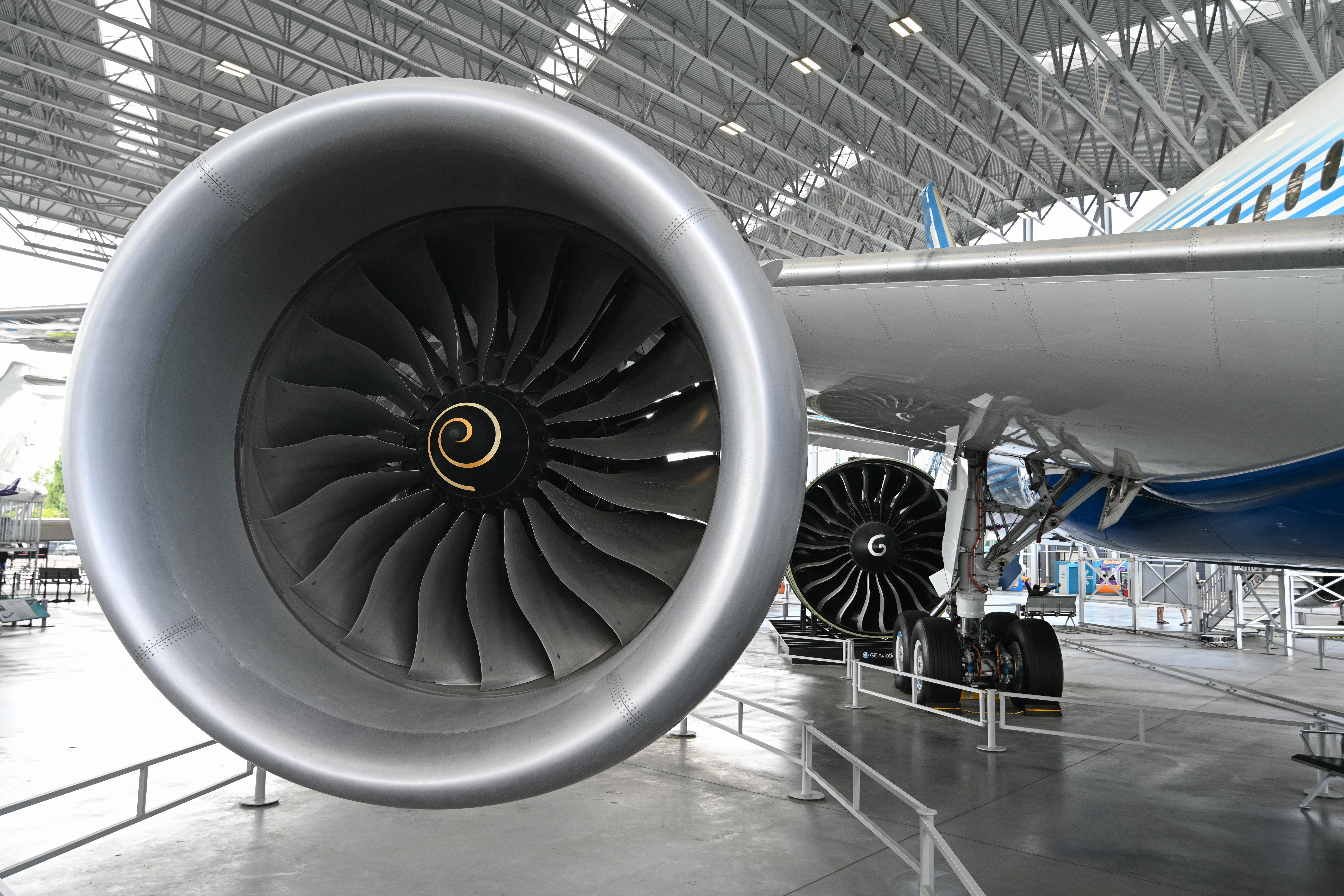
The U.S. engine manufacturer says the inspection technology has operated on GEnx widebody engines for about three years. GE reports that it reduces blade-inspection time by approximately 50% while improving accuracy compared with standard borescope inspections. Those are company-reported results, however. GE has not publicly disclosed detailed independent validation data, inspection error rates or the methodology used to construct and evaluate its test sets.
AI narrows the technician’s workload
Borescope inspection gives maintenance personnel a way to examine internal engine hardware without fully disassembling the powerplant. The resulting image-review workload creates a narrow application for AI: directing attention toward blade images requiring scrutiny and making the review process more consistent.
That scope matters. The tool is not described as independently declaring a blade serviceable, approving a component for continued operation or changing mandatory maintenance requirements. Its practical role is closer to an inspection aid than an autonomous airworthiness authority. Technicians remain responsible for interpreting the images within the applicable maintenance process.
GE’s reported time reduction could help shops process inspections more efficiently as operators and maintenance networks contend with constrained capacity. The International Air Transport Association estimated that aviation supply-chain disruption would cost airlines more than $11 billion in 2025. Faster image review cannot resolve shortages of parts or skilled labor, but it could reduce one source of inspection workload if performance carries across engines, facilities and operating conditions.
The move from roughly three years of GEnx use to deployment at LEAP-service locations is therefore more consequential than a laboratory demonstration. It puts the software into a broader maintenance network supporting widely operated narrowbody engines. It also raises the validation questions that matter when scaling any inspection system: how consistently it performs across sites, imaging conditions, hardware populations and technician workflows. Publicly available figures do not yet answer those questions.
Physics remains in the maintenance loop
Bengaluru engineers also contribute to GE’s ABM.AI analytics-based maintenance tool and engine-health-monitoring systems. These combine operational data and inspection findings with AI and physics-based models to support condition-based maintenance. The physics layer gives the analytics an engineering framework tied to how engine systems and components behave, rather than relying exclusively on statistical pattern matching.
Condition-based maintenance can help operators anticipate work and improve predictability, but it supplements rather than replaces required inspections and maintenance tasks. That boundary mirrors the Blade Inspection Tool’s architecture: software organizes information and identifies where human attention may be most valuable, while approved procedures and engineering judgment still govern the maintenance disposition.
The Bengaluru center’s related projects show how data quality can begin before an image reaches the algorithm. GE’s 360 Foam Wash process is intended to remove accumulated debris, lower exhaust temperatures, improve compressor efficiency and restore engine performance. Cleaning before inspection can also produce clearer images for workscoping. GE reported more than 8,000 washes on fielded or in-service engines since 2017 and more than 10 licensed customers. The process is approved for certain GE90, GEnx and CF34 models, although GE has not published a standardized turnaround-time improvement.
Engineers at the center additionally support end-to-end dust-endurance testing for narrowbody and widebody engines, working to connect controlled test conditions with performance in harsh environments. That effort reinforces the larger maintenance approach: inspection images, operational history and physical testing are complementary inputs, not interchangeable substitutes.
For U.S. operators and maintenance providers, GE’s rollout offers a concrete view of how AI is entering commercial-engine service today. It is not replacing the technician or the maintenance manual. It is filtering a demanding image-review task across more than 12 sites, with a claimed 50% time reduction and with independent error-rate and validation details still needed to establish how broadly that gain holds.
| More aerospace and engineering stories, right in your MSN feed. Follow AMI on MSN |
By David Whitaker — Associate editor for AMI’s aerospace and drone systems desk, translating flight systems, aircraft programs, spaceflight, and UAV developments into accessible technical stories.