


Heart X1’s megawatt electric flight demonstrates integration, not airline economics
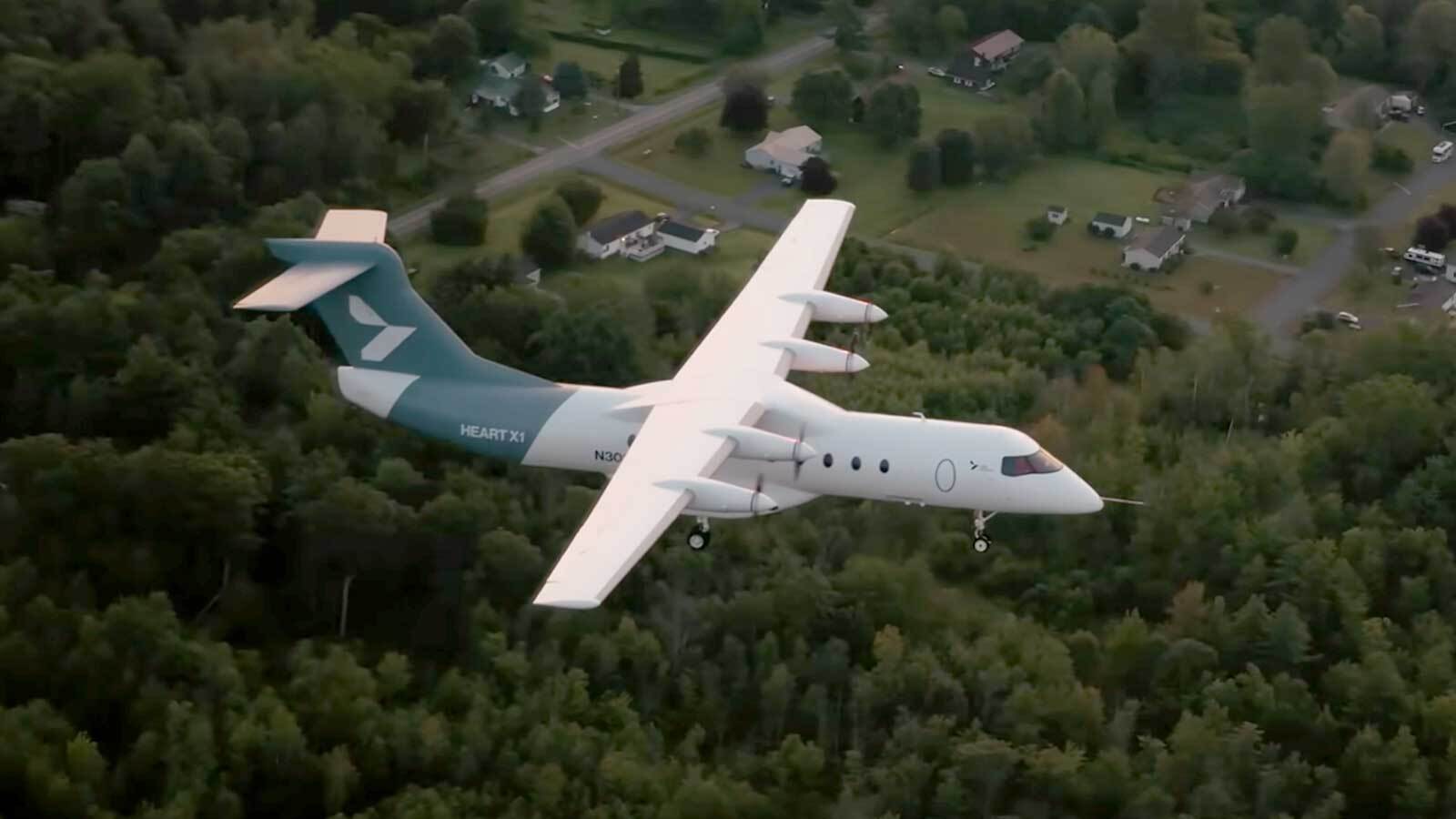
Heart Aerospace’s X1 demonstrator has completed a 27-minute piloted flight with its battery-electric propulsion system delivering more than one megawatt of power. The August 12 flight at Plattsburgh International Airport in New York moved Heart’s electric-aircraft work from a ground-test program into full-scale flight testing, but it did not establish the range, certification readiness or operating economics of the company’s planned passenger aircraft.
The X1 operated under a Federal Aviation Administration Special Airworthiness Certificate in the Experimental Category. Its test profile included taxi, takeoff, climb, maneuvering and landing, and the aircraft reached 1,100 feet above ground level before returning to the airport.
That sequence matters because the first flight exercised the demonstrator through the basic phases needed to begin evaluating an integrated aircraft rather than an isolated motor, battery pack or laboratory powertrain. At more than 11,339.8 kilograms, with a 32.3-meter wingspan and a nose-to-tail length of 23.1 meters, X1 gives Heart a full-scale platform for examining how its electrical propulsion, aerodynamics and aircraft-level systems behave together.
Heart calls X1 the largest battery-electric aircraft yet flown. Its dimensions and weight support the company’s emphasis on commercial-aircraft scale, although the record claim has not been independently verified.
Experimental flight is not transport-aircraft certification
The authorization used for X1 testing should not be confused with approval to carry paying passengers in airline service. An Experimental-category certificate permits a defined flight-test program; Heart’s intended production aircraft, the ES-30, is being developed for FAA Part 25 certification as a transport-category airplane.
That transition substantially raises the engineering burden. The ES-30 will have to address the broader set of design and compliance requirements applicable to passenger aircraft, including the standards governing electrical equipment and installations under Part 25. A successful demonstrator sortie is therefore an input to the certification program, not evidence that the production configuration already satisfies those requirements.
The distinction is especially important because X1 and ES-30 are not presented as identical aircraft. X1 flew entirely on battery power, while the planned 30-seat ES-30 is a hybrid-electric regional airliner. The demonstrator can help Heart validate technologies, flight behavior and its ability to design, build and operate a large electric aircraft. The production program must still convert that experience into a certifiable configuration with commercially useful endurance and repeatable operating performance.
The $5 figure covers electricity, not the flight
Heart said X1 consumed approximately $5 worth of electricity during its first flight. That is a narrow energy-expense figure for one 27-minute test mission. It does not include aircraft acquisition, battery replacement, maintenance, flight and ground crews, airport charges, insurance, scheduled downtime or the infrastructure required to charge and support a fleet.
The same boundary applies to Heart’s forecast that the ES-30 could reduce aircraft operating costs by more than 40% compared with legacy regional aircraft. The company attributes the projected advantage to lower energy expenses, simplified electric propulsion, electrified systems and improved aircraft availability. None of those fleet-level economic claims was demonstrated by X1’s first flight.
Endurance remains another open question. The initial mission established that the aircraft could complete a basic piloted flight profile while supplying megawatt-class electrical power, but the disclosed results do not provide a demonstrated commercial range, payload capability, dispatch reliability rate or battery-life profile. Those are central to determining whether an electric or hybrid-electric design can fit airline schedules without surrendering its energy-cost advantage to charging time, maintenance requirements or limited utilization.
Heart is now developing the first pre-production ES-30 at its pilot manufacturing plant in Los Angeles. The company schedules ES-30 flight testing for 2028 and targets entry into service in 2031, with United Airlines, Air Canada and JSX identified as prospective buyers. Those dates and customer plans remain forward-looking program targets.
X1 has cleared a meaningful first gate: a full-scale, battery-powered aircraft completed taxi, takeoff, climb, maneuvering and landing while its propulsion system exceeded one megawatt. The more consequential test begins with the pre-production ES-30, where Heart must turn that integrated demonstration into measurable endurance, a Part 25 compliance program and airline operating data.
| More aerospace and engineering stories, right in your MSN feed. Follow AMI on MSN |
By David Whitaker — Associate editor for AMI’s aerospace and drone systems desk, translating flight systems, aircraft programs, spaceflight, and UAV developments into accessible technical stories.



