Lockheed’s Planned Half-Price Patriot Interceptor Drops Direct-Hit Technology
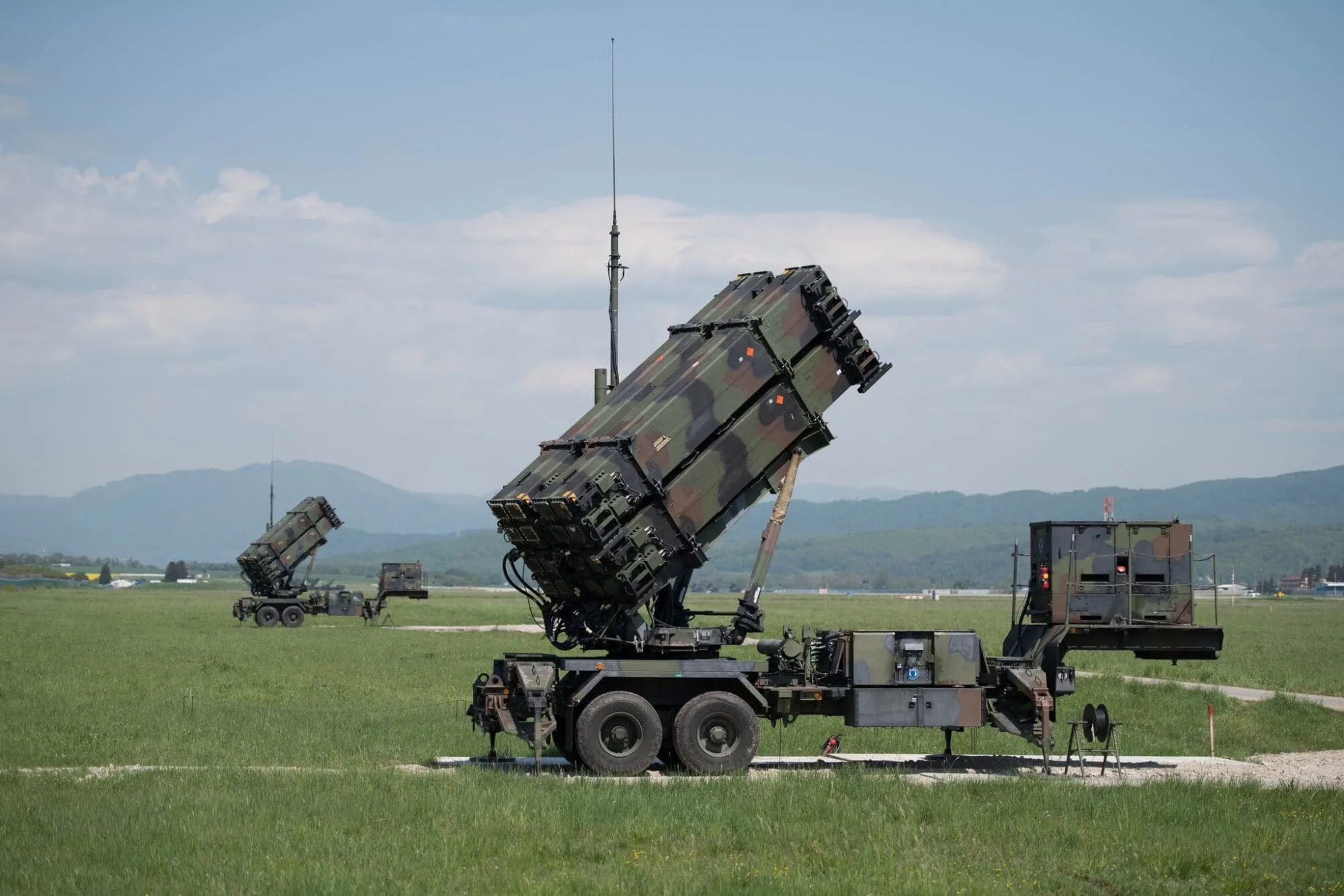
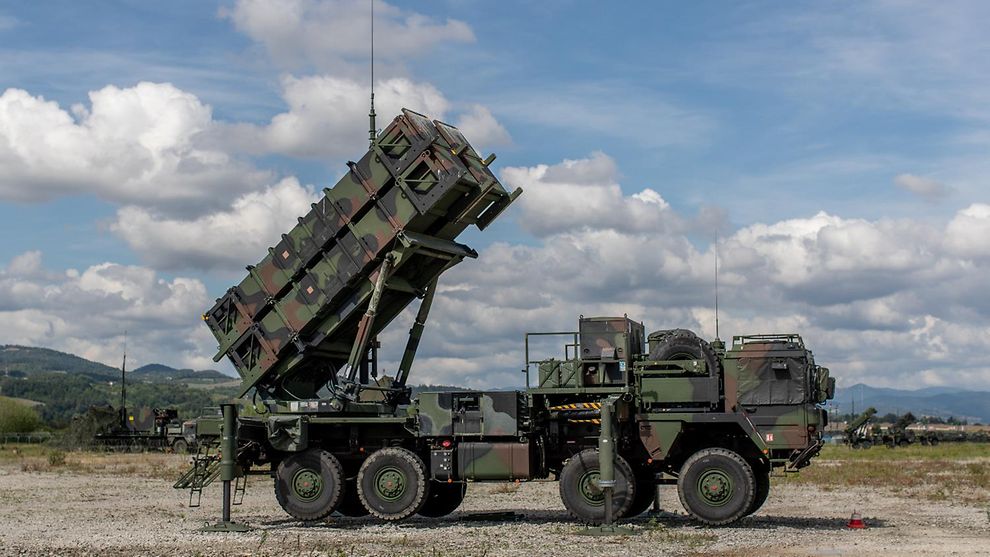
Lockheed Martin’s planned lower-cost Patriot interceptor comes with a consequential engineering trade: PAC-3 ACE is expected to cost roughly half as much as the PAC-3 MSE, but it will not use the MSE’s hit-to-kill technology. Instead of relying on a direct collision to defeat a target, the new interceptor will carry a larger conventional high-explosive fragmentation warhead.
Jason Reynolds, Lockheed Martin’s vice president and general manager of integrated air and missile defense, confirmed the change at the Space and Missile Defense Symposium in August. “We basically modified the front end, modified the back end, took out the [Attitude Control Motors], so it’s no longer hit-to-kill,” Reynolds told reporters. The company has not presented the projected reduction as a contracted unit price, and the program is still years from production.
Lower cost reaches across the missile
The PAC-3 ACE design reduces complexity in propulsion, control, sensing and the warhead section. Its single-pulse solid-fuel motor replaces the PAC-3 MSE’s dual-pulse motor. The midsection and seeker will be simplified, while the existing guidance system and software will remain or provide the foundation for adapted versions.
Lockheed Martin is also removing the Attitude Control Section and its small control motors. On PAC-3 MSE, that hardware provides the rapid maneuvering authority associated with hit-to-kill interception. Removing it cuts a specialized subsystem from the missile, but it also changes the basic interception method.
ACE will replace the MSE’s 7-kilogram Lethality Enhancer with a larger high-explosive fragmentation warhead. The Lethality Enhancer is not the MSE’s primary kill mechanism; it supplements the destructive effect of a direct impact. ACE instead will depend on its conventional warhead to produce the damaging effect near the target.
That does not by itself establish how ACE will perform against each target category. Flight testing has not yet supplied a complete performance comparison with PAC-3 MSE, and Lockheed Martin has not disclosed detailed effectiveness figures. Reynolds has said the new missile will integrate with existing munitions systems at reduced range. Its eventual operating envelope, interception reliability and suitability for particular threats will depend on development and testing.
A production benefit that will take years
The redesign can ease manufacturing demands because it eliminates or simplifies several technically demanding components. A single-pulse motor is less complex than the MSE’s advanced two-pulse propulsion system, while removing the attitude-control motors also reduces the number of propulsion products required for each round. Simplifying the seeker and midsection can further reduce parts, assembly work and inspection requirements, although Lockheed Martin has not published a detailed production-cost breakdown.
Those changes matter because propulsion and other specialized missile components are among the constraints on expanding interceptor output. L3Harris, which supplies PAC-3 MSE propulsion hardware, is separately preparing to nearly triple production across products that include the two-pulse motor, attitude-control motors and Lethality Enhancer. That expansion supports the existing MSE rather than demonstrating that ACE is ready to enter manufacturing.
The United States is also funding a major increase in the current interceptor’s output. A seven-year PAC-3 MSE contract action announced by Lockheed Martin has a total potential value of $58.62 billion and is intended to help triple production capacity by the end of 2030. In Camden, Arkansas, the company plans to increase employment associated with final interceptor production from about 1,200 people to approximately 1,850.
That parallel investment shows why ACE should not be treated as an immediate replacement for MSE. The United States is expanding production of the established direct-hit interceptor while Lockheed Martin develops a less complex option that could support a broader mix of inventory and cost points. Whether customers procure ACE, and in what quantities, remains unresolved.
The first flight is still ahead
PAC-3 ACE is not expected to make its first flight before early 2028. Serial production is scheduled to begin 18 months after that milestone, which would place the planned manufacturing start around the end of the decade if development remains on schedule.
The program therefore offers no short-term cure for current interceptor supply constraints. Its claimed cost advantage still has to survive flight testing, customer evaluation, contracting and production qualification. For Patriot operators, the proposed bargain is now clearer: fewer complex propulsion and control components and a projected price around half that of PAC-3 MSE, purchased by giving up direct hit-to-kill interception and waiting years for the alternative to reach a production line.
| More aerospace and engineering stories, right in your MSN feed. Follow AMI on MSN |
By David Whitaker — Associate editor for AMI’s aerospace and drone systems desk, translating flight systems, aircraft programs, spaceflight, and UAV developments into accessible technical stories.