Rocket Lab Wins $663 Million, but Larger Space Force Award Awaits Unflown Rocket
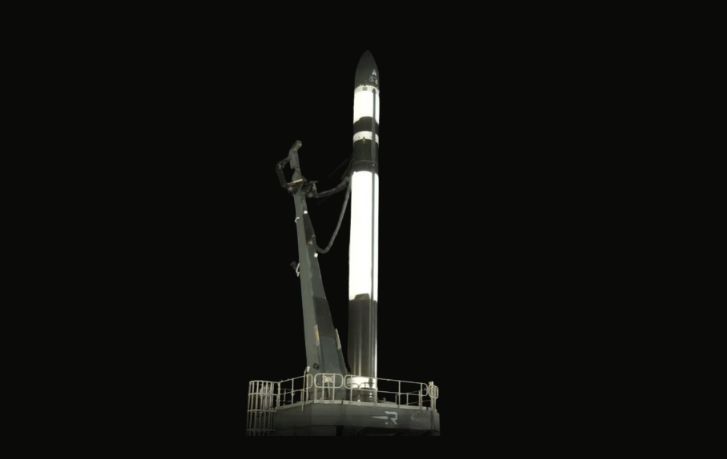
Rocket Lab secured two U.S. Space Force awards with a combined stated value of $663 million, but they do not carry the same execution risk. The larger, $397 million satellite award announced Aug. 4 depends on Neutron, a medium-lift rocket that has never flown and whose remaining 2026 debut window is narrowing.
The contrast is with a separate $266 million award announced July 27 for 12 guaranteed suborbital test launches, plus options for six more. Rocket Lab has not identified the vehicle assigned to those missions, so HASTE cannot be treated as formally selected. Still, the company already conducts suborbital work with HASTE, an Electron-derived vehicle, while Neutron remains in development.
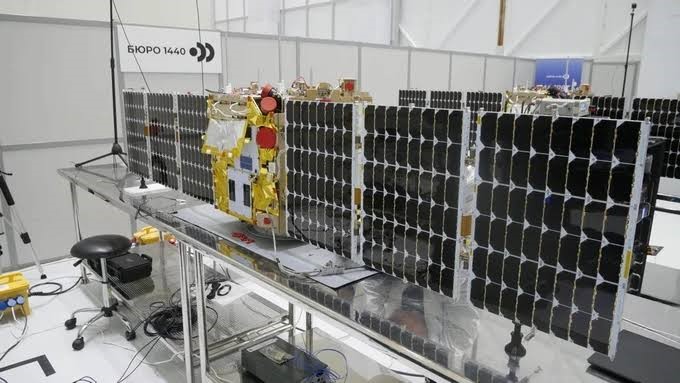
The $397 million agreement covers development, launch and operation of multiple flat-panel satellites for the Space-Based Airborne Moving Target Indicator program. The proposed system is intended to track airborne threats from orbit using satellites, communications links and ground processing. Rocket Lab says those spacecraft are slated to launch on Neutron.
One award buys an integrated system
The critical difference is scope. Rocket Lab is responsible for more than spacecraft production under the satellite award: it is also supplying the launch and operating the satellites. That vertical integration can reduce handoffs between separate spacecraft, rocket and operations contractors, but it also concentrates schedule dependencies inside one provider.
If Neutron is late, Rocket Lab could continue some satellite design, manufacturing and ground-system work. It could not complete the planned launch portion on Neutron until the vehicle is ready. No launch dates for the satellite program have been announced, so a specific program delay cannot yet be calculated. The defensible conclusion is narrower: Neutron’s schedule now sits on the larger award’s critical execution path.
Rocket Lab previously expected Neutron to debut in 2025 and later targeted late 2026. On Aug. 10, the company said first-stage tank production remained aligned with delivery of the rocket to its Virginia pad in the fourth quarter, but cautioned that the window for an end-of-year launch was narrowing. Delivery to the pad would not itself constitute flight readiness; integrated stage checks and a static-fire test would still have to follow.
That distinction matters in government procurement. A first flight demonstrates whether a complete vehicle can operate as an integrated system, while qualification work is intended to establish that structures, propulsion and other subsystems meet their requirements. Rocket Lab has said it is balancing the speed of reaching flight one against preparing Neutron for production and a sustained launch cadence. That may improve the vehicle’s usefulness after debut, but it can also put pressure on the inaugural schedule.
The smaller award starts from a more mature base
The $266 million Rocket Systems Launch Program contract supports missile-defense testing from a new Rocket Lab site at the Pacific Spaceport Complex-Alaska on Kodiak Island. The first mission could occur as soon as the end of 2026. The award guarantees 12 suborbital launches and includes options that could raise the total to 18.
Although the assigned rocket remains unconfirmed, Rocket Lab’s current suborbital missions use HASTE. Electron and HASTE collectively completed 21 missions in the prior year with a reported 100% success rate. That record does not guarantee execution of the Alaska contract, which also requires a new launch site and associated operations, but it gives Rocket Lab an existing hardware and operating base that Neutron does not yet have.
The procurement structures also serve different Space Force needs. Repeated suborbital launches provide test capacity, while the satellite agreement is part of a broader effort to evaluate competing orbital-sensing approaches. In its official Aug. 4 announcement, Space Systems Command said three fixed-price agreements totaling $615 million were intended to diversify suppliers and mature multiple sensing technologies. Rocket Lab’s $397 million share is therefore one part of a multi-vendor strategy, not the entire tracking architecture.
For taxpayers and future Space Force users, the tradeoff is clear. The government is paying to broaden its industrial base and test an integrated commercial approach, rather than relying on one supplier or sensor design. In return, part of that diversification is exposed to the normal qualification and schedule uncertainty of a new launch vehicle.
The next decisive milestone is not another contract announcement. It is Neutron completing its remaining tests and reaching its inaugural flight, the point at which Rocket Lab can begin replacing schedule promises with medium-lift flight history.
| More aerospace and engineering stories, right in your MSN feed. Follow AMI on MSN |
By David Whitaker — Associate editor for AMI’s aerospace and drone systems desk, translating flight systems, aircraft programs, spaceflight, and UAV developments into accessible technical stories.