Russia’s Rassvet Loses One Satellite as Two More Drift Toward Reentry
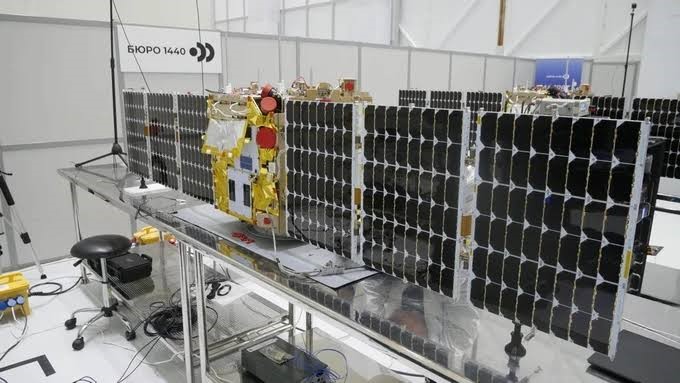
One spacecraft in Russia’s planned Rassvet broadband network has already reentered the atmosphere, and two more remain in low, decaying orbits. The visible deployment problems are emerging before Bureau 1440 plans to begin service in 2027 and build a fleet of roughly 292 operational satellites by the end of that year.
Tracking data confirm the losses and altitude shortfall, but they do not identify a cause. Rassvet-3 No. 4, cataloged as NORAD 68363, did not raise its orbit after launching with the first operational batch on March 23. It reentered on June 6. As of August 25, no orbit-raising maneuvers had been observed from Rassvet-3 Nos. 17 and 23, cataloged as NORAD 100083 and 100089, following their July 19 deployment.
Why an orbit near 290 kilometers is difficult to hold
Nos. 17 and 23 were still circling Earth at an average altitude of roughly 290 kilometers, with orbital low points near 277 kilometers. Their trajectories were gradually decaying, leaving them at risk of eventual atmospheric reentry unless they begin maneuvering to a more sustainable altitude.
At those heights, a satellite still encounters traces of Earth’s upper atmosphere. That drag steadily removes orbital energy, and the effect grows as the orbit descends into denser atmospheric layers. The exact decay rate can vary, so the available tracking does not establish a reentry date. It does show that the spacecraft cannot remain indefinitely in their present trajectories without raising orbit.
The missing maneuvers could reflect a problem involving propulsion, spacecraft integration, power, guidance or mission operations. None of those possibilities has been confirmed. Public orbital observations reveal what the satellites have or have not done, but not whether their propulsion systems are unavailable, whether controllers have delayed their use or whether another spacecraft condition is preventing maneuvers.
The altitude gap extends beyond two satellites
The investigation is not limited to the two lowest spacecraft. Bureau 1440 has advertised an orbital height of approximately 800 kilometers, yet most Rassvet-3 satellites that have raised their orbits are at roughly 500 to 550 kilometers, with several others lower. Available information does not explain why the fleet has stopped short of the announced altitude or whether the lower positions are temporary, revised operating orbits or signs of incomplete orbit raising.
That distinction matters. An intentional 500-to-550-kilometer operating shell would not itself indicate a failure; SpaceX operates many Starlink satellites around 550 kilometers. But an unexplained gap between an announced 800-kilometer destination and the tracked fleet leaves a central program question unresolved: Are the spacecraft proceeding through a longer deployment sequence, or has the constellation’s orbital plan changed?
Starlink also illustrates why onboard propulsion is integral to a low-Earth-orbit broadband network rather than an optional accessory. Its satellites use electric thrusters for orbit adjustment, station keeping and eventual disposal. Rassvet’s propulsion design and spacecraft status are not established here, so Starlink cannot identify the cause of the Russian satellites’ behavior. It does provide the relevant operational benchmark: large constellations depend on repeatable orbit raising and replenishment across many spacecraft and launches.
Small losses can become a schedule problem
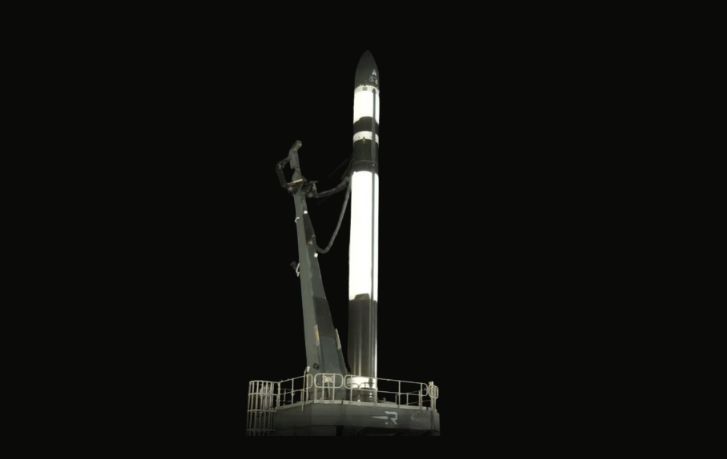
Bureau 1440 has launched two operational Rassvet-3 batches in 2026, both aboard Soyuz-2.1b rockets. Losing one satellite and potentially two more would not by itself prevent a 292-spacecraft constellation. The larger concern is repeatability. If similar orbit-raising problems recur across later batches, the program would need additional spacecraft and launch capacity merely to replace losses while continuing to expand coverage.
Constellation schedules absorb isolated failures more readily than conventional missions because many satellites share the workload. That resilience, however, depends on production volume, launch cadence and predictable commissioning. Each spacecraft that fails before reaching a useful orbit consumes a manufactured satellite and a launch slot without adding sustained network capacity.
The next decisive evidence will come from the orbits themselves. A sustained climb by Nos. 17 and 23 would show that they retained some maneuvering capability; continued decay would narrow their recovery window and make reentry increasingly difficult to avoid. At the same time, the rest of the fleet must either resume climbing toward the announced 800-kilometer altitude or establish that roughly 500 to 550 kilometers is now the intended destination. Until one of those patterns becomes visible, Rassvet’s nearly 300-satellite deadline rests on a deployment process that has already produced one confirmed loss and left two more spacecraft descending.
| More aerospace and engineering stories, right in your MSN feed. Follow AMI on MSN |
By David Whitaker — Associate editor for AMI’s aerospace and drone systems desk, translating flight systems, aircraft programs, spaceflight, and UAV developments into accessible technical stories.