Army’s $58.6 Billion Patriot Deal Targets 2,000 Missiles a Year, Funding Unsettled
A $58.6 billion ceiling is not the same as $58.6 billion ready to flow into missile factories. The U.S. Army’s seven-year Patriot interceptor award gives Lockheed Martin a longer planning horizon, but the Army said no funds were obligated when the action was announced July 29.
The award replaces a one-year, $4.7 billion action issued in April with a seven-year framework supporting planned procurement from fiscal 2026 through 2032. A contract modification of approximately $53.86 billion raises the total not-to-exceed ceiling to about $58.62 billion. Exact terms and many delivery dates remain under negotiation.
That distinction matters because the ceiling describes the government’s maximum potential commitment under the framework, not money already appropriated or a guaranteed purchase of a fixed quantity. Congress still must provide funding, and subsequent negotiations must convert the broad framework into defined production orders and delivery schedules.
A longer demand signal can unlock factory investment
The industrial logic is straightforward. Missile factories, component suppliers and skilled workforces cannot expand efficiently around isolated annual orders. A seven-year demand signal gives Lockheed and its vendors a stronger basis for ordering raw materials, adding tooling, hiring workers and expanding facilities whose costs must be recovered over multiple production lots.
Lockheed plans to triple production capacity for the Patriot Advanced Capability-3 Missile Segment Enhancement interceptor by the end of 2030. Its previously announced target is annual output of 2,000 interceptors. The company also plans to increase employment at its final-assembly operation in Camden, Arkansas, by 50%, from about 1,200 people to approximately 1,850.
Those plans sit within a broader proposed investment of $8 billion to $9 billion through 2030, covering modernization at more than 20 U.S. facilities. Lockheed has identified new munitions centers in Alabama and Arkansas as part of that expansion.
The seven-year structure improves the business case for those investments, but it does not make the 2,000-per-year rate current output. Factory capacity is also not interchangeable with completed deliveries. An interceptor production line depends on qualified components, specialized suppliers, test equipment and synchronized throughput across the supply chain. Expanding final assembly faster than critical vendors can raise their output would leave expensive capacity waiting for parts.
Appropriations and suppliers remain the controlling constraints
A House appropriations report supports seven-year purchasing authority for the Patriot interceptor and describes multiyear procurement as a route to lower unit costs, shorter timelines and capacity expansion. It also underscores the unresolved side of the deal: contract authority must be matched by funding, detailed budget justification and oversight of second- and third-tier suppliers.
For taxpayers, that creates a basic accountability test. A longer commitment can produce better pricing and more predictable manufacturing than repeated one-year buys, but only if government and industry investments translate into measurable capacity, deliveries and cost savings. The House report calls for semiannual reporting on multiyear awards, including projected versus realized savings and the effect of public and private investment on production and supply chains.
The tradeoff extends beyond the prime contractor. Predictable orders can support employment and manufacturing investment in Arkansas, Alabama and supplier communities elsewhere. Conversely, uncertain annual appropriations can leave smaller vendors facing pressure to hire or purchase equipment before firm orders arrive. The framework is intended to reduce that uncertainty, not eliminate it.
The inventory concern behind the award is substantial but not fully public. The Center for Strategic and International Studies estimates that the U.S. military holds fewer than 1,000 Patriot interceptors. That is an outside estimate, not a confirmed Pentagon inventory figure, and it should not be read as a precise count. Still, it illustrates why the planned production rate matters to the United States and allied Patriot operators competing for deliveries from the same industrial base.
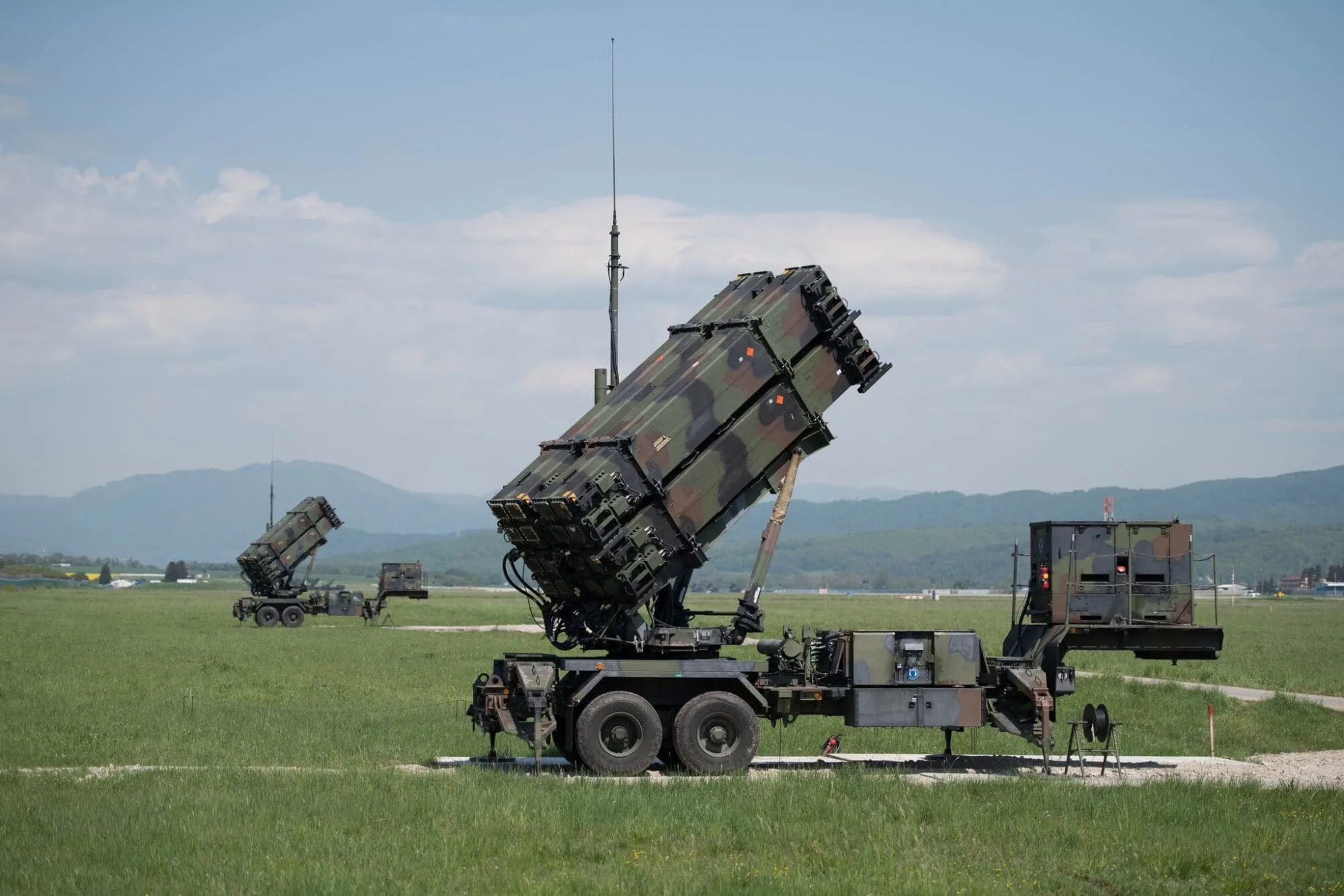
The Patriot PAC-3 MSE is a hit-to-kill interceptor used within the Patriot air-defense system against ballistic missiles, cruise missiles and aircraft. Its role makes replenishment a readiness issue, but the new contract does not resolve how future output will be divided among U.S. requirements and allied demand.
Lockheed now has a seven-year framework large enough to justify a major manufacturing expansion. The next meaningful proof will not be the ceiling itself; it will be funded orders, firm delivery schedules and evidence that suppliers can support 2,000 completed interceptors a year by the end of 2030.
| More aerospace and engineering stories, right in your MSN feed. Follow AMI on MSN |
By David Whitaker — Associate editor for AMI’s aerospace and drone systems desk, translating flight systems, aircraft programs, spaceflight, and UAV developments into accessible technical stories.