Ukraine Tests European-Backed Starlink Alternative, but Readiness Remains Unproven
Ukraine says it has begun testing a European-backed alternative to SpaceX’s Starlink, a potentially important step toward reducing its dependence on a privately controlled satellite network for wartime communications. The disclosure establishes that testing is underway, but it does not establish that the unnamed system can match Starlink’s coverage, capacity or operational availability.

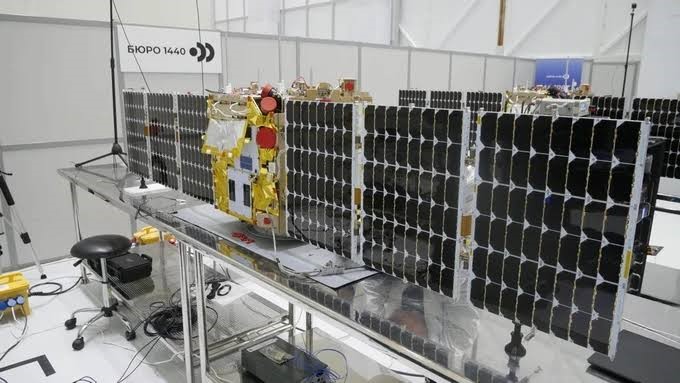
President Volodymyr Zelenskyy disclosed the project in remarks made public Sunday, August 23. He said Ukraine was implementing a similar project with a European country and added, “We have begun testing it.” He did not identify the European partner, release technical specifications or provide test results, a deployment schedule or criteria for declaring the system operational.
That gap is the central tension. Entering testing is a real development milestone, but “testing” can cover anything from checking a limited terminal connection to evaluating an integrated service under representative operating conditions. Without information about the test configuration and objectives, the alternative’s readiness cannot yet be compared meaningfully with Starlink.
Testing must answer more than whether a link works
A credible alternative has to be assessed as an end-to-end communications service, not simply as a satellite or terminal. Important questions include how much geographic coverage is available, how many users the network can support, whether connections remain stable, and how terminals, ground infrastructure and network management work together. The evidence released so far answers none of those questions.
Terminal supply and maintainability also matter. A network has limited practical value if compatible user equipment cannot be produced, distributed, powered and repaired at the required scale. Ukraine has not said whether its project uses new terminals, existing European equipment or some combination of commercial and government-owned infrastructure.
Governance may be just as consequential as hardware. Starlink is controlled outside Ukraine, and Ukraine is seeking authorization from Elon Musk and the U.S. administration to use the service for operations in Russian territory. Zelenskyy said Musk considers coverage over Russia an escalation. Whatever its eventual performance, a European-backed alternative could reduce dependence only if Ukraine also obtains dependable access rules, service authority and support arrangements. Moving from one external provider to another would not automatically eliminate the control issue.
The U.S. Space Force is confronting a related architectural problem from a procurement perspective. It recently selected five companies for connectivity demonstrations involving multiple commercial satellite networks. The effort is intended to validate common physical, electrical and data interfaces so different providers can connect to an emerging Space Data Network.
That U.S. program is not evidence of how Ukraine’s unnamed project works. It does, however, illustrate why multi-provider resilience requires deliberate interface design and on-orbit validation. Networks built by different organizations do not become interchangeable merely because they all move data through space. Common standards, compatible terminals and repeatable connection methods determine whether another provider can serve as a practical backup rather than a separate, isolated service.
A rival deadline remains an attributed claim
Zelenskyy also alleged that Russia and China are developing a Starlink equivalent and expect it to be ready by December 2026. “The Russians are building a Starlink equivalent together with the Chinese, and they believe they will have this project ready by December 2026,” he said. There is no independent confirmation here of the program, its participants, technical design or schedule, so the December target should not be treated as an established delivery date.
The two developments therefore carry different levels of certainty. Ukraine has publicly stated that its European-backed project has entered testing, although its performance remains undisclosed. The Russian-Chinese project and deadline are still an allegation attributed to Zelenskyy, without independently verified program details.
Ukraine’s next meaningful milestone will not be another declaration that tests occurred. It will be evidence defining what was tested, under what conditions, against which performance requirements and with what path to sustained service. Until those details emerge, the project represents a serious attempt to loosen Starlink dependence not a demonstrated replacement.
| More aerospace and engineering stories, right in your MSN feed. Follow AMI on MSN |
By David Whitaker — Associate editor for AMI’s aerospace and drone systems desk, translating flight systems, aircraft programs, spaceflight, and UAV developments into accessible technical stories.