Tesla Sets September 3 Cybercab Launch, but Paid Rides Remain Unscheduled
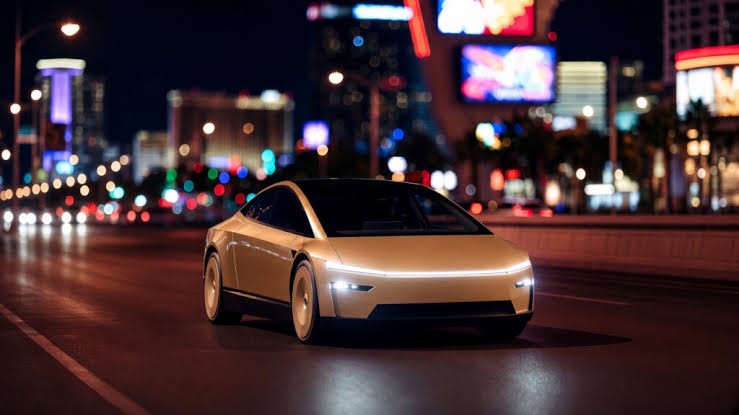
Tesla will hold a Cybercab launch event in Austin on September 3, advancing a robotaxi program built around a two-seat vehicle with no steering wheel or pedals. What Tesla has not confirmed is equally important: when the Cybercab will begin carrying paying passengers or how widely it will initially operate.

That distinction separates a product milestone from a commercial-service launch. Tesla’s Robotaxi page says Cybercab rides will be offered in the future, but it provides no public availability timeline. Prospective riders therefore know when Tesla plans to celebrate the vehicle’s launch, not when they will be able to request one for an everyday paid trip.
A different vehicle, not just another robotaxi
Tesla’s existing Robotaxi service uses Model Y vehicles in Austin and other cities in Texas and Florida. Those vehicles provide a familiar passenger-car platform while Tesla develops and operates its ride-hailing system. The company has said the Cybercab will eventually replace Model Y robotaxis and become the highest-volume vehicle in the fleet.
Cybercab changes the system boundary because it was designed specifically for autonomous ride-hailing. Its two-seat cabin omits the steering wheel and pedals, so occupants cannot assume conventional driving control if the automated system encounters trouble. That does not establish how the vehicle will perform, but it makes automated fallback behavior, operational support and emergency procedures central deployment requirements rather than supplementary features.
Public-road testing of the production version began in Austin in June. A safety monitor occupied the passenger seat during at least some testing, although Tesla has not confirmed in the available information whether that arrangement will continue into paid operation. Production has also reportedly begun in Texas, and Tesla has been preparing employees and local first responders for the program’s next phase.
Those steps show progress across manufacturing, road validation and deployment support. They do not, on their own, confirm that the vehicle is ready for unrestricted passenger service. Moving from Model Y operations to a purpose-built cabin requires Tesla to validate the complete operating system: sensing and automated-driving control, vehicle actuation, failure response, fleet supervision, passenger interaction and coordination with emergency services.
Texas authorization adds a concrete deployment threshold
Commercial operation in Texas is not defined simply by holding a launch event or placing test vehicles on public roads. Since May 28, 2026, companies commercially operating vehicles under an engaged automated-driving system must maintain an active authorization through the Texas Department of Motor Vehicles’ Automated Vehicles Regulatory Program.
The state application requires an operator to acknowledge that its vehicle can comply with applicable traffic laws, carries a required recording device and can achieve a minimal-risk condition if an automated-driving failure leaves the system unable to perform. The operator must also certify that the Texas Department of Public Safety has received a plan explaining how emergency-service personnel should interact with the vehicle.
These requirements are particularly relevant to a vehicle without manual controls. A minimal-risk condition is the system-level substitute for expecting a passenger to take the wheel, while emergency-response planning addresses what happens when outside personnel need to approach, access or manage an automated vehicle. The available information does not establish Tesla’s authorization status for Cybercab, so no conclusion can be drawn about that threshold.
Federal automated-vehicle rules are also still developing. The National Highway Traffic Safety Administration has begun work on automated-vehicle performance standards and is updating guidance around safety management, remote assistance, emergency response and post-crash behavior. Those broader changes illustrate why production readiness and deployment readiness are separate questions for unconventional vehicles, without establishing which specific federal pathway Cybercab may use.
Tesla is allowing five selected Robotaxi users to attend the September 3 celebration through a sweepstakes connected to rides completed from August 17 through August 23, with a mail-in entry option. That promotional detail confirms the event’s framing, but not the start of Cybercab passenger operations.
The next meaningful milestone will be a confirmed commercial deployment plan: when paying rides begin, where they will operate, and under what operating and safety arrangements. Until Tesla supplies those details, September 3 remains the launch of the Cybercab program’s next phase not a confirmed date for steering-wheel-free paid rides.
| More aerospace and engineering stories, right in your MSN feed. Follow AMI on MSN |
By Jonathan Barrett — Editor for AMI’s future mobility and autonomous systems section, with two decades covering robotics, e-mobility, drone-vehicle convergence, and transport mechanical systems.