Ford Hires Former Federal Safety Official After 64 Recalls Cover 13 Million Vehicles
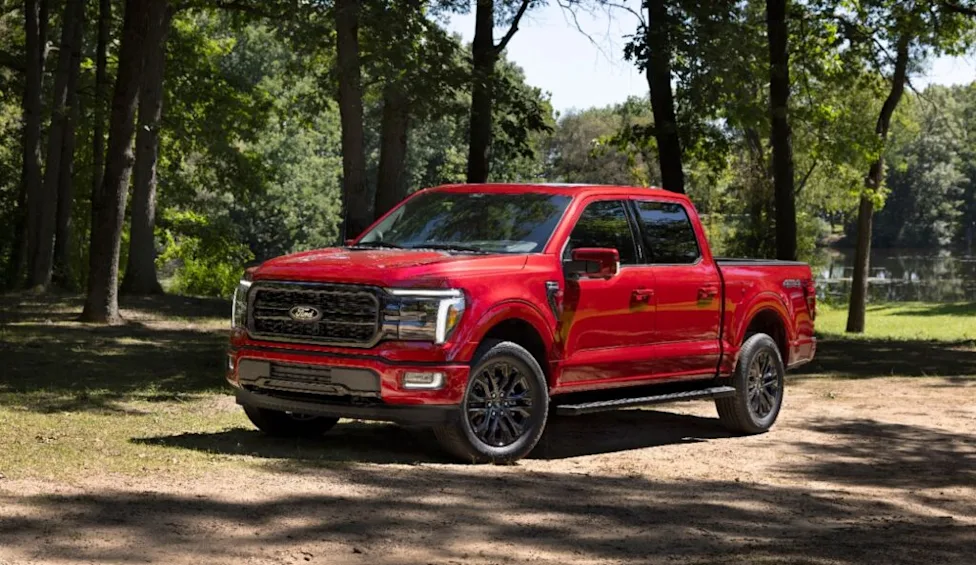
Ford has achieved an unusual split in its safety and quality measurements: It ranked highest among mainstream brands in J.D. Power’s 2026 Initial Quality Study while recording 64 recalls covering more than 13 million vehicles. The automaker is now responding at the executive level, creating its first Chief Auto Safety Officer position and appointing former federal safety official David Hines.

Hines was scheduled to begin the job on Monday, according to Ford’s confirmation of the appointment. Based in Washington, D.C., he will report to chief policy officer and general counsel Steve Croley and oversee global product-safety compliance, governance and strategy. His remit crosses engineering, digital design, quality, manufacturing, software and purchasing an indication that Ford is treating safety as a lifecycle data and systems-integration function, not solely a factory-quality issue.
The two headline measurements are not as contradictory as they initially appear. J.D. Power recorded 152 owner-reported problems per 100 Ford vehicles during the first 90 days of ownership. That study captures early experiences ranging from software and feature usability to fit-and-finish concerns.
Federal recalls answer a different question. They cover safety defects and regulatory noncompliance that may be identified long after production, potentially across several model years. A vehicle can therefore perform well during its first three months and still become part of a later campaign after engineers or regulators identify a safety-related pattern.
Software changes the meaning of recall volume
Recall totals also combine very different remedies. Ford’s largest campaign cited in the 2026 count covered roughly 4.38 million trucks and SUVs because Integrated Trailer Module software could disable trailer brakes and lighting while towing. Ford delivered the remedy through an over-the-air update rather than requiring every affected owner to visit a dealership.
Federal statistics count that remote software correction in the same broad category as a campaign requiring technicians, replacement components and service-bay time. The safety obligation is the same, but the burden on owners and the manufacturer can be substantially different.
The number of covered vehicles also does not necessarily represent the number expected to contain a defect. A Bronco fire-risk campaign included 565,691 vehicles, while Ford estimated that the wiring issue affected roughly one percent of them. Manufacturers often recall a wider population because available production and component records cannot isolate every affected vehicle with sufficient confidence.
That distinction does not make a recall inconsequential. Owners may still face uncertainty, scheduling delays and resale concerns. It does, however, show why total recalled vehicles should not be used by itself as proof that every included vehicle is defective or that Ford’s current vehicles are necessarily the industry’s worst-built.
The consent order makes traceability central
Hines arrives while Ford is implementing a federal consent order tied to a November 2024 civil penalty of $165 million. The National Highway Traffic Safety Administration found that Ford took too long to recall more than 600,000 vehicles with defective rearview cameras and supplied inaccurate information to regulators.
The resulting requirements reach well beyond issuing recall notices. Ford must develop safety-data analytics, improve investigation documentation, establish component traceability by vehicle identification number and create a new imaging test laboratory. It must also review recalls filed during the preceding three years and operate under independent monitoring for at least three years.
Vehicle-level traceability is particularly consequential. If Ford can reliably connect a component, software version, supplier batch or production change to individual vehicle identification numbers, it can define an affected population more precisely. Better records can reduce the risk of excluding vehicles that need repairs while avoiding unnecessarily broad campaigns when the defect can be bounded accurately.
The review of a 255,000-vehicle Focus campaign illustrates the documentation challenge. Ford said it could not establish that a repair from 2018 had been completed. In a safety system, performing a remedy and proving that it was performed are separate requirements; both depend on durable records that remain accessible years later.
Hines brings more than 13 years of experience at NHTSA, most recently as director of its Office of Crash Avoidance Standards. His work included developing federal vehicle-safety standards and directing research involving automated-driving and driver-assistance systems. Earlier in his career, he worked as a design engineer for Ford and Visteon and participated in development of the Ford 500 and Freestyle.
Ford has not publicly reduced Hines’ assignment to any single recall or compliance case. The documented scope is broader: coordinating safety decisions across disciplines that often use different databases, timelines and definitions of risk. The practical test will be whether those functions can identify defect patterns sooner, preserve an auditable engineering record and define recall populations with enough precision to protect owners without casting an unnecessarily wide net.
| More aerospace and engineering stories, right in your MSN feed. Follow AMI on MSN |
By Thomas Caldwell — AMI’s senior editor for mechanical and mobility engineering, covering vehicle electronics, systems integration, electrification, chassis systems, propulsion, and safety policy.