


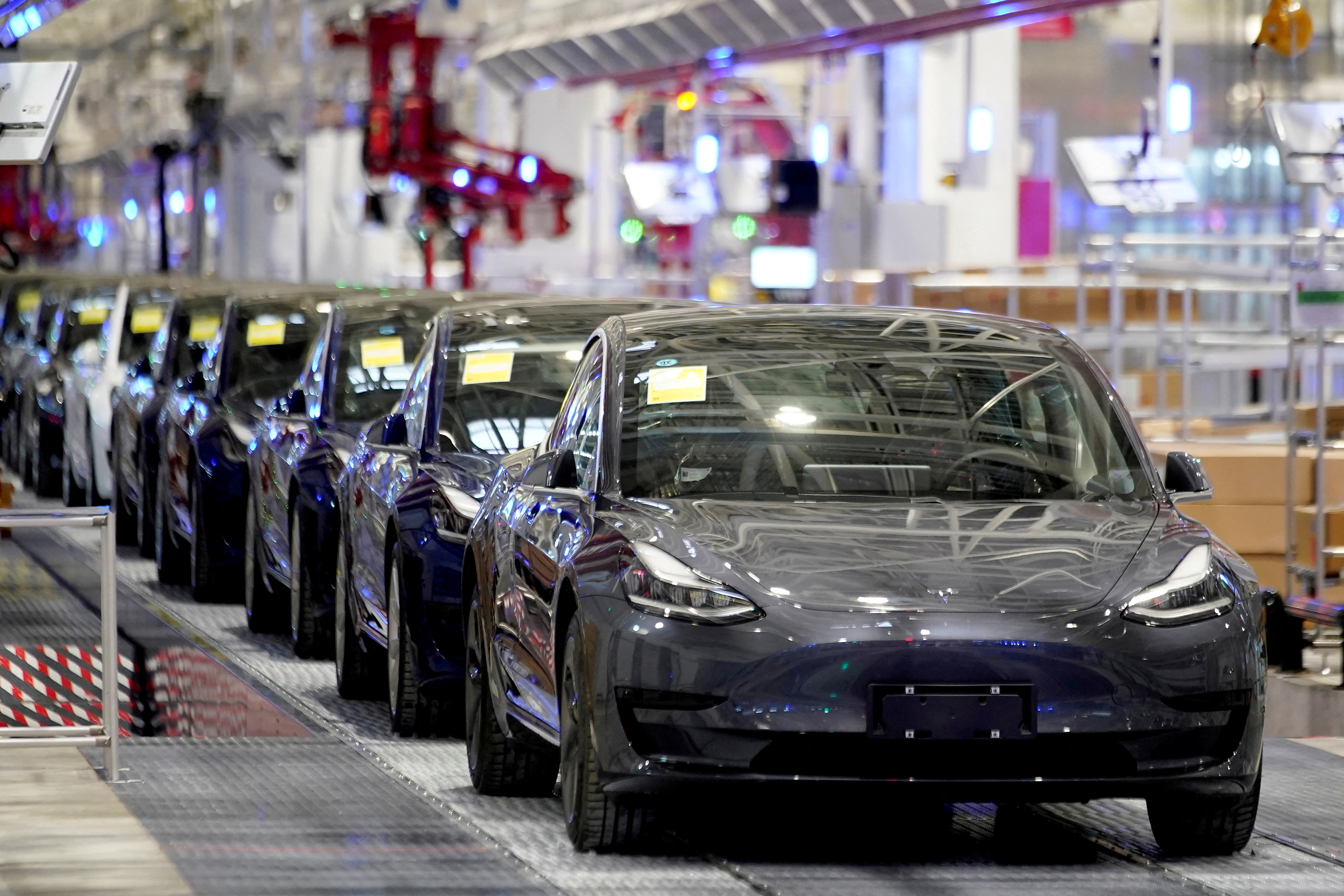
Tesla and Eight Automakers Recall 4.3 Million Cars in China Over Emergency Access
Flush electronic door handles offer automakers a cleaner body surface and a modest aerodynamic benefit. The same design can become an emergency-access problem, however, if a collision or another interruption removes the electrical power needed to operate the normal release. That tension now sits behind a recall of about 4.3 million vehicles from Tesla and eight other automakers in China.
The action, described by Reuters as the largest automotive recall in Chinese history, covers approximately 2.98 million Tesla vehicles. Xiaomi, Leapmotor and Xpeng are undertaking their largest recalls on record. The concern is not that every handle has failed, but that occupants or rescuers could have difficulty opening affected doors when power is unavailable and time is limited.
A small aerodynamic gain creates a safety-system dependency
Conventional handles provide an obvious physical interface: a user finds the handle, applies force and operates a mechanical linkage. Hidden or flush-mounted designs can instead depend on sensors, switches, powered actuators or electrically operated latches. That arrangement reduces protrusions and supports the smooth exterior surfaces favored on many electric vehicles, but it also makes the door part of a larger electrical and control architecture.
Mechanical emergency releases can provide a backup, yet their presence alone does not guarantee effective access. Location, visibility, labeling and consistency across seating positions all affect whether an unfamiliar passenger can find and operate a release under stress. Front and rear doors may also use different arrangements, increasing the human-factors burden at precisely the moment when occupants have the least time to interpret an unfamiliar mechanism.
The U.S. Fire Administration advises electric-vehicle owners to identify the mechanical release for every seating position before an emergency. Its door-release safety guidance notes that releases can be near a handle or window switch, beneath a cover or behind interior trim. That variation also matters to emergency responders, who may encounter several brands and model years at one scene without a standardized external access method.
Labels and software address different parts of the problem
Recall remedies include warning labels and, in at least some vehicles, over-the-air software updates. Labels can make a manual release easier to identify without requiring extensive door-hardware replacement. Their effectiveness still depends on placement, contrast, lighting and whether an occupant understands the instruction during a high-stress event.
Tesla told China’s State Administration for Market Regulation that its remedy includes labels and a remotely delivered update designed to lower the vehicle’s windows automatically after a collision. An open window may provide another route for communication or access, but the stated remedy should not be interpreted as eliminating every power-loss scenario. Software still depends on the relevant sensors, control modules, communication paths and available electrical energy functioning long enough to complete the commanded action.
This distinction is important because emergency egress and emergency entry are related but separate requirements. A clearly marked interior mechanical release may help an occupant leave, while a rescuer outside still needs an identifiable and operable way to open the door. A robust design therefore has to consider power loss, physical deformation, low visibility, unfamiliar users and access from both sides of the vehicle.
China is moving from recalls to a design rule
China plans to prohibit the relevant electronic-handle design beginning in 2027, requiring physical release mechanisms inside and outside new vehicle designs. That approach moves beyond correcting millions of existing vehicles and changes the design boundary for future products: styling and aerodynamic integration cannot remove an accessible mechanical path for emergency operation.
No comparable U.S. recall has been announced. Reuters reported that the Chinese action does not cover Teslas in the United States, and the National Highway Traffic Safety Administration said automakers had not notified it of plans for a similar recall. The agency has said it will consider new safety standards addressing occupant entrapment during electrical failures.
For the U.S. market, the developing issue is less about one brand than about whether emergency releases should be standardized for recognition, location and operation across vehicles. China’s 2027 requirement establishes a clear hardware baseline. The U.S. response remains at the rulemaking stage, leaving automakers to balance flush-body design with a fundamental requirement that becomes most important after the electrical system can no longer be assumed to work.
| More aerospace and engineering stories, right in your MSN feed. Follow AMI on MSN |
By Thomas Caldwell — AMI’s senior editor for mechanical and mobility engineering, covering vehicle electronics, systems integration, electrification, chassis systems, propulsion, and safety policy.



