


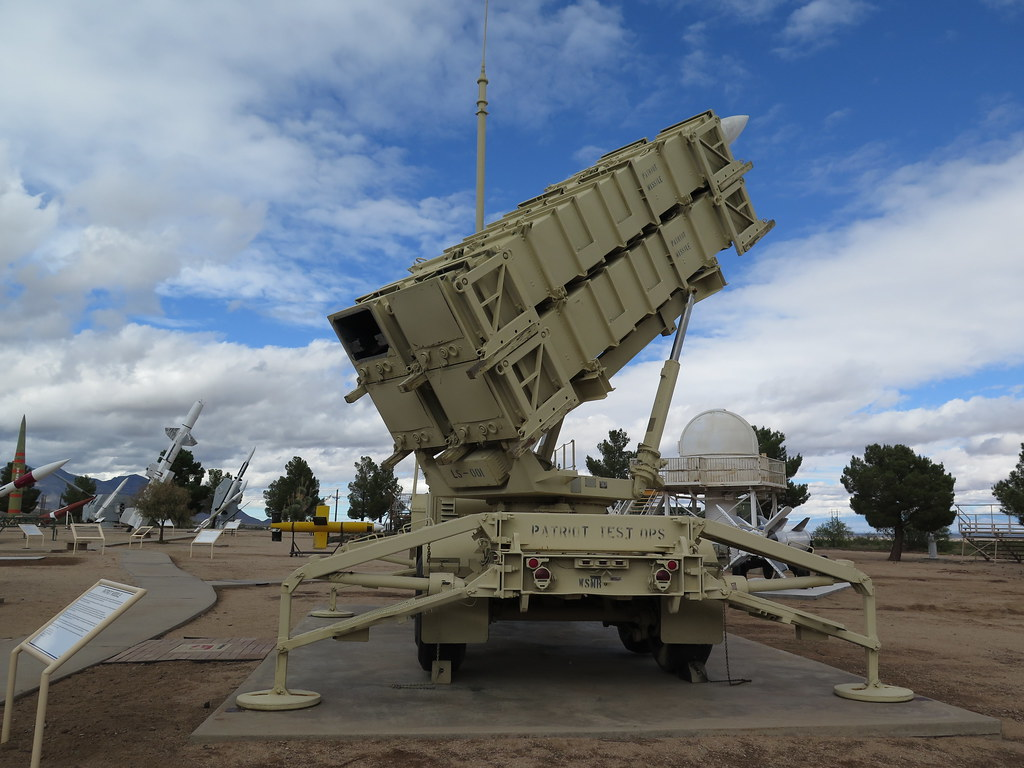
Taiwan’s 102 Patriot Missiles Face Delays as U.S. Replaces Depleted Inventory
Taiwan expected 102 U.S.-made Patriot interceptors this year. It may not receive the full order soon, even as nearly US$30 billion in approved American weapons remains undelivered. The immediate pressure is a collision between heavy missile use in the Iran war, U.S. replenishment needs and existing commitments to allies across several regions.

A Taiwanese official told The Washington Post that deliveries of Patriot Advanced Capability-3 interceptors were expected to be significantly delayed because the Pentagon had depleted much of its inventory in the Middle East. That is an attributed warning, not a publicly announced revision to Taiwan’s contracts or delivery schedule.
The distinction matters. Taiwanese defense officials told the Legislative Yuan in March that they still expected the 102 Patriot missiles during the year. Jennifer Kavanagh of Defense Priorities subsequently assessed that Taiwan was unlikely to receive its full order of roughly 100 missiles soon, with rebuilding U.S. inventory likely to come first and continued support for Gulf allies also competing for available production.
A backlog larger than one missile order
Taiwan’s approved but undelivered U.S. weapons total nearly NT$965.5 billion, or US$30 billion, according to the Taiwan Security Monitor. That backlog includes NT$28.4 billion in Patriot missiles as well as High Mobility Artillery Rocket System launchers and munitions.
The Patriot issue therefore sits inside a broader delivery pipeline rather than an isolated shipment. An approved sale establishes the customer, configuration and funding path, but it does not create finished hardware. Interceptors still must move through supplier contracts, component production, assembly, testing and government acceptance. When the U.S. military and several foreign customers need the same limited product, inventory allocation can become as consequential as factory output.
Missile production is particularly difficult to accelerate because the industrial chain includes specialized propulsion, electronics, energetic materials and safety-critical processes. Manufacturers cannot add qualified capacity as quickly as demand can rise. A CSIS assessment of the U.S. munitions industrial base cites manufacturing lead times of 25 to 51 months for some advanced missiles and interceptors. It also notes that framework agreements still require appropriations, company investment and executable contracts before planned capacity becomes delivered hardware.
Production is expanding, but demand is moving too
The Pentagon’s fiscal 2027 requests show the intended scale of the response. Requested Patriot PAC-3 Missile Segment Enhanced interceptors increased from 341 in fiscal 2026 to 3,203 in fiscal 2027. Requests are not deliveries, however, and a rapid budget increase does not erase existing lead times or instantly expand every supplier in the chain.
Northrop Grumman announced in August that it had signed two multiyear framework agreements totaling more than $3 billion, including a $2 billion agreement covering PAC-3 MSE solid rocket motors and ignition-safety devices. The company said the investment supports an Army plan to raise annual PAC-3 MSE production from roughly 600 missiles to thousands in the near term. It also plans to triple production capability at its Allegany Ballistics Laboratory by 2027.
Those investments address a real bottleneck, but they illustrate the timing problem confronting Taiwan. New facilities, tooling and supplier capacity improve future throughput; they do not necessarily replace expended interceptors in time to protect previously expected delivery windows. Production growth must also serve U.S. forces and other allied customers rather than Taiwan alone.
Pressure is appearing elsewhere in Asia
The same competition extends beyond Patriot. The Financial Times reported that delivery of 400 Tomahawk cruise missiles to Japan could slip by as much as two years, although Japan’s defense minister said in May that its fiscal 2025-to-2027 acquisition plan remained on schedule. The differing accounts underscore that reported industrial pressure should not be treated as a confirmed schedule change without a formal customer or Pentagon announcement.
Readiness effects are also reaching training calendars. The U.S. military canceled participation in a joint amphibious exercise scheduled for September in South Korea, with force availability constrained by demands associated with the Iran conflict. That does not establish a permanent regional shift, but it shows that simultaneous commitments can consume personnel and operating capacity as well as munitions.
Mark Cancian of CSIS said war games conducted since 2023 found that a Taiwan defense scenario would probably exceed current Pentagon supply plans and exhaust many critical weapons within weeks. For Taiwan, the unresolved question is now concrete: whether expanding U.S. factories can replenish American inventory while still delivering the 102 Patriot interceptors Taipei was told to expect this year.
| More aerospace and engineering stories, right in your MSN feed. Follow AMI on MSN |
By David Whitaker — Associate editor for AMI’s aerospace and drone systems desk, translating flight systems, aircraft programs, spaceflight, and UAV developments into accessible technical stories.



