Navy Ordered to Plan Doris Miller Steam Catapults, With Billions at Stake
The U.S. Navy has been ordered to plan a return to steam catapults on the unfinished USS Doris Miller even though work on its electromagnetic launch and arresting systems is reportedly nearly halfway complete. The August 13 presidential directive gives the Pentagon and Navy 60 days to identify the required measures, timeline and resources. It does not approve a final conversion or establish its cost.
That distinction matters because this is not a flight-deck equipment swap. Doris Miller is the fourth Ford-class aircraft carrier, a ship designed around electrical systems rather than the steam infrastructure used extensively aboard the preceding Nimitz class. Reversing its launch architecture during construction could require substantial redesign inside the ship, with possible consequences for cost, schedule, system integration and crew requirements.
A catapult reaches deep into the carrier
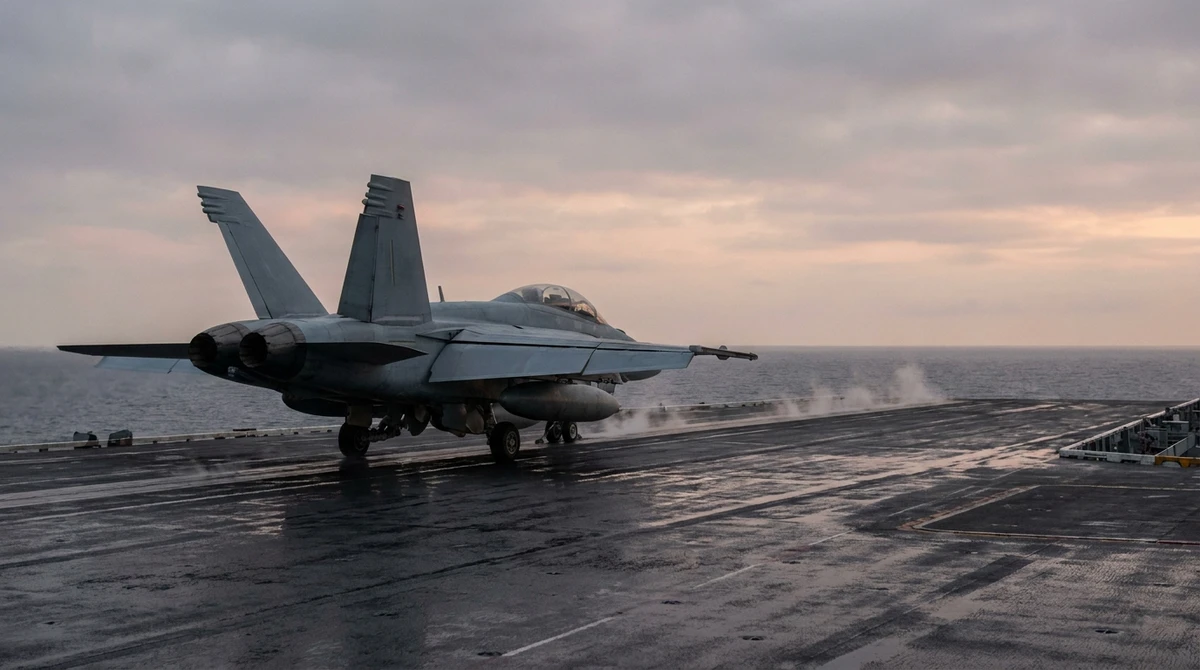
An aircraft catapult is visible on the flight deck, but much of the machinery and supporting infrastructure sits below it. The Ford class uses the Electromagnetic Aircraft Launch System, which accelerates aircraft electrically. Steam catapults instead need steam supplied and distributed to their machinery, along with different piping, controls and support arrangements.
Ford-class carriers were not laid out as Nimitz-class ships with newer catapults added on top. Their greater use of electrical power is part of a broader ship architecture. Introducing steam into Doris Miller would therefore require engineers to determine where the supporting equipment could fit, how it would connect with existing ship systems and which completed or planned sections would need modification.
General Atomics, the electromagnetic system’s manufacturer, said its production work for the catapult and arresting equipment was nearly 50% complete. The company warned of cost, schedule and integration risks if the Navy changes direction. Its commercial interest should be kept in view, but the production figure identifies the central procurement problem: some contracted work may have to be altered or abandoned before replacement equipment is designed, sourced and installed.
The industrial base would also have to reverse course
The conversion question extends beyond Newport News Shipbuilding. Bryan Clark of the Hudson Institute told Breaking Defense that the Navy has not purchased a new steam catapult in more than 20 years. In his assessment, suppliers would need upfront investment and time to restore the necessary production capability.
That creates two industrial tasks rather than one. The Navy would have to unwind part of an active electromagnetic-system supply chain while reconstituting capacity for steam hardware that has not been ordered for a new U.S. carrier in decades. Tooling, qualified suppliers, production planning and workforce availability could all affect the schedule, although no official plan has yet quantified those requirements.
A supplier restart is also different from maintaining steam systems already installed on the Navy’s Nimitz-class carriers. Existing maintenance knowledge does not by itself establish that industry can promptly manufacture complete new catapult sets and integrate them into a Ford-class hull.
Billions are possible, but no official estimate exists
Outside assessments cited in coverage of the directive say the redesign could cost billions of dollars. That remains a projection, not an approved price. A defensible estimate would need to separate at least four categories: work already performed, redesign and engineering, new hardware and production capacity, and construction disruption at the shipyard.
The taxpayer question is therefore not simply whether steam or electromagnetic launch equipment has the lower purchase price. It is whether any benefit sought from steam would outweigh the cost of changing a partly completed ship, restarting a dormant production line and supporting a different system over the carrier’s service life.
Manpower is another unresolved tradeoff. The directive seeks a different launch technology, but the available information does not provide an official crew estimate for a steam-equipped Ford-class carrier. The Navy’s plan will need to address whether additional operation and maintenance demands would affect staffing, training and long-term support costs.
Nor does the directive settle the reliability argument. Steam catapults have a long operational history, while the Ford class has already absorbed the development cost and disruption associated with electromagnetic launch. The available information does not provide comparable official reliability data sufficient to declare either system the better choice for Doris Miller.
The 60-day plan is consequently more than an implementation schedule. It is the first required accounting of how much completed work would change, what internal redesign steam would demand, whether suppliers can build the equipment, how many sailors would be needed and what taxpayers would pay. Until those figures arrive, Doris Miller’s steam conversion remains an ordered planning exercise with a potentially multibillion-dollar consequence not a completed engineering decision.
| More aerospace and engineering stories, right in your MSN feed. Follow AMI on MSN |
By David Whitaker — Associate editor for AMI’s aerospace and drone systems desk, translating flight systems, aircraft programs, spaceflight, and UAV developments into accessible technical stories.