USS Abraham Lincoln Plans Thailand Recovery Stop After 250-Plus Days at Sea
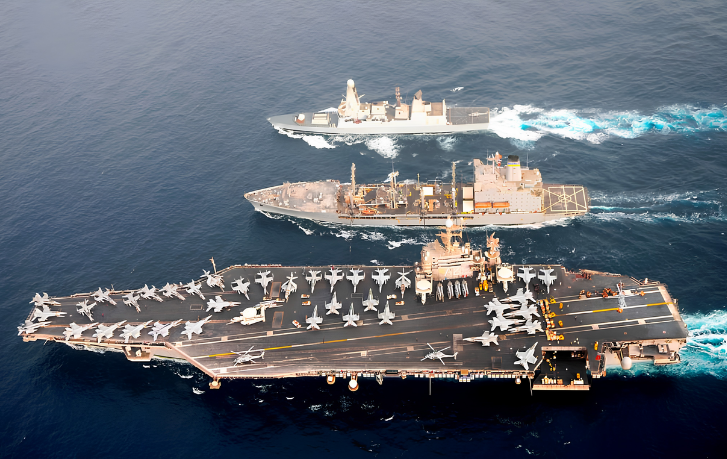
More than 250 consecutive days at sea is the number defining the USS Abraham Lincoln’s planned stop in Thailand. Thai officials said the Nimitz-class aircraft carrier is expected to visit next week for crew rest, recuperation, and logistical support before continuing toward San Diego. The stop will give roughly 5,000 personnel aboard a break after an unusually long stretch without a significant port visit.
The Lincoln recently left the Middle East after being relieved by the USS George Washington. The U.S. Navy declined to comment on the planned visit, while the U.S. Embassy in Bangkok did not immediately respond to a request for confirmation, according to Associated Press reporting on the Thai announcement.
Nuclear propulsion does not eliminate the logistics chain
A nuclear-powered carrier can remain underway for extended periods without the propulsion-fuel limits faced by conventionally powered ships. That endurance does not make the entire ship self-sustaining. Food, replacement parts, hygiene products, mail, and other stores still have to move through a supply chain, while machinery and hotel services continue accumulating operating hours.
The Navy can transfer fuel and cargo while ships are underway, a capability developed specifically to keep fleets operating far from ports. But replenishment at sea is not equivalent to a port period. It moves needed material aboard while the carrier remains an active workplace, and it still depends on the availability of supply ships, suitable conditions, inventory, and properly coordinated delivery chains.
The Navy’s top uniformed officer, Adm. Daryl Caudle, said the service needed time to establish an effective, systematic replenishment process during the deployment. He distinguished staple food availability from separate supply chains for parts and items such as hygiene products and drinks, saying those channels had to be “dialed in.” That distinction matters on a ship carrying thousands of people: cargo capacity alone does not ensure that every category of supply reaches the ship when required.
Habitability systems become readiness systems
Freshwater distribution, plumbing, sanitation, food service, ventilation, berthing, and waste handling may not attract the attention given to propulsion or aircraft operations, but they run continuously. After months at sea, their reliability directly affects whether thousands of sailors can live and work aboard the ship.
Accounts from sailors and family members have described shortages of supplies and water, plumbing problems, low morale, and worsening mental health aboard Lincoln. Those are attributed reports, not confirmed Navy findings, and the available information does not establish their causes or full extent.
A previous problem aboard another Nimitz-class carrier shows why port access can matter when a major habitability system needs extensive attention. In 2022, USS Nimitz connected to San Diego’s water supply while its potable-water system was flushed, inspected, and repeatedly tested after sailors reported a fuel-like smell and taste. The Navy later said safe water had been restored, with four of 26 tested tanks isolated from the system. That separate event does not establish what occurred aboard Lincoln, but it demonstrates how shore connections, laboratory testing, and time alongside can support work that is harder to complete while continuously underway.
Crew recovery cannot be delivered as cargo
A port visit also addresses a limit no replenishment ship can solve: sustained human workload. Carrier personnel must combine watchstanding with maintenance, inspections, training, flight operations, meals, and exercise. Even when schedules are designed around adequate sleep, unplanned work and recurring shipboard duties compete for the same hours.
The Navy’s crew-endurance policy calls for at least 7.5 hours of sleep and no more than 12 hours of work per day, according to a U.S. Naval Institute analysis of deployment fatigue. The same analysis noted that operational demands can make those standards difficult to maintain. Going ashore does not erase accumulated fatigue, but a recovery period can interrupt the continuous cycle of watches and shipboard work while providing maintenance and supply access.
Lincoln’s Thailand visit is expected to be brief, so it should not be treated as a substitute for a full maintenance period or a complete answer to reported crew-welfare concerns. Its importance is more basic: after more than 250 consecutive days at sea, even one of the Navy’s longest-endurance ships still depends on ports to restore the people, supplies, and everyday systems that make sustained operation possible.
| More aerospace and engineering stories, right in your MSN feed. Follow AMI on MSN |
By David Whitaker — Associate editor for AMI’s aerospace and drone systems desk, translating flight systems, aircraft programs, spaceflight, and UAV developments into accessible technical stories.