FAA Orders Boeing 787 Inspections Over Manufacturing Gaps and Fatigue Risk
A shim is meant to fill the space between aircraft structures before they are fastened together. If that gap exceeds its engineering allowance and the components are instead pulled together with excessive force, the resulting preload can concentrate stress around the fastener holes. Repeated flight loading may then initiate fatigue cracks at those locations.

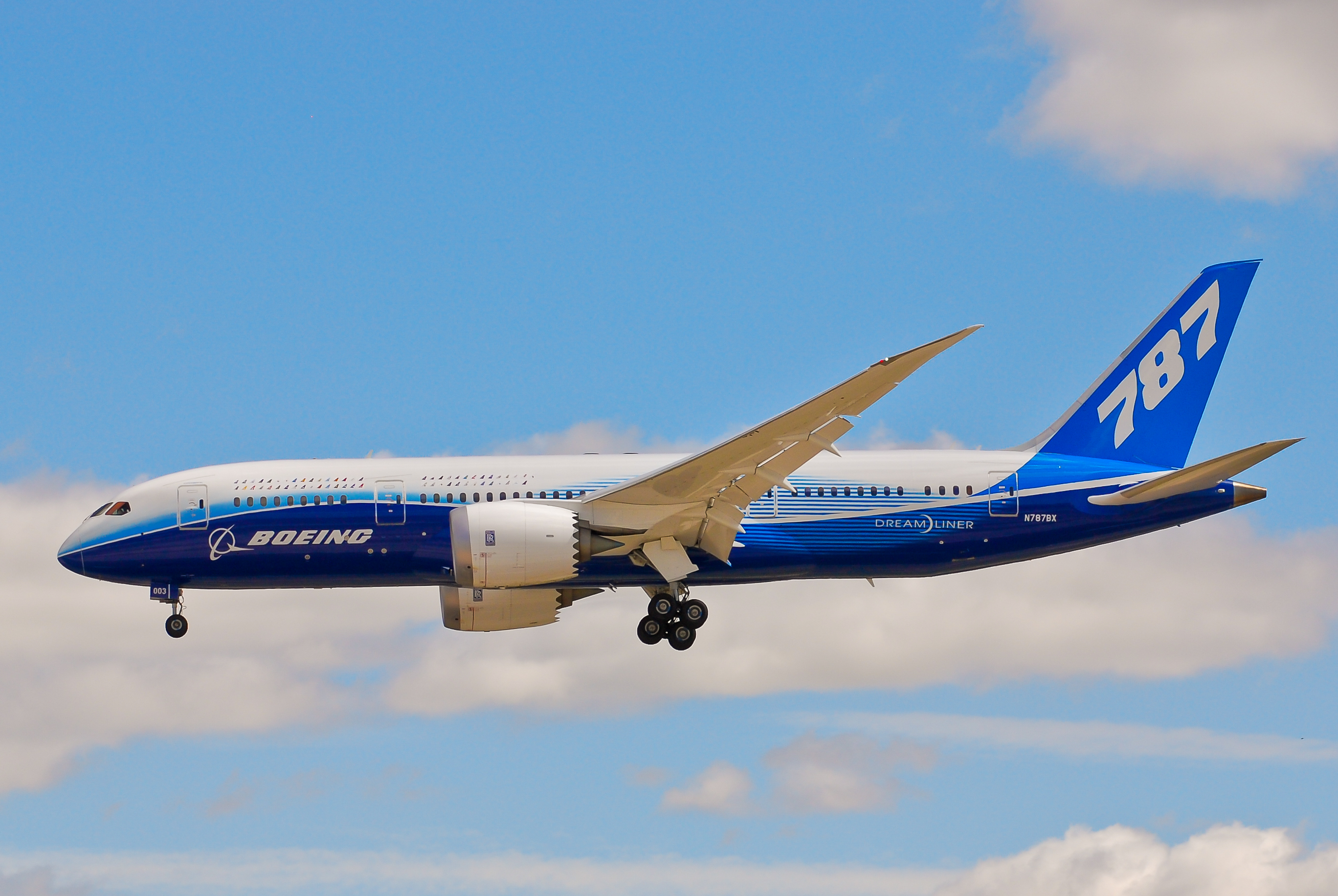
That potential mechanism not a reported wing failure prompted the Federal Aviation Administration to require preventive inspections of certain Boeing 787 Dreamliners. The final airworthiness directive, issued in August 2026 and effective October 1, covers specified 787-8, 787-9 and 787-10 aircraft. It makes Boeing’s inspection instructions mandatory for the affected operators.
The condition is in the lower side-of-body splice plates associated with the lower outboard wing skins. Boeing’s manufacturing investigation concluded that some shim gaps may have exceeded engineering allowances and that high pull-up forces used during assembly could cause fatigue cracks around fastener holes.
Why assembly preload matters after an aircraft enters service
Pulling two imperfectly fitted structures together does more than close a visible gap. It can leave residual stress in the joint before aerodynamic and ground loads are applied. Fastener holes are already geometric stress concentrators, so additional preload can reduce the margin between normal cyclic loading and the point at which a small fatigue crack begins.
This does not establish that cracks are present on every covered aircraft or that any have been discovered in service. It explains why the FAA is requiring inspections before damage can remain undetected and grow. The agency’s stated concern is that unchecked cracking could eventually weaken primary wing structure until it could no longer sustain its required limit load.
The directive applies to 17 aircraft on the U.S. registry. Reporting based on Boeing and FAA information places the worldwide population at 77 aircraft, a limited subset of a global Dreamliner fleet exceeding 1,100 airplanes. Boeing has said the underlying production issue was corrected and that aircraft may continue normal operations.
Operators face repeated structural checks, not a grounding order
Depending on aircraft configuration, operators must conduct repetitive ultrasonic inspections at specified splice plates, rear spar terminal fittings, lower chords, front spar terminal fittings and jack pads. Certain splice plates also require repeated detailed inspections. If a crack is found, the directive requires the applicable follow-up action, including repair through an approved method.
Ultrasonic inspection is important here because fatigue damage can begin around a fastener hole or within a joint where an exterior visual check alone may not reveal it. The combination of ultrasonic and detailed inspections gives maintenance teams two complementary ways to look for the condition while it remains manageable.
The inspection schedule also reflects how fatigue accumulates. Boeing’s compliance calculations combine flight hours and flight cycles rather than relying on one fixed threshold. American Airlines asked the FAA to simplify that system because its internal tracking software did not support the equations, potentially requiring manual tracking or more conservative limits.
The FAA rejected that request, saying the affected splice plates are sensitive to flight length. Both time aloft and the number of flights therefore matter to the inspection interval. The agency also concluded that a simplified limit could be more restrictive and could leave some aircraft immediately out of compliance. That decision highlights a systems-integration issue extending beyond the wing itself: maintenance planning software must accurately implement the fatigue model behind the regulation.
Cost and passenger consequences remain bounded
The FAA estimates that each inspection cycle could require up to 286 labor hours and cost as much as $24,310 per aircraft, with a maximum of $413,270 per cycle across the 17 U.S.-registered airplanes. No parts cost was assigned to the inspection itself, and the regulator lacked definitive information for estimating repairs if cracking is found. Boeing indicated that warranty coverage could reduce some operators’ costs.
No fleetwide grounding, airport disruption or airline schedule impact has been established. Passengers could encounter localized scheduling effects if an operator must position an aircraft for inspection or perform a repair, but the directive does not document such consequences. Its operational purpose is to keep affected aircraft within an approved inspection-and-repair program rather than remove the entire 787 fleet from service.
The practical milestone is October 1, when the directive becomes effective and Boeing’s configuration-specific inspection schedule becomes a federal requirement. From that point, the central safety question shifts from the original manufacturing gap to whether repeated nondestructive inspections can identify any fatigue damage before it reduces the wing structure’s certified load capability.
| More aerospace and engineering stories, right in your MSN feed. Follow AMI on MSN |
By Thomas Caldwell — AMI’s senior editor for mechanical and mobility engineering, covering vehicle electronics, systems integration, electrification, chassis systems, propulsion, and safety policy.