Japan’s Defense Ministry Requests Record $55.6 Billion, Leaves Many Purchases Unpriced
Japan’s Ministry of Defense has requested a record 8.89 trillion yen, or $55.6 billion, for the fiscal year beginning in April. The proposed package covers missiles, crewed aircraft, maritime drones and artificial-intelligence-supported command systems, but quantities and individual costs remain undisclosed for many of its named platforms. The request still requires review by Japan’s Ministry of Finance and should not be treated as an approved procurement plan.

The largest clearly itemized aircraft purchase is 292.2 billion yen for 17 General Atomics MQ-9B SeaGuardian maritime-surveillance drones. Another 7.6 billion yen is requested for interceptor drones, while 16.3 billion yen is earmarked for a submarine-launched guided-missile program. Yet those figures offer only a partial view of the proposed spending: additional F-35 fighters, KC-46 aerial refueling tankers, C-2 transports, P-1 maritime-patrol aircraft and improved Mogami-class frigates appear without corresponding quantities or individual prices.
A broad portfolio, not a complete acquisition plan
The mixture matters because it links several layers of military capability rather than simply adding aircraft. The SeaGuardians would expand persistent maritime surveillance, the tankers and transports would support range and mobility, and the command system would be intended to combine information from multiple sources. Extended-range weapons would sit at the other end of that data chain.
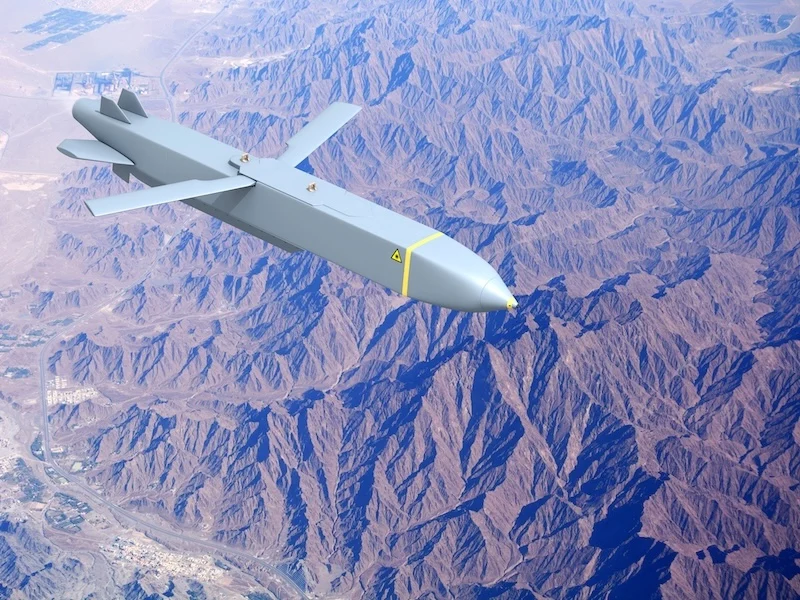
For U.S. aerospace companies, the request names several recognizable systems. Northrop Grumman’s AGM-88G Advanced Anti-Radiation Guided Missile-Extended Range is included as a potential acquisition, described as Japan’s first stated interest in a dedicated anti-radar missile. Lockheed Martin’s F-35, Boeing’s KC-46 and General Atomics’ MQ-9B are also identified, although only the proposed 17-drone purchase receives a quantity and combined price.
That uneven disclosure limits meaningful comparisons. A total budget can indicate strategic direction, but acquisition accountability depends on quantities, configuration, support packages and delivery schedules. Aircraft purchases rarely consist of airframes alone: training, ground equipment, spare parts, software support, sensors and maintenance capacity can materially affect both cost and availability. The request does not provide enough itemized information to calculate those burdens for many listed platforms.
The SeaGuardian line offers one example of the support question. Japan’s coast guard already operates three MQ-9Bs, but a 17-aircraft proposal for the Maritime Self-Defense Force would require a broader service structure. General Atomics and Fujitsu have signed a memorandum to examine domestic MQ-9B maintenance and operational support, including avionics work, parts management and personnel training. That agreement does not approve the proposed purchase, but it shows that local sustainment is being considered alongside fleet expansion.
Imported systems would be paired with domestic development
The missile portfolio follows a similar mixed approach. Japan is seeking unspecified lower-cost cruise missiles through overseas acquisition, followed by development of a domestic equivalent. It also proposes a stand-off missile launch module for unmanned underwater vehicles and wants to develop its domestic ASM-3 supersonic anti-ship missile into a long-range air-to-air weapon.
This creates a substantial integration challenge. Imported and domestically developed weapons, sensors, aircraft and unmanned platforms must exchange usable information through common command structures. Procurement quantities determine more than fleet size: they influence training pipelines, spare-parts inventories, basing requirements and whether a program can sustain routine operations without excessive dependence on a small number of assets.
The proposed AI-assisted command system is intended to “rapidly integrate and analyze data” for situational awareness and decision support. It would eventually migrate to a classified, domestically developed cloud platform designed to continue operating during disruption. Japan is considering a combination of overseas and domestic AI technology, while officials have said humans would retain final control.
That human-control boundary is important, but so are testing, data governance and responsibility for system output. Faster data processing does not by itself establish that information is accurate, that different platforms can exchange it reliably or that operators can interpret automated recommendations under pressure. Those requirements turn the command system into a long-term software, communications and verification program rather than a single equipment purchase.
Three national-security documents expected later in the year had not been released when the request was published. Until those policy documents, itemized prices and platform quantities emerge and the Ministry of Finance completes its review the $55.6 billion figure describes the scale of Japan’s opening proposal more clearly than it describes the final hardware, support burden or approved cost.
| More aerospace and engineering stories, right in your MSN feed. Follow AMI on MSN |
By David Whitaker — Associate editor for AMI’s aerospace and drone systems desk, translating flight systems, aircraft programs, spaceflight, and UAV developments into accessible technical stories.