Ukraine’s F-16s Reportedly Fly Gun-Only Day Missions as Missiles Run Short
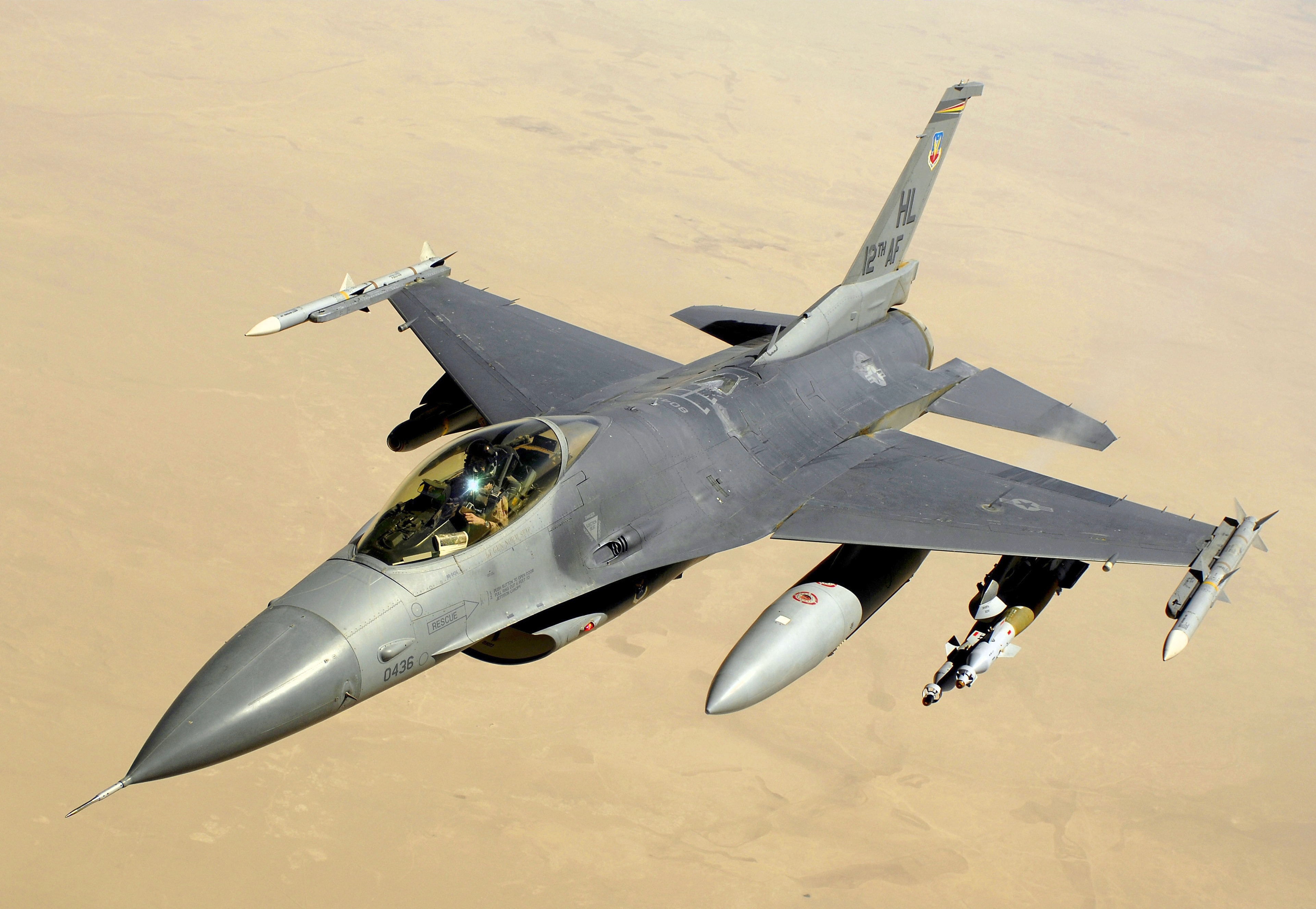
Some Ukrainian F-16 daytime sorties reportedly launch without air-to-air missiles, leaving pilots dependent on the fighter’s internal cannon. A Ukrainian Air Force commander using the callsign “Phantom” confirmed that scarce AIM-9 Sidewinder and AIM-120 AMRAAM missiles are being rationed, creating a readiness constraint that reaches beyond the fighter fleet.

The central problem is that Ukraine’s F-16s and its ground-based air defenses draw from overlapping Western missile inventories. The AIM-120 also serves as the primary interceptor for the National Advanced Surface-to-Air Missile System, better known as NASAMS. Those batteries help defend Kyiv, while fighters are also tasked with intercepting Russian drones and cruise missiles before they reach cities.
That makes each missile allocation a system-level decision. An interceptor assigned to an F-16 is unavailable to a NASAMS battery, and one fired during the current attack cannot be used against the next. The available information does not quantify Ukraine’s inventory, sortie rate or the size of the shortage, but the reported gun-only missions show that rationing has reached aircraft loadouts.
“Yes, that’s true. Any aircraft without weapons is … useless,” Phantom said when asked whether Ukraine faced a severe shortage of missiles for its F-16s. The commander called for additional AIM-9 and AIM-120 missiles, along with more interceptors for U.S.-made Patriot batteries.
The cannon preserves a limited interception option
The F-16 carries an internal M61A1 Vulcan, a 20 mm rotary cannon. That gives a pilot another way to engage an aerial target when guided missiles are unavailable, but a cannon is not an equivalent substitute for a full missile loadout. It changes the engagement geometry, reduces the range at which the fighter can act and leaves the aircraft with a much narrower set of options.
There is also a public-safety concern below. Cannon rounds that miss or continue beyond an aerial target eventually return to the ground and can affect a relatively broad area. That creates a potential danger to civilians, particularly when interceptions occur near populated areas. There is no indication here that F-16 cannon fire has caused civilian casualties; the concern is the inherent ground-impact risk introduced by relying on gunfire for air defense.
The shortage therefore produces a difficult tradeoff. Holding missiles back preserves a limited inventory for later attacks and for ground batteries, but sending a fighter without them reduces what that aircraft can do. Using the cannon retains some defensive capability while adding constraints and a potential hazard that guided interception is intended to reduce.
Higher production will not immediately refill launch rails
Phantom proposed increasing missile output or allowing production to be localized in Ukraine or elsewhere in Europe. That remains a request, not an approved manufacturing plan. Missile production depends on established suppliers, specialized components, qualified assembly processes and acceptance testing, so adding capacity is not the same as delivering operational rounds immediately.
RTX’s Raytheon division is already expected to raise annual AMRAAM production to at least 1,900 missiles under a multiyear Pentagon arrangement, according to Air & Space Forces Magazine. That would be about 58% above the company’s 2024 goal of 1,200 per year. Yet AMRAAM demand extends across the U.S. military and 43 allied partners, and the available information does not establish how many additional missiles will reach Ukraine or when.
A potentially cheaper layer is also emerging. Ukrainian F-16s appear to carry APKWS II laser-guided 70 mm rockets, which add a guidance kit to a standard unguided rocket. The system is described as a lower-cost option than AMRAAM for drones and subsonic cruise missiles, and U.S. aircraft have used it in an anti-drone role in the Middle East.
APKWS II could reduce demand for scarce air-to-air missiles by giving crews another guided option against certain targets. However, its Ukrainian deployment scale, operational status and results have not been established. It cannot yet be treated as a complete solution to the shared inventory pressure affecting F-16s and NASAMS.
For now, the reported gun-only sorties illustrate the difference between possessing fighters and sustaining an air-defense force. Aircraft availability and trained pilots matter, but interception capacity ultimately depends on having enough compatible weapons for both airborne and ground-based launchers when the next wave arrives.
| More aerospace and engineering stories, right in your MSN feed. Follow AMI on MSN |
By David Whitaker — Associate editor for AMI’s aerospace and drone systems desk, translating flight systems, aircraft programs, spaceflight, and UAV developments into accessible technical stories.