Ukraine’s Patriot Missile Push Stalls as Allies Guard Limited Supplies
Ukraine needs more missiles for its Patriot air-defense systems, but the governments holding compatible interceptors are reluctant to reduce their own limited inventories. That leaves Kyiv caught between continuing attacks on cities and energy infrastructure and a supply chain that cannot rapidly replace missiles transferred from existing stocks.

The constraint is not simply a lack of purchasing funds. Ukraine has been seeking more financing for defense purchases, yet PAC-2 and PAC-3 interceptors are controlled by a relatively small group of governments and backed by production lines carrying substantial order backlogs. Greece, Spain, Japan and South Korea are among the countries identified as holding compatible missiles but balking at transfers.
Three constraints are converging
The first bottleneck is national readiness. An interceptor handed over today is one fewer available to the donor until a replacement arrives. Governments therefore have to weigh Ukraine’s immediate requirement against their own air-defense plans, training needs and minimum inventory levels. Greece has previously resisted pressure to transfer Patriot equipment, arguing that the system is necessary for its own airspace defense, while Spain has pledged a limited number of missiles.
The second constraint is renewed American demand. The United States is rebuilding inventories after firing hundreds of missiles during the conflict with Iran, according to reporting on the replenishment effort. That demand competes for many of the same industrial resources and finished interceptors sought by Ukraine and other Patriot operators. Public accounts of the severity of U.S. shortages have been disputed by Pentagon and NATO spokespeople, but the push to increase procurement confirms that replenishment has become an industrial priority.
The third problem is manufacturing lead time. The U.S. government announced on August 31 that it had signed seven-year framework agreements with General Dynamics and Lockheed Martin intended to triple production capacity for the PAC-3 Missile Segment Enhancement interceptor. The agreements also cover specialized components including motor cases, seeker housings, midsections and shroud-deployment systems.
That expansion is significant, but it does not provide an immediate pool of missiles for transfer. The program is structured around multiyear procurement, workforce growth, bulk material purchases and facility upgrades. Funding is also subject to annual appropriations. Those details show why missile output cannot be increased like a short production run of a conventional manufactured product: specialized suppliers, facilities and trained labor must scale together.
More launchers do not solve an ammunition shortage
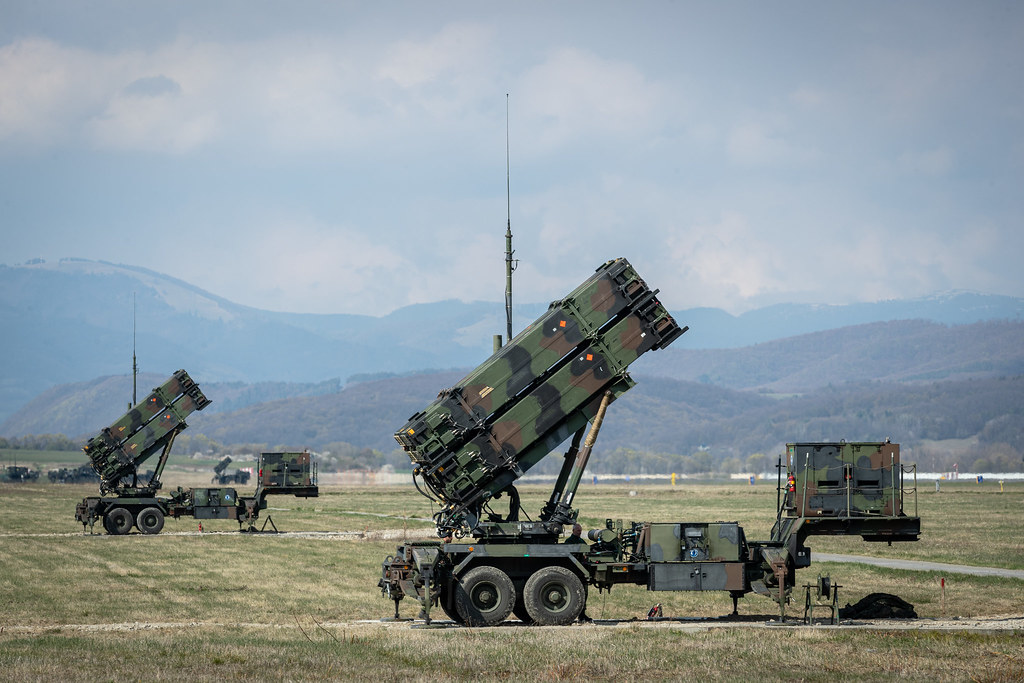
Patriot is a complete air-defense system, but its operational value depends on having the appropriate interceptors available. A battery includes radar, command-and-control equipment and launchers; none of those elements substitutes for expended ammunition. The current pressure is therefore increasingly centered on missile supply rather than simply obtaining more firing units.
PAC-2 and PAC-3 also should not be treated as interchangeable labels for one generic missile. They represent different interceptor families within the Patriot ecosystem. That makes the composition of available national inventories important, not merely the total number of missiles nominally associated with Patriot.
Alternative air-defense systems can broaden coverage, but they face their own ammunition and delivery constraints. The Franco-Italian SAMP/T family is one potential complement, while its newer version is only gradually becoming available. Production for competing interceptors is also backlogged, limiting their ability to serve as a rapid substitute for Patriot missiles already integrated into Ukraine’s defenses.
Transfers remain the only near-term lever
For Ukraine, the practical distinction is between missiles that exist in allied magazines and additional production that will arrive over several years. New factories and expanded component lines may improve long-term supply, but they cannot address the immediate shortage on the same schedule. Near-term reinforcement consequently depends on governments accepting a temporary reduction in their own stocks, potentially with replacement deliveries promised later.
The shortage comes as Ukrainian cities struggle against daily Russian missile attacks. Moscow has said it is preparing “massive strikes” against Kyiv’s energy infrastructure, although that statement describes Russia’s announced intention rather than an independently confirmed operational plan. Separate Ukrainian intelligence warnings about possible ground offensives likewise remain attributed assessments.
The industrial picture leaves Ukraine facing a hard timing mismatch: the fastest missiles to deliver are the ones allies already possess, but those are precisely the supplies governments are most reluctant to release. The newly announced U.S. production expansion runs for seven years, while Ukraine’s requirement is immediate.
| More aerospace and engineering stories, right in your MSN feed. Follow AMI on MSN |
By David Whitaker — Associate editor for AMI’s aerospace and drone systems desk, translating flight systems, aircraft programs, spaceflight, and UAV developments into accessible technical stories.