


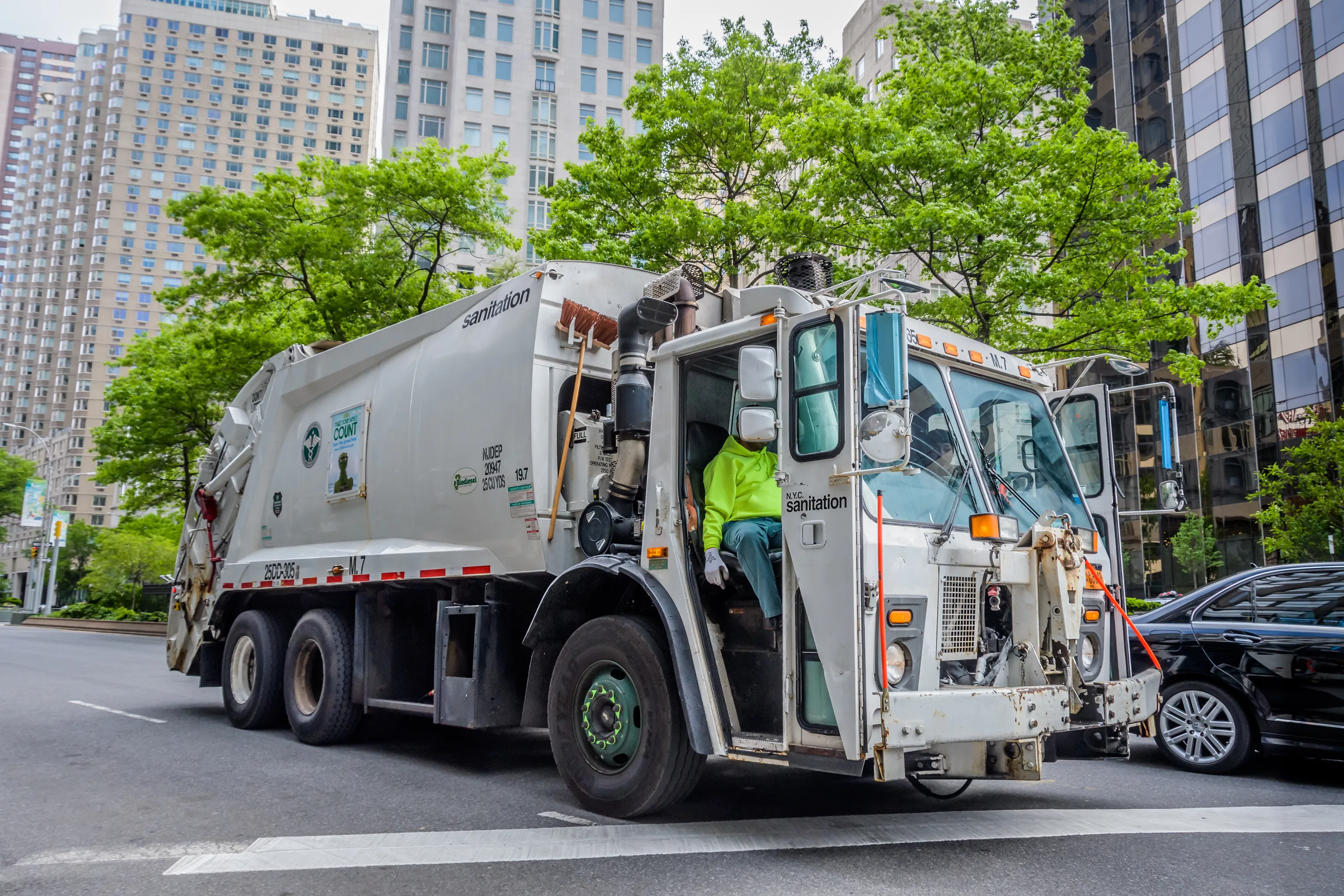
Two Sydney Garbage-Truck Fires Prompt Fire and Rescue New South Wales Battery Warning
Firefighters attended two garbage-truck fires in Sydney on the same Tuesday morning, prompting Fire and Rescue New South Wales to warn residents that batteries and battery-powered products must not go into household rubbish or recycling. Crews suspect improperly discarded batteries were involved, but no completed investigation or definitive cause finding has been reported.
The first emergency call came just after 7 a.m. from Marayong Park in western Sydney. Two fire engines and eight firefighters arrived to find the rear of a garbage truck burning. The vehicle was moved to a nearby car park, where its load was dumped onto the road so crews could reach and extinguish the burning material.
That fire extensively damaged the truck and disrupted traffic around Sofa Street. At 9:20 a.m., crews responded to a second garbage-truck fire in Chippendale and quickly extinguished it. A discarded vape battery was identified as a possible source of the second fire, although that connection remains unconfirmed.
Why a small battery can create a large waste-system fire
A lithium-ion cell is designed to store substantial energy in a compact package. That advantage becomes a waste-handling hazard when a battery enters machinery built to compress mixed rubbish rather than preserve delicate electronic components.
During collection and processing, a cell can be crushed or otherwise damaged. Internal damage may allow its positive and negative components to make unintended contact, generating heat. If the temperature rises sufficiently, the cell can enter thermal runaway a self-heating reaction that can sustain and intensify the event.
The surrounding waste load adds another systems-level problem. Paper, plastics and other combustible material can allow a small initial failure to spread beyond the battery. The battery may also be buried within compacted rubbish, making it difficult to locate and cool. In the Marayong Park response, firefighters had to dump the truck’s load to gain access to the burning waste, illustrating how containment inside a collection vehicle can complicate firefighting and disrupt nearby roads.
Fire and Rescue New South Wales said these fires can be intense, difficult to extinguish and hazardous to waste workers and the surrounding community. The authority recorded 332 lithium-ion battery-related incidents in 2025, although that broader figure is not limited to garbage trucks.
Acting Superintendent Peter Murray condensed the disposal guidance into four words: “Never bin a battery.” Residents should take used cells and battery-powered products to designated recycling drop-off locations. New South Wales also provides official lithium-ion battery safety guidance covering products such as e-bikes and e-scooters.
New rules would move responsibility toward battery brands
The incidents occurred ahead of a New South Wales battery regulation expected to commence October 1. It covers small and removable batteries weighing less than five kilograms, including AA and AAA cells, power banks, and batteries used in electric bicycles and scooters.
The rules would enable the state Environment Protection Authority to establish a mandatory product-stewardship scheme. Under that model, battery brand owners would fund safe collection and disposal rather than leaving local waste systems and individual residents to carry the full burden. Suppliers that fail to comply could face penalties of up to $880,000.
Product stewardship addresses a gap that truck-mounted safety measures cannot eliminate: batteries enter the waste stream before collection operators can identify them. Some fleets are testing thermal detection inside truck hoppers for example, the US city of Goodyear, Arizona, has launched a thermal-camera pilot intended to warn drivers about overheating waste. Such detection can provide an earlier alert, but it does not prevent a battery from being crushed or remove it from a mixed load.
The stronger control is separation at the start of the disposal chain. The two Sydney fires have not yet been conclusively attributed to batteries, but the morning’s response demonstrates the operational consequence once any fire takes hold: damaged equipment, exposed workers, an unloaded waste pile and interrupted roads. A cell small enough to disappear into a household bin can become a vehicle-scale emergency several collection steps later.
| More aerospace and engineering stories, right in your MSN feed. Follow AMI on MSN |
By Thomas Caldwell — AMI’s senior editor for mechanical and mobility engineering, covering vehicle electronics, systems integration, electrification, chassis systems, propulsion, and safety policy.



