White House Completes Granite Pad to Shield Lawn From Presidential Helicopter Heat
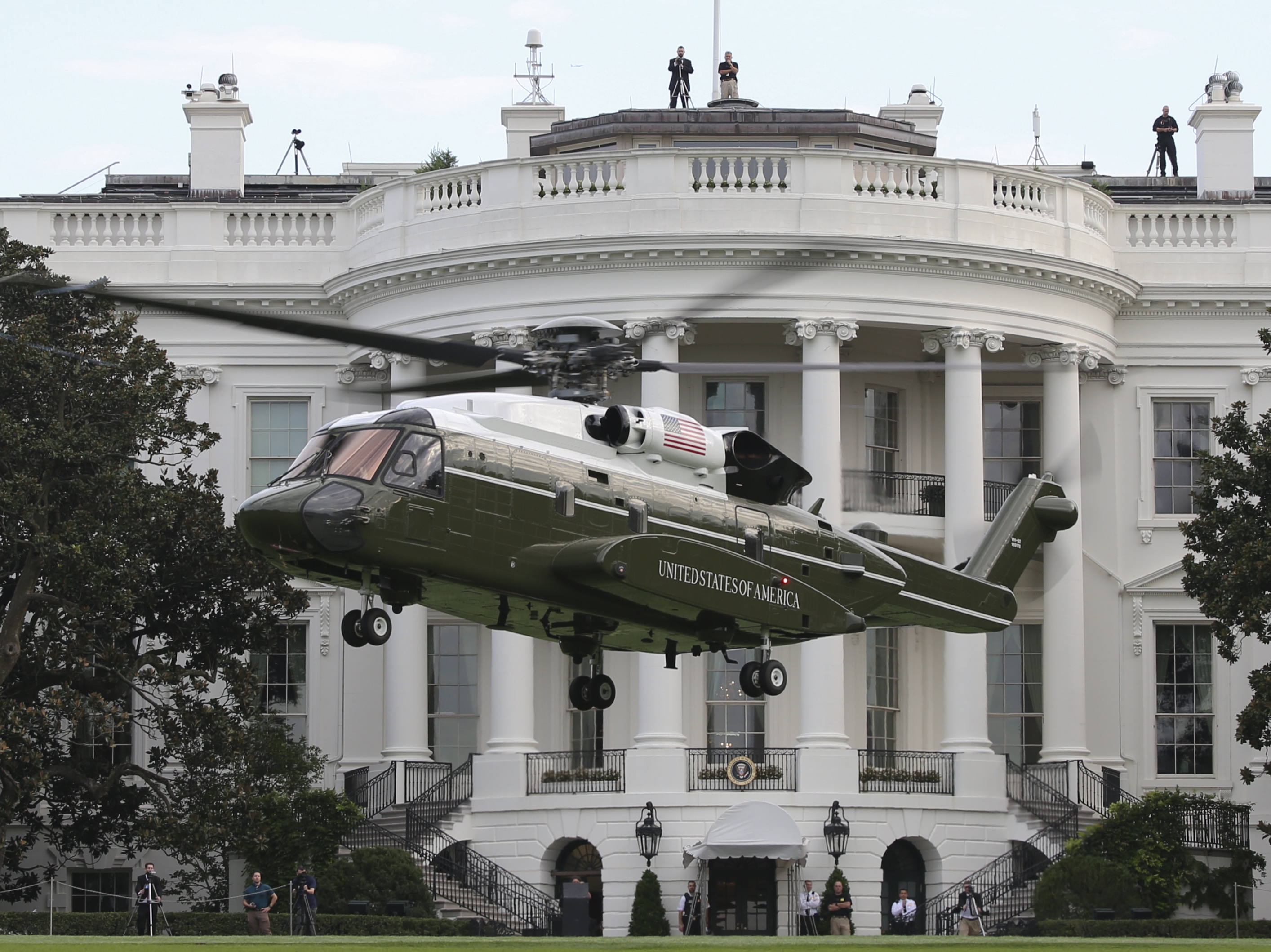
The White House has completed a permanent granite helicopter landing pad on the South Lawn, replacing the traditional grass arrangement to accommodate the newer VH-92A Patriot presidential helicopter. President Donald Trump described the surface as “just completed” on September 6, following the removal and redesign of portions of the initial installation.

The roughly 100-foot landing surface addresses an unusual interface problem between a modern aircraft and one of the country’s most recognizable lawns. The VH-92A’s exhaust outlets direct substantial heat downward, creating the potential to scorch or otherwise damage grass. The fixed granite pad is intended to support routine White House operations while limiting that heat exposure, according to an earlier account of the project and aircraft transition.
Until now, presidential helicopters have used removable landing markers placed on the South Lawn’s grass. That approach preserves the lawn when no aircraft is present, but it does not change how the underlying surface responds to concentrated exhaust. The granite installation effectively moves that burden from landscaping to permanent infrastructure designed around the newer helicopter’s operating characteristics.
A landing surface must manage more than heat
Exhaust resistance was only one part of the design problem. A helicopter landing area also needs suitable levelness, while an outdoor paved surface must drain water rather than allow it to collect. The South Lawn’s existing slope meant those requirements had to be reconciled with the surrounding ground instead of treating the project as a simple replacement of grass with stone.
That combination helps explain why portions of the original installation were removed and redesigned. However, no authoritative technical account has specified exactly what was changed, how the granite structure is supported or how its drainage system is configured. The available information therefore supports the broad engineering constraints heat, slope, levelness and drainage but not a detailed reconstruction of the redesign or any claim about a certification outcome.
The pad also illustrates how infrastructure can become part of an aircraft transition. Sikorsky delivered the final planned VH-92A in 2024, but the newer helicopters continue to operate alongside the older VH-3D and VH-60N presidential transports. The legacy types are expected to remain in service until 2030, when the VH-92A is expected to assume full duties. When carrying the president, one of these helicopters uses the call sign Marine One.
The VH-92A entered service in 2021, and the first presidential flight aboard the type occurred in 2024. Its more powerful propulsion installation and downward-directed exhaust distinguish its effects on the landing surface from those of the older VH-3D. The lawn issue has been described as non-safety-related; the new pad is an infrastructure response to surface damage and operating compatibility, not evidence of an aircraft flight-safety defect.
Cost and redesign details remain unresolved
The project was funded through a Lockheed Martin contribution made to the National Park Service. A confirmed final project cost has not been provided, and public descriptions of who would cover the work have varied. Without a formal accounting, an exact price should not be treated as settled.
Nor does completion by itself establish when the VH-92A will begin routine South Lawn operations or whether additional operational approvals remain. The strongest confirmed conclusion is narrower: the White House has permanently altered its historic grass landing area because the newer presidential helicopter imposes a different thermal load at ground level.
That makes the granite pad a visible endpoint of a broader systems-integration task. Aircraft performance, exhaust routing, landscaping, drainage and site geometry all meet at the same interface. The helicopter can continue evolving through its phased transition, but the South Lawn could not remain unchanged if it was to support the VH-92A without repeated heat damage.
| More aerospace and engineering stories, right in your MSN feed. Follow AMI on MSN |
By Thomas Caldwell — AMI’s senior editor for mechanical and mobility engineering, covering vehicle electronics, systems integration, electrification, chassis systems, propulsion, and safety policy.