Air Force One Slide Deployment Forces Removal and Briefly Delays Dallas Flight
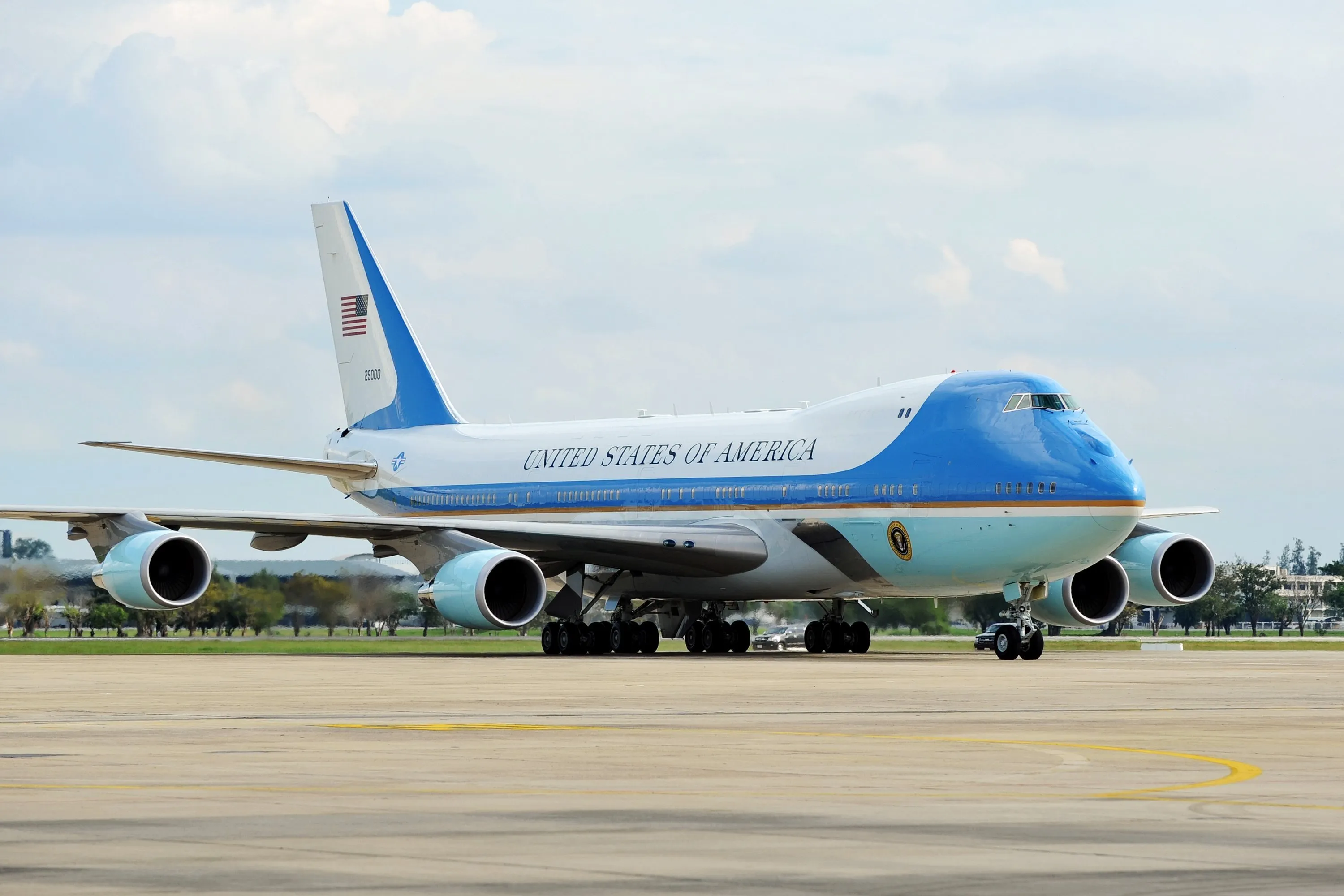
An emergency evacuation slide deployed from Air Force One at Joint Base Andrews on September 9, forcing personnel to remove the assembly before the presidential aircraft could depart for Dallas. The flight was briefly delayed even though President Donald Trump described the approximately 14-year-old Boeing 747-8 as safe to fly.
Trump estimated that work around the slide would take about 15 minutes. The deployed unit was ultimately deflated, detached and hauled away, and an Air Force spokesperson later said the aircraft “continued safely on its planned route,” according to an Associated Press account. The previous presidential aircraft was positioned nearby as a backup.
Reports attributed the deployment to an accidental action by military personnel, but no official finding identifying the cause has been released. The Air Force statement called it an “emergency slide deployment” without saying whether it resulted from an error, a test or another circumstance. That distinction remains unresolved.
Why the slide could not simply be put back
An inflatable evacuation slide is designed for rapid use during an emergency, not for casual deployment as part of an immediate preflight check. Its inflation system operates broadly like an airbag, using stored high-pressure gas to expand the slide quickly. Once activated, the equipment is no longer in its normal dispatch configuration.
Returning a deployed slide to service can involve careful folding, inspection of the fabric and associated hardware, resetting the inflation mechanism and certification by qualified personnel. A serviceable replacement assembly may instead be installed when that is the faster approved option. The precise work performed at Joint Base Andrews was not disclosed, and it is not known whether a replacement slide was fitted before departure.
The 747-8 installation adds a basic geometric constraint: its elevated exit requires a particularly long, extendable slide to bridge the distance from the door to the ground. That makes the unit more than a simple inflatable chute that can be pushed back into a compartment after use. Deployment changes the maintenance status of the exit system and requires a documented decision about how the aircraft can be dispatched.
This explains the central tension at Andrews. An aircraft can be considered safe to fly in a broad sense while still having a specific piece of emergency equipment that must be removed, replaced or otherwise addressed before release. “Safe to fly” does not mean every maintenance action disappears; it means the aircraft was ultimately accepted for the planned operation under the applicable requirements and configuration.
A backup aircraft protected the mission schedule
Bringing out the previous Air Force One demonstrated the operational value of fleet redundancy. Presidential transport has a schedule and continuity requirement beyond that of an ordinary passenger departure. A relatively localized equipment event can therefore trigger a larger response, including preparation of another aircraft, even if the original jet is expected to return to service quickly.
The backup did not have to take over the flight, but its availability limited the risk that slide servicing would become a much longer mission interruption. That is a readiness benefit purchased through additional aircraft, crews, ground support and maintenance capacity.
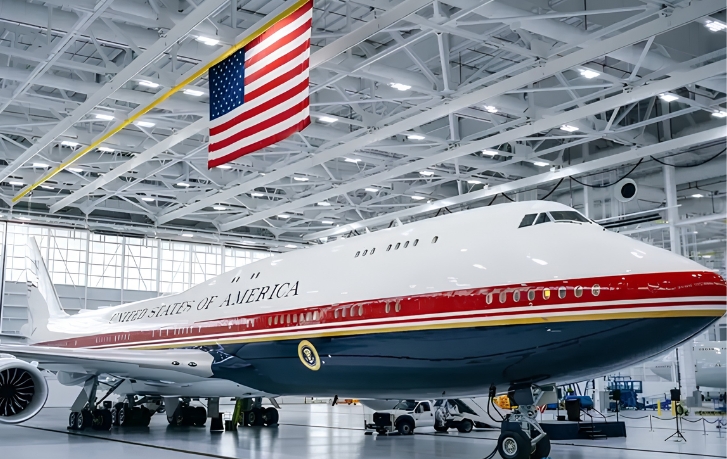
The aircraft itself was given by the Qatari royal family and has been valued at $400 million. It was subsequently modified for presidential use, but the available public information does not establish the conversion’s total taxpayer cost, the complete certification scope or the precise security configuration. Some lawmakers and ethics experts have questioned the foreign gift, though those broader disputes do not establish any connection to the slide deployment.
The same separation applies to security. The slide event demonstrates a maintenance and dispatch constraint, not a failure of the aircraft’s protective systems or proof that its accelerated conversion caused the deployment. Those would require findings that have not been released.
What is confirmed is narrower and technically meaningful: the evacuation equipment deployed on the ground, personnel removed it, the older presidential aircraft stood ready, and the Dallas-bound flight continued. The unanswered maintenance detail is whether the 747-8 departed with a replacement slide installed or under another approved configuration an important distinction that officials have not explained.
| More aerospace and engineering stories, right in your MSN feed. Follow AMI on MSN |
By David Whitaker — Associate editor for AMI’s aerospace and drone systems desk, translating flight systems, aircraft programs, spaceflight, and UAV developments into accessible technical stories.