Australia’s Safety Bureau Investigates Four Sydney Airport Conflicts With Cause Unclear
Four air traffic control incidents occurred at Sydney Airport in less than a month, but investigators have not established that they share a cause. The Australian Transport Safety Bureau opened its latest investigation on Aug. 21 after conflicting ground-movement clearances directed two Qantas jets toward the same taxiway intersection.
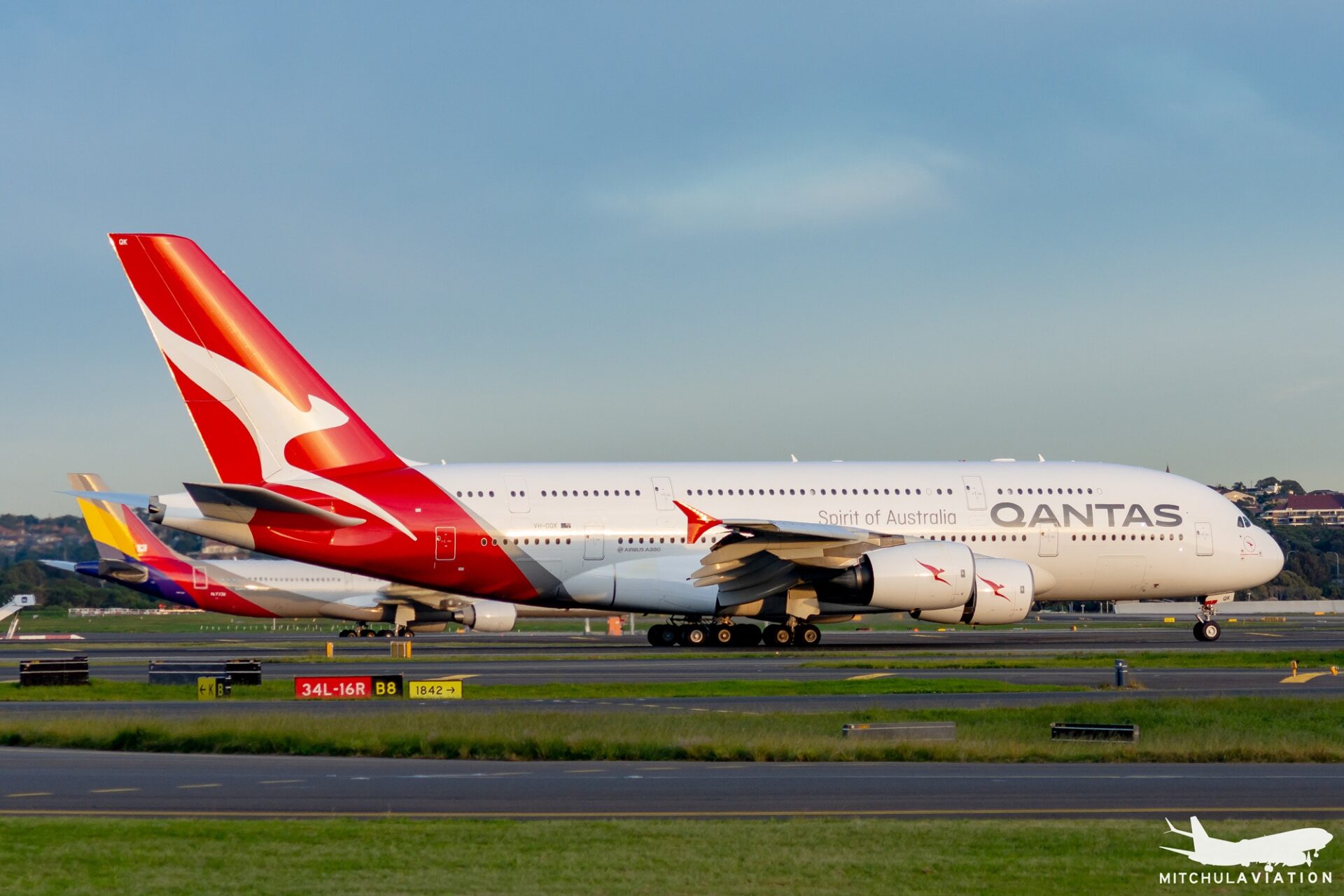
The Aug. 18 event involved a Qantas Airbus A321 preparing to depart for the Gold Coast and a Qantas Boeing 737 that had arrived from Melbourne. The 737 was cleared to continue along a taxiway that the A321 had been cleared to turn onto. The Airbus crew braked to avoid the Boeing, although the bureau said there was no immediate risk of collision.
Four events, but not one established pattern
The ATSB will assess whether the latest incident shares contributing factors with three conflicts beginning July 27. In that first event, a QantasLink Dash 8 was completing a landing while a Qantas 737, whose pilots reported clearance to cross the same runway, moved beyond the safety hold point before stopping.
Two more events followed on Aug. 9. A Jetstar Airbus A320 braked suddenly to avoid a Qatar Airways Boeing 777, injuring a cabin crew member. That taxiing proximity event is the subject of a separate ATSB investigation. Later that day, a Virgin Australia 737 cleared for takeoff stopped after its crew saw a Qantas aircraft crossing the runway ahead. The Virgin aircraft stopped roughly one kilometer short of the Qantas jet, which had also been cleared to cross.
That concentration of events warrants examination, but clustering alone does not demonstrate a common system failure. The occurrences involved different aircraft, crews, movement phases and combinations of runway and taxiway activity. Their severity also varied: one injured a crew member, while the bureau explicitly found no immediate collision risk in the latest case.
Investigators must reconstruct the operating picture
The central task is to determine how each clearance was formed, transmitted, understood and acted upon. Investigators plan to interview the involved controllers and flight crews, retrieve and review recorded operational data, and collect other relevant information. Comparing those records should help establish whether the four events contain a repeated contributing factor or merely occurred close together in time.
Human-factors analysis extends beyond asking whether an individual made an error. It can examine workload, expectations, communication, supervision, procedural design and the information available to each participant. Recorded data can then test recollections against the timing and wording of clearances and the aircraft movements that followed. None of those possible dimensions should be treated as a finding before the ATSB completes its work.
A previous ATSB investigation at Adelaide Airport illustrates the breadth of this process without explaining the Sydney events. In that unrelated case, investigators considered clearance wording, a pilot’s assumptions, temporary-closure procedures, marker placement and whether lighting was conspicuous against the background. The resulting findings reached beyond individual actions to include procedural and regulatory design. Sydney’s circumstances are different, but the comparison shows why a ground-movement investigation can require more than reviewing a single radio exchange.
Airspace changes remain context, not a confirmed cause
The Sydney cluster followed extensive airspace and procedural changes that took effect July 9 as Western Sydney International Airport was integrated into the region. The changes altered controlled-airspace arrangements around the Sydney Basin, including the boundaries over Sydney Kingsford Smith Airport. Australia’s Civil Aviation Safety Authority advises pilots to use updated charts, databases and flight-planning information on its Sydney airspace changes page.
A controller separately reported concerns that staff had insufficient preparation time for the complex material associated with those changes. More than 50 controllers reportedly answered a union survey, with most expressing concern about the time available before implementation. CASA investigated the report and concluded that Airservices Australia had put appropriate training, procedures and operational support in place.
Those two facts must remain separate: concerns were reported, and the regulator found the preparations appropriate. Neither establishes that the July changes, training arrangements or any controller action caused the four incidents. The ATSB’s evidence review will determine whether those subjects are relevant, can be ruled out or require further examination.
Broader Australian data provide context rather than an answer. An analysis of ATSB records from 2003 through 2025 found statistically significant increases in both the number and flight-hour rate of commercial-air-transport runway incursions, as well as domestic taxiing collisions or near collisions. That longer trend does not identify why the Sydney events happened, but it reinforces the value of testing their frequency against traffic activity and their severity not simply counting reports.
The ATSB expects to issue a preliminary report in six to eight weeks. Its most consequential finding may be whether four incidents at Australia’s busiest airport reflect one repeated weakness, several unrelated circumstances, or a combination that requires different safety responses.
| More aerospace and engineering stories, right in your MSN feed. Follow AMI on MSN |
By Thomas Caldwell — AMI’s senior editor for mechanical and mobility engineering, covering vehicle electronics, systems integration, electrification, chassis systems, propulsion, and safety policy.