Taiwan Plans Fourth Patriot Battalion as 102-Missile Delivery Faces Uncertainty
Taiwan plans to establish a fourth Patriot air-defense battalion while the status of 102 U.S. made interceptors scheduled for delivery this year remains unresolved. The latest documented government position is that the missiles will arrive on schedule, but that assurance dates to March and has since been challenged by reports of pressure on U.S. supplies.
No official delay has been confirmed. That distinction matters: the available information establishes concern about the delivery timeline, not a revised date or a canceled shipment. The next decisive update must therefore come from Taiwan’s Ministry of National Defense or the U.S. government and specify whether all 102 Patriot Advanced Capability-3 interceptors remain scheduled to arrive before the end of 2026.
The question has become more consequential because Taiwan is not merely replenishing an existing force. It currently operates three Patriot battalions staffed by roughly 2,000 personnel across northern, central and southern areas. The planned fourth battalion is intended to strengthen air defense in eastern Taiwan, expanding a force formally established on Oct. 1, 1996.
A battalion requires more than additional missiles
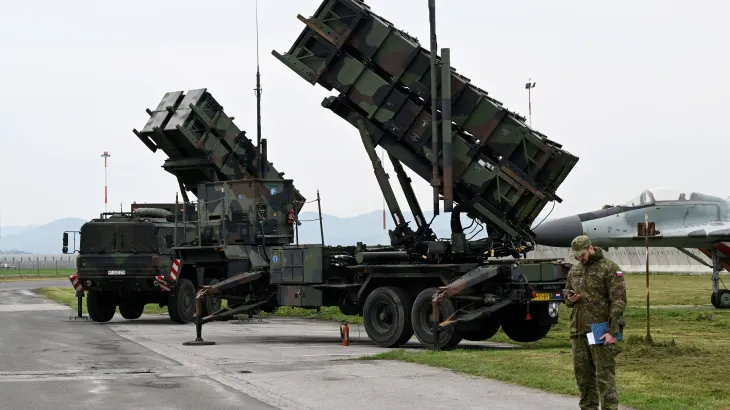
Patriot is a mobile ground-based system built around radar, an engagement control station, launchers and interceptors. A recent Congressional Research Service overview of the Patriot system describes it primarily as a point-defense capability, meaning it protects particular locations or assets and is normally most effective as part of a layered air-defense network.
That architecture makes the fourth battalion’s establishment a separate milestone from the missile shipment. Interceptors provide the expendable inventory, but an operational unit also depends on launch equipment, sensors, control stations and trained personnel being available together. A delivery of missiles alone would not confirm that the eastern battalion is established, staffed or ready.
Conversely, activating another battalion without the planned interceptor flow would spread a finite missile inventory across a larger force. Taiwan has not publicly documented such a mismatch, but the structure of the program makes synchronized updates on missiles, equipment and personnel more useful than a simple announcement that a new unit is planned.
The last official assurance is now six months old
A Taiwan Ministry of National Defense official told lawmakers in March that the 102 missiles would arrive during 2026 as scheduled. Subsequent reporting has raised the prospect of a significant delay, but no newer official delivery date has been documented. That leaves the March statement as the latest confirmed government timetable rather than proof that physical deliveries have begun.
The uncertainty follows heavy reported use of PAC-3 interceptors since the Iran war began on Feb. 28. The New York Times reported that more than 1,500 had been fired and fewer than 1,700 remained in the U.S. inventory. Those are attributed estimates, not independently confirmed inventory figures, and U.S. officials have disputed broader claims of severe munitions shortfalls.
Even so, the industrial constraint is credible enough to have drawn formal congressional attention. The CRS overview identifies interceptor cost, availability, production rates, foreign orders and the use of overseas production lines as active oversight questions. It also notes that some prospective customers have considered alternatives partly because of reported delivery waits measured in years.
Washington has approved Patriot manufacturing in Japan and Germany to expand production. That does not automatically create a substitute supply path for Taiwan. Japan manufactures Patriots and resells them to the U.S. military, but its restrictions prevent direct supply to third countries. A Taiwanese military official also said Taipei purchased American-made missiles and would not accept Japanese-made interceptors.
The follow-on purchase raises the stakes
Taiwan intends to spend approximately 20 billion Taiwan dollars, or $620 million, on another 300 PAC-3 missiles by 2027. If completed as planned, that acquisition would bring its PAC-3 inventory to 650. The program therefore contains three linked but distinct questions: whether the 102 missiles arrive this year, whether the fourth battalion is established with the required people and equipment, and whether funding and availability support the additional 300-interceptor purchase.
For now, the 102-missile order has not been officially declared late, and the fourth battalion has not received a documented establishment date in the available public updates. The next meaningful milestone is not another estimate of U.S. inventory. It is a current official delivery status that shows whether Taiwan’s incoming missiles, expanding force structure and 2027 procurement plan are still moving on the same schedule.
| More aerospace and engineering stories, right in your MSN feed. Follow AMI on MSN |
By David Whitaker — Associate editor for AMI’s aerospace and drone systems desk, translating flight systems, aircraft programs, spaceflight, and UAV developments into accessible technical stories.