


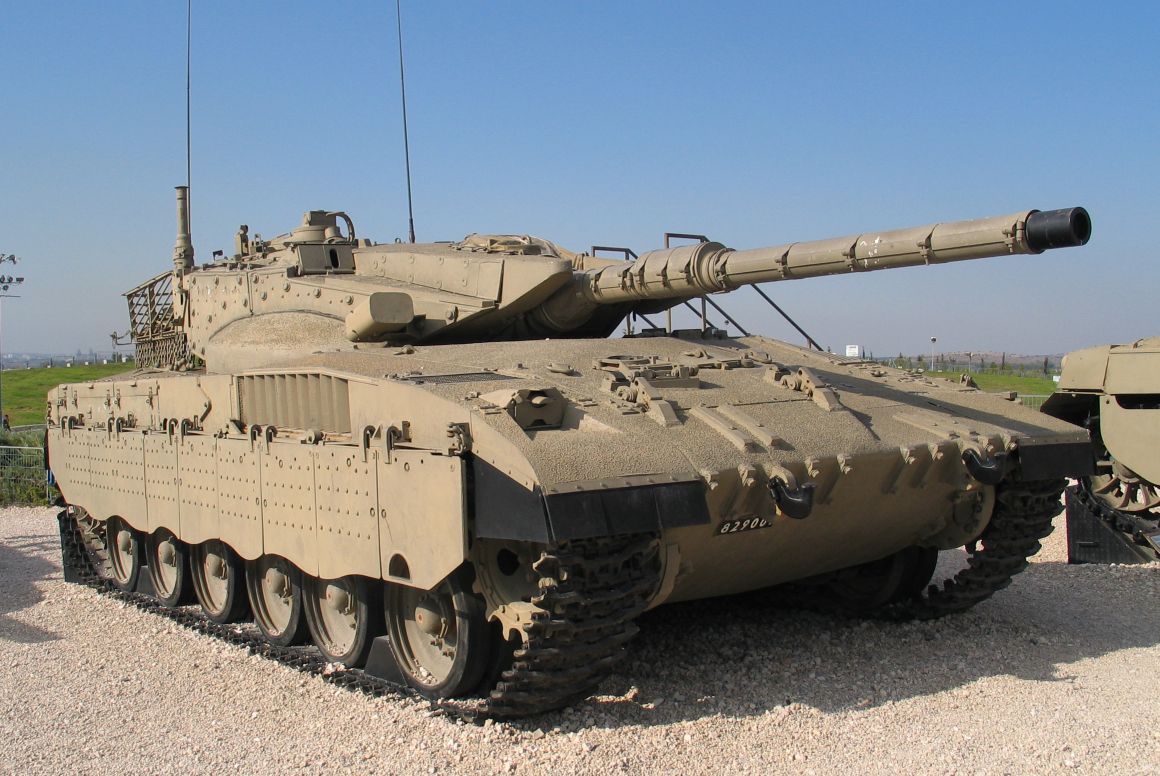
Israel Signs $26 Million Five-Year Merkava and Namer Components Deal
Israel’s Ministry of Defense has signed an approximately $26 million agreement with Ashot Ashkelon to manufacture and supply transmissions, suspensions and powertrains for Merkava tanks and Namer armored personnel carriers. The ministry’s announcement values the order at NIS 100 million and identifies both 1,500-horsepower and 1,200-horsepower transmissions among the covered hardware.

Deliveries to the Israel Defense Forces will run over five years. The ministry presents the order as part of a broader initiative to improve armored-vehicle readiness, but the schedule means it should not be treated as proof that reported near-term parts shortages or reduced tank availability have already been resolved.
The mechanical scope matters because the order reaches beyond isolated replacement pieces. A transmission must repeatedly transfer engine output through a heavy tracked vehicle’s operating range, while the suspension carries high dynamic loads over broken ground. The powertrain brings the propulsion hardware together as a system. Availability depends not merely on having a vehicle hull, but on maintaining these load-bearing and torque-transmitting assemblies in serviceable condition.
A supply agreement with a long time horizon
Ashot Ashkelon specializes in propulsion systems, transmissions and other components for armored vehicles. Its role is therefore tied to manufacturing precision, refurbishment capability and the retention of specialist production knowledge. The company said many recent orders include spare parts and refurbishment of components it did not previously supply.
That detail gives the contract a wider sustainment dimension. New manufacture adds replacement hardware, while refurbishment can return recoverable assemblies to service without requiring every worn unit to be replaced outright. However, the ministry did not provide an annual delivery profile, quantities for each component type, or a breakdown between new and refurbished units. Those missing figures prevent a firm assessment of how quickly the agreement can affect fleet availability.
The five-year term can support continuity in tooling, materials purchasing and skilled labor. For heavy-vehicle driveline components, repeatable production is particularly important: gears, shafts, housings, bearings and suspension elements must be manufactured and assembled within controlled tolerances while surviving shock, vibration, heat and sustained mechanical loading. A multi-year order gives a supplier a clearer basis for planning that work than a sequence of short emergency purchases.
It also creates an obvious boundary. A signed contract establishes funding and industrial demand; it does not place every component into service immediately. Actual readiness effects will depend on delivery timing, acceptance, allocation to vehicles, workshop throughput and whether the ordered mix corresponds to the components constraining availability. No such detailed implementation data accompanied the announcement.
The unresolved industrial tension
The agreement follows reports that several tank battalions could be taken out of service amid spare-parts shortages. Those reports, attributed to Kan Reshet Bet rather than a direct IDF confirmation, did not identify the battalions, vehicle totals, affected components or implementation schedule. The new order is relevant to that concern, but it cannot yet establish what happened to the reported withdrawals.
A separate pressure point concerns ammunition production. Defense officials reportedly warned that Elbit Systems lines producing Merkava shells, artillery shells and mortar shells faced closure, with the loss of workers, machinery and expertise potentially making a restart difficult. That warning sits uneasily beside earlier efforts to expand domestic ammunition supply.
Those efforts included an approximately $48 million March contract for tens of thousands of 155mm artillery shells and multi-year land-ammunition orders worth about NIS 2.8 billion in May 2024. In July 2024, the ministry also signed an approximately $340 million Elbit agreement that included establishing a new Israeli ammunition facility. Large procurement totals can expand capacity in selected product categories, but they do not automatically keep every existing line operating or solve shortages elsewhere in the armored-vehicle support chain.
The Ashot Ashkelon agreement is therefore a concrete procurement response with a defined supplier, mechanical scope, value and duration. The next decisive information will be the delivery profile and the status of the reportedly affected battalions and ammunition lines. Until those details emerge, the contract strengthens the domestic component pipeline without demonstrating that the immediate readiness and production concerns have disappeared.
| More aerospace and engineering stories, right in your MSN feed. Follow AMI on MSN |
By Edward Collins — Senior editor for AMI’s performance systems and mechanical design coverage, focused on powertrains, drivetrain systems, manufacturing precision, materials, and high-performance engineering.


