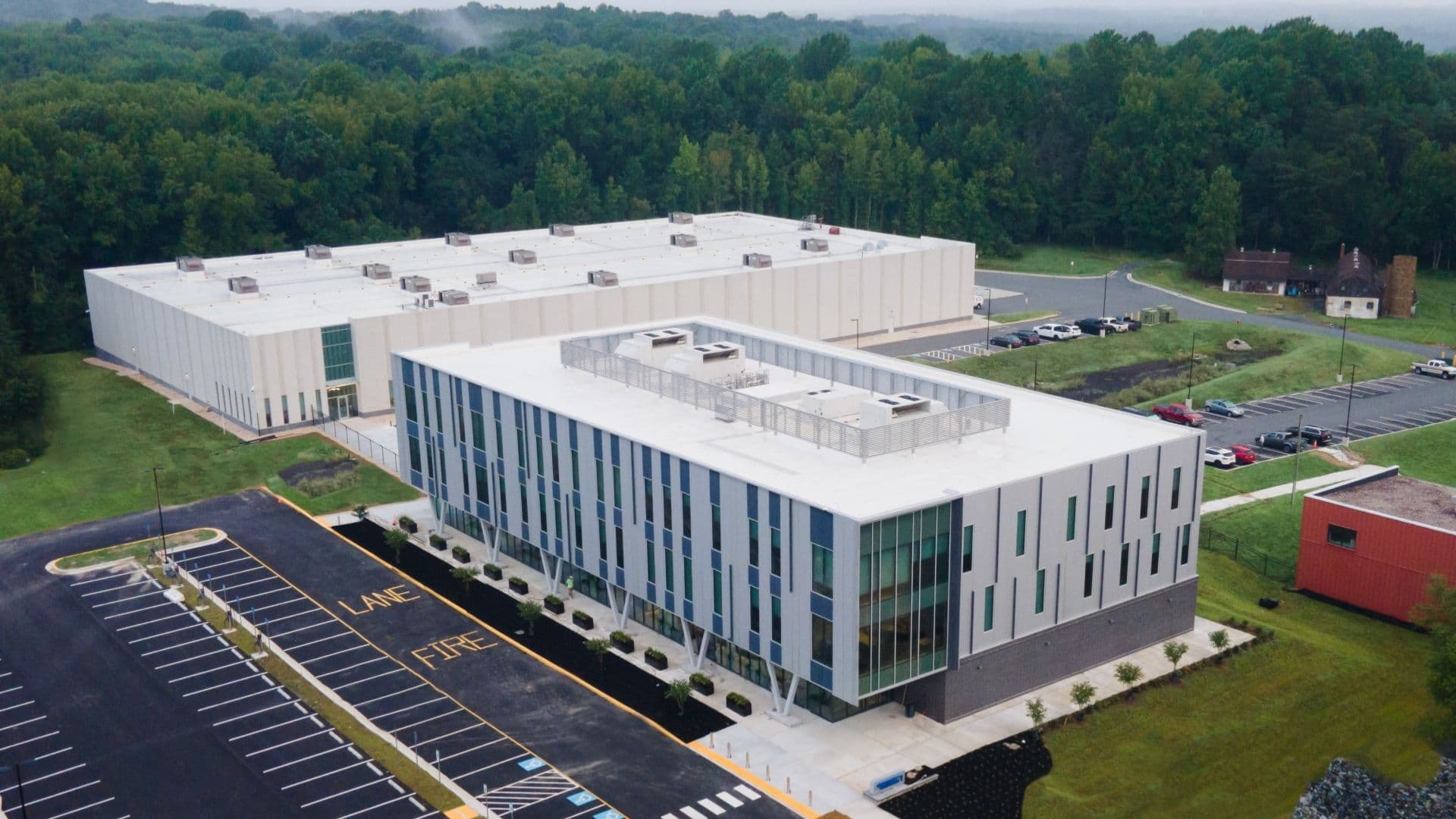
Northrop Targets More Than 25,000 Rocket Motors Annually by 2029
Northrop Grumman plans to raise annual solid rocket motor output across its U.S. manufacturing network from about 13,000 units in 2024 to more than 25,000 by 2029. The company has also opened a 57,000-square-foot propulsion engineering center in Elkton, Maryland, giving its broader expansion a measurable baseline, a deadline and a new engineering hub.
That target is not a promised delivery rate for complete Patriot or Terminal High Altitude Area Defense interceptors. It covers Northrop’s companywide rocket-motor production across multiple defense programs and sites. A motor is one critical subsystem; finished interceptor output still depends on other components, final assembly, testing, government funding and contracts.
The distinction matters because the Pentagon’s headline production ambitions are much larger than any single supplier metric. The Defense Department announced framework agreements with Northrop and Lockheed Martin on August 3 intended to triple production capacity for Patriot’s enhanced interceptor and quadruple capacity for the Terminal High Altitude Area Defense interceptor. Officials tied the initiative to a long-term objective of nearly 14,000 interceptors, but those capacity goals came without a disclosed completion timetable or delivery schedule.
A measurable propulsion target, not a complete missile forecast
Northrop’s 2029 figure narrows one part of that uncertainty. Moving from roughly 13,000 motors to above 25,000 represents an increase of more than 12,000 units annually and nearly doubles the company’s 2024 output. Unlike an aspiration expressed as a multiple, it creates a milestone against which factory expansion can eventually be judged.
It does not, however, establish what mix of motors Northrop will produce. The company’s network supports multiple tactical missile, hypersonic, defense and space applications. The published target does not allocate the 25,000-plus units among those programs, identify how many would support Patriot, or show how motor output translates into finished-interceptor deliveries.
The Elkton Propulsion Innovation Center is principally an engineering investment within that larger system. It houses 250 engineers working on tactical-missile and hypersonic propulsion and is part of a broader $100 million investment at Northrop’s 550-acre Propulsion Systems & Controls campus. Construction, modernization and infrastructure work there are expected to increase the site’s solid-rocket-motor design and manufacturing capacity by 25%, while Elkton staffing is expected to grow by more than 30%.
Co-locating design, development, manufacturing and testing can reduce organizational handoffs as propulsion products move toward production. But engineering capacity and factory throughput are different measurements. More engineers can support design maturation, process changes and qualification work; they do not by themselves prove a proportional rise in accepted production hardware.
The industrial network has another useful capacity measure
Across six major sites, Northrop currently can produce about 30 million pounds of solid rocket propellant per year and expects that capacity to approach 50 million pounds by 2028. This is a separate measure from motor count because motors vary substantially in size and propellant load. Read together, the two targets indicate expansion in both unit throughput and bulk propellant capacity, but neither number alone predicts the delivery rate of a particular interceptor.
Northrop says it has invested more than $2 billion in munitions-related technology and facilities over the past seven years, including more than $1 billion for advanced U.S. manufacturing facilities producing rocket motors and missile components. It has tripled tactical solid-rocket-motor capacity at its West Virginia facility and plans to double capacity at large-motor sites in Utah over five years. Those dispersed investments matter because the 2029 goal is network-wide rather than the output promise of one new Maryland building.
The Pentagon’s direct-supplier strategy provides the policy connection. Its agreements establish Northrop as a second source for Patriot solid rocket motors, increase production of Patriot ignition-safety devices and expand capacity for several THAAD structural components. That approach can reduce reliance on a single propulsion source, but the framework mechanism is primarily a demand signal. Appropriations, executable contracts, capital spending, workforce growth and qualified production still have to follow.
This is why the Maryland opening is meaningful without proving that the interceptor shortage is solved. Combat demand has strained U.S. inventories, and a Center for Strategic and International Studies analysis estimated that roughly two-thirds of the pre-war U.S. Patriot inventory was used during the Iran conflict. That estimate is independent analysis, not a Defense Department finding.
The next credible test is therefore not another capacity multiple. It is whether Northrop reports progress toward more than 25,000 motors per year, identifies the program mix behind that figure and converts added engineering, propellant and factory capacity into qualified deliveries by 2029. Until then, the company has supplied a concrete propulsion milestone but not a timetable for complete Patriot or THAAD interceptors.
| More aerospace and engineering stories, right in your MSN feed. Follow AMI on MSN |
By David Whitaker — Associate editor for AMI’s aerospace and drone systems desk, translating flight systems, aircraft programs, spaceflight, and UAV developments into accessible technical stories.