


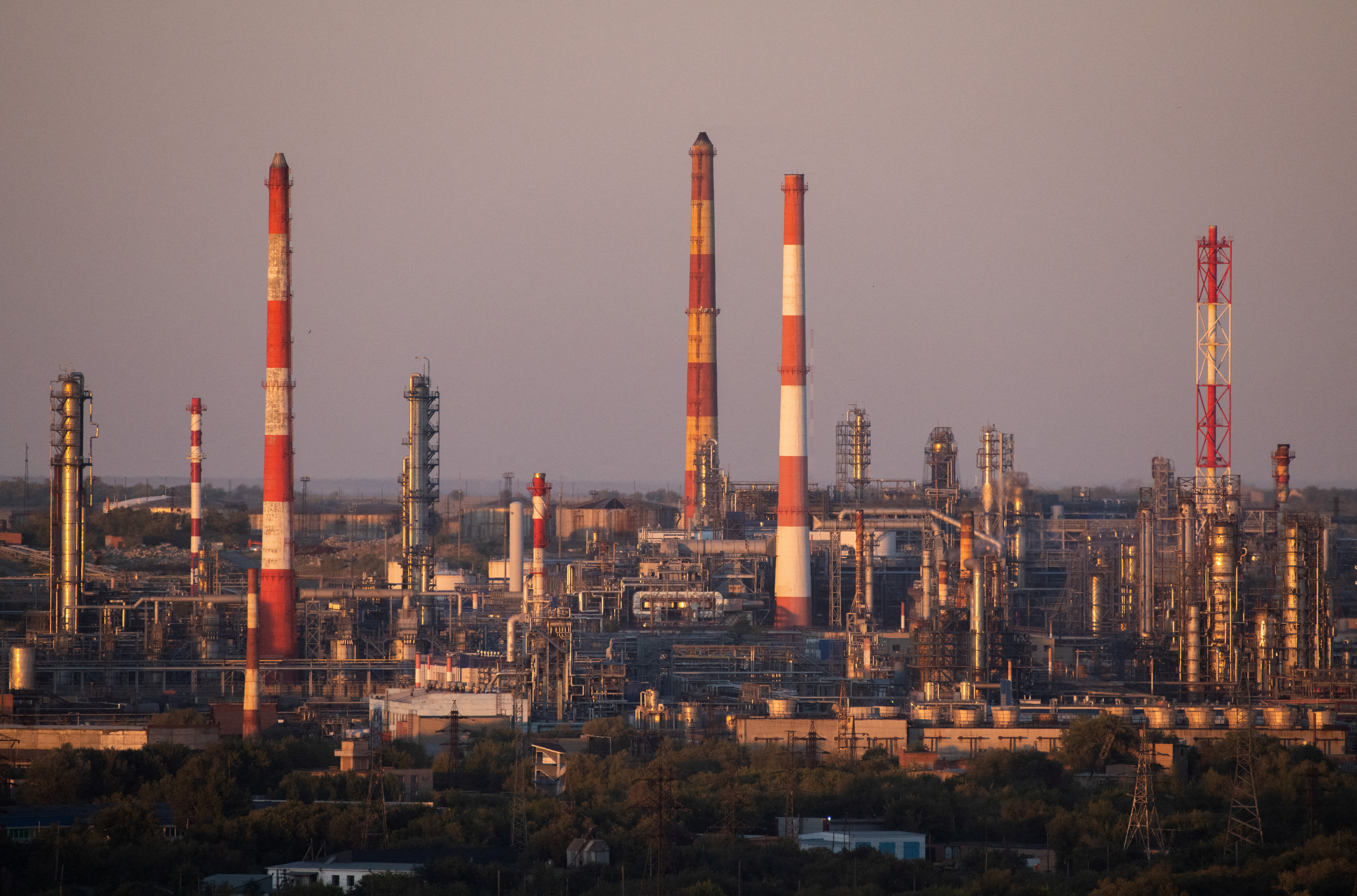
Ukrainian Drone Strikes Push Russia to Record Fuel Imports
Russia imported a record 172,000 tonnes of fuel in August 2026, more than seven times its previous monthly high. The cargoes included products from South Korea and gasoline made in India from Russian crude, according to the Centre for Research on Energy and Clean Air’s August analysis. The figures mark a striking reversal for a country that previously ranked as the world’s largest exporter of refined oil products.
That reversal is occurring in both directions of the trade. Revenue from Russian seaborne oil-product exports fell 32% from July to €78 million per day, the lowest level since the full-scale invasion began, while export volumes dropped 21%. Russia is therefore importing unusually large quantities of finished fuel at the same time that its earnings from shipping refined products abroad are contracting.
The import total remains modest beside Russia’s overall refining system, but its composition shows why the change matters. Gasoline represented 74% of August’s imported oil products, compared with only 6% of imports from 2023 through 2025. India supplied 70% of the month’s total fuel imports and 94% of its imported gasoline, including 120,000 tonnes valued at €78 million. Those Indian cargoes came from a refinery that had processed Russian crude, meaning the oil left Russia as raw material and returned as a higher-value finished product.
South Korea supplied another 18,000 tonnes, mostly gasoil. That was eight times its three-year monthly average and 41% above the previous post-invasion monthly record set in July. The two routes illustrate a basic consequence of losing dependable domestic conversion capacity: crude availability does not guarantee gasoline or diesel availability. A refinery must separate crude and then upgrade intermediate streams into products meeting the required specifications. When enough of that processing chain is unavailable, importing finished fuel can become the faster buffer.
A refinery shutdown is more than lost crude throughput
The August 26 shutdown of LUKOIL-Nizhegorodnefteorgsintez in Kstovo demonstrates the industrial scale behind that trade shift. Three industry sources told Reuters that a Ukrainian drone strike damaged several processing units, connecting equipment and other facilities, stopping crude processing. The refinery has about 17 million tonnes of maximum annual capacity and, before the strikes, could produce roughly 5 million tonnes of gasoline and more than 5 million tonnes of diesel per year. No repair or restart date has been confirmed.
Those annual figures should not be treated as a direct forecast of lost August or September supply. Actual displacement depends on utilization before the shutdown, inventories, the condition of individual units and whether sections of the plant can restart independently. They do, however, define the size of the production system now subject to an open-ended interruption. The facility is Russia’s fourth-largest refinery by capacity and its second-largest gasoline producer, with more than 50 petroleum products in its output slate.
Refineries are networks rather than collections of interchangeable machines. Crude-distillation equipment creates intermediate streams, while additional units convert or treat those streams into usable gasoline, diesel and other products. Damage to connecting equipment can prevent an otherwise serviceable unit from receiving feedstock or sending material to the next stage. That interdependence helps explain why a restart schedule cannot be inferred simply from the number of visibly damaged components.
The International Energy Agency has also warned that serious damage to complex secondary processing units can require six to eight months to repair, while sanctions can restrict access to replacement equipment and specialist suppliers. That is a general industry assessment, not a confirmed timetable for Kstovo. The refinery’s actual damage scope, repair sequence and potential for a partial restart remain undisclosed.
Imports buy flexibility, but at a logistical cost
Foreign refining gives Russia a temporary substitute for unavailable domestic processing, but not an equivalent one. Sending crude abroad, paying another refinery to convert it and transporting the finished product back adds freight, handling and insurance costs that do not exist when a domestic refinery is operating normally. Longer supply chains also require more transport capacity and planning to deliver the correct product to the market where it is needed.
The simultaneous decline in exports compounds that penalty. Oil-product loadings at Russian ports fell for a third consecutive month in August and were less than half their August 2025 level. A refinery outage can therefore remove both domestic fuel supply and exportable product, replacing a revenue-generating flow with an import expense.
Repeated drone strikes also create a broad protection and readiness burden across a geographically dispersed industrial network. The measurable consequence is not simply the number of facilities hit, but the cumulative uncertainty imposed on maintenance planning, inventories, distribution and restart reliability. For Kstovo, that uncertainty remains unusually consequential: a plant capable of producing about 10 million tonnes of gasoline and diesel annually is offline, and there is still no confirmed date for its return.
| More aerospace and engineering stories, right in your MSN feed. Follow AMI on MSN |
By Stephen Wallace — Editor for AMI’s aerospace integration and unmanned mobility coverage, focused on drone manufacturing, VTOL systems, autonomous networks, and air-ground mobility links.


