Russian Refinery Runs Hit 22-Year Low as Ukrainian Drone Damage Takes Longer to Repair
Russia processed 3.8 million barrels of crude per day in June 2026, down 30% from a year earlier and its lowest rate since May 2004. The decline is the clearest national measure yet of how repeated Ukrainian drone strikes are affecting a refining network that, on paper, has 6.5 million barrels per day of capacity across 32 major plants.
The mechanism is changing as well as the scale. An International Energy Agency assessment reported by Oil & Gas Journal found that more frequent and precise strikes are increasingly damaging complex secondary processing units, not only the equipment that initially separates crude. Serious damage to those systems can require six to eight months to repair, while sanctions restrict access to replacement equipment and specialist support.
Why the damaged equipment matters
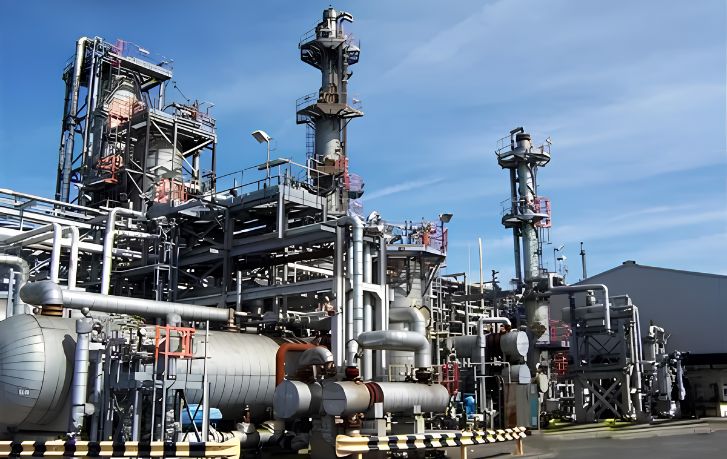
A refinery’s nominal capacity does not fully describe its ability to supply usable transportation fuel. Initial processing separates crude into broad fractions, but secondary units including catalytic crackers, reformers and hydrotreaters convert and treat those streams to increase gasoline and other light-product yields and meet fuel specifications.
That distinction helps explain why repairing a plant does not necessarily restore its previous output or product mix. The IEA said minor damage to a crude-distillation unit can often be repaired within one or two weeks. A badly damaged upgrading unit is a different industrial problem, involving more specialized equipment, longer component lead times and expertise that sanctions can make harder to obtain.
The resulting constraint is therefore not simply how many barrels can enter a refinery. It is whether the surviving equipment can turn those barrels into the required quantities and grades of gasoline, diesel and aviation fuel. Reported gasoline output was already about 20% lower, reinforcing the gap between installed capacity and useful production.
Repeated interruptions weaken recovery
The IEA counted a successful strike on a Russian refinery roughly once every three days during the first eight months of 2026. By late August, it said only four major refineries all in Eastern Siberia or farther east had remained untouched. Those figures indicate a sustained industrial-capacity challenge rather than an isolated outage, although individual damage claims and restoration schedules remain difficult to verify independently.
Repeated shutdown-and-repair cycles also create a reliability problem. Refiners have reportedly postponed maintenance, restarted mothballed equipment and made rapid repairs to preserve throughput. Those measures can recover near-term capacity, but they leave less operating margin when another unit fails or must be taken down for planned work. The IEA warned that this cumulative pressure is particularly significant at plants struck multiple times.
Air-defense resources face a related scale problem. A refining system consists of large, fixed facilities spread across a vast territory, while protective resources and repair crews are finite. The nationwide throughput figure shows that industrial resilience depends on more than preventing any single strike: it also depends on limiting accumulated downtime and restoring specialized processing capacity before another interruption occurs.
Kirishi shows how outages can combine
Kirishinefteorgsintez, described as Russia’s second-largest refinery, is a compact example of that compounding effect. Industry sources cited by Reuters said an August 30 drone attack damaged two crude-processing units representing about 48% of the plant’s capacity. The other units, accounting for the remaining 52%, were already unavailable, reportedly leaving the refinery with no operating crude-processing capacity.
The Kirishi claims remain attributed to industry reporting rather than an independently established damage assessment. Even so, the shutdown matters because the plant represents about 7% of Russia’s refining capacity and is described as the largest fuel supplier to St. Petersburg and northwestern Russia. It had also not fully recovered from earlier interruptions and was reportedly operating at about half capacity during August.
Emergency measures expose the supply constraint
Russia’s response illustrates what reduced refining resilience means beyond individual facilities. The government banned gasoline exports in April, followed by its first jet-fuel and diesel export bans in June and July. It also temporarily relaxed fuel-quality requirements and blending rules, measures that increased supply flexibility but pointed to constraints in the upgrading units needed to produce higher-specification fuels.
Imports have become another buffer. The Centre for Research on Energy and Clean Air calculated that Russia imported 172,000 tonnes of oil products in August, more than seven times the previous monthly high since the full-scale invasion began. Gasoline made up 74% of that volume. Separately, Reuters estimated late-August gasoline production at about 80,000 tonnes per day against consumption of roughly 115,000 tonnes.
The IEA has lowered its baseline forecast for Russian refinery throughput to about 4 million barrels per day on average for the remainder of 2026 and throughout 2027. Whether output recovers beyond that level will depend increasingly on long-duration repairs to specialized equipment not merely on restarting crude intake after the latest shutdown.
| More aerospace and engineering stories, right in your MSN feed. Follow AMI on MSN |
By Stephen Wallace — Editor for AMI’s aerospace integration and unmanned mobility coverage, focused on drone manufacturing, VTOL systems, autonomous networks, and air-ground mobility links.