Nebraska Farmer Says Restricted John Deere Diagnostics Drive $100,000 Repair Bill
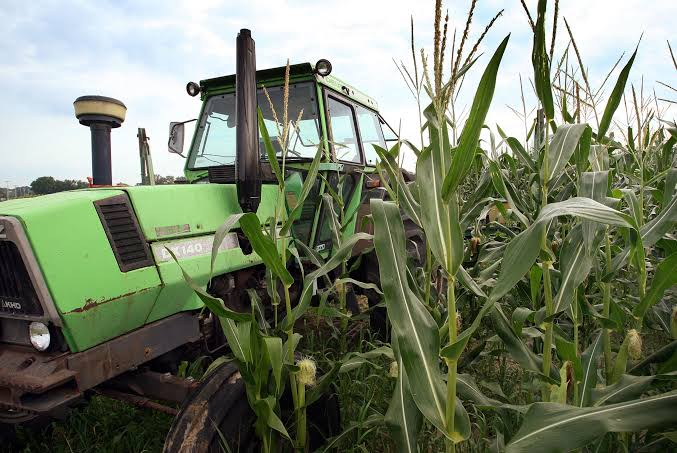
Nebraska farmer Guy Mills Jr. reported spending about $100,000 a year repairing five high-tech John Deere tractors, with approximately 60% of that bill going to labor. In an account published by the American Society of Mechanical Engineers, Mills estimated that he could cut the expense in half if he could diagnose and repair problems himself. Those figures describe one farmer’s experience and estimate, not an industry-wide cost study.

The timing of a failure can matter as much as the invoice. Farmers may have only a few critical weeks to harvest a crop, and Mills said he had to wait hours or days for a John Deere-authorized technician because he lacked access to the tractors’ built-in diagnostic tools. That dependence can turn one breakdown into two financial exposures: the direct cost of service and the potential loss of crop revenue while machinery sits idle.
The central question is not whether modern tractor electronics have value. Sensors, monitors, software, GPS and automated controls can improve productivity and provide capabilities that older mechanical equipment cannot. Another farmer cited in the ASME account, Andrew Mickelsen of Idaho, credited GPS and infinitely variable transmissions with major productivity gains. His complaint was that diagnosing faults had become more difficult and expensive as computers, electronic valves and wiring replaced simpler mechanical linkages.
That distinction matters because diagnosis is not the same as rewriting machine software. An owner may need fault codes, service documentation, calibration procedures or an electronic diagnostic tool simply to identify a failed component. Changing embedded code, increasing power or bypassing emissions and safety controls presents a different engineering and regulatory issue.
Repair cost begins before a part is replaced
For a software-dependent machine, a technician may be required before the owner knows whether the problem is a major component failure or an inexpensive electrical item. Mickelsen described waiting for a technician to replace a fuse costing less than $10. He said the service call cost hundreds of dollars and the associated downtime exceeded $1,000.
That example illustrates how tightly integrated controls change maintenance economics. A low-cost part does not guarantee a low-cost repair when identifying, authorizing or calibrating it requires specialized access. Labor, travel and waiting time can dominate the bill, particularly in rural areas where qualified technicians cannot arrive immediately.
Manufacturers and dealers have argued that they share farmers’ interest in minimizing downtime and have promised access to on-board diagnostics, wireless interfaces, electronic service tools, manuals and training. At the same time, industry proposals have drawn a boundary around software modification and changes affecting electronic control units, safety compliance or emissions standards. That boundary is technically defensible, but its implementation determines whether an owner receives useful repair access or only limited information that still requires a dealer visit.
John Deere did not respond to the request for comment in the ASME account. Mills’s estimate also does not separate every cause within his annual repair spending, so it cannot establish that diagnostic restrictions alone produced the entire $100,000 bill. His reported 60% labor share and projected 50% savings nevertheless identify where he believed much of the avoidable cost resided: troubleshooting and service work he could not perform independently.
Simplicity offers a different systems tradeoff
Canadian manufacturer Ursa Ag is reportedly tripling production of basic tractors that omit complex software, autosteer, GPS and connectivity. Company representative Doug Wilson said advanced technology has a role but is needed for only about 5% of farm work, arguing that many routine tractor jobs do not require it. Interest in the machines reportedly includes both small farms and large U.S. dairy operators.
Ursa Ag’s approach does not prove that simpler equipment has a lower total operating cost in every application. The available comparison does not provide matched models, configurations, workloads, fuel use, productivity data or long-term maintenance records. Removing electronics may improve owner serviceability and reduce the number of software-dependent failure points, but it also gives up automation and connected functions that can be valuable in work suited to them.
The resulting design choice is broader than old machinery versus new machinery. It is a decision about where diagnostic authority resides and how much operational dependence accompanies automation. For Mills, that dependence was measured not only in an annual repair bill but in hours or days lost during a harvest window that would not wait for an authorized technician.
| More aerospace and engineering stories, right in your MSN feed. Follow AMI on MSN |
By Thomas Caldwell — AMI’s senior editor for mechanical and mobility engineering, covering vehicle electronics, systems integration, electrification, chassis systems, propulsion, and safety policy.