Russia May Use Up to 25,000 North Koreans in Drone Production
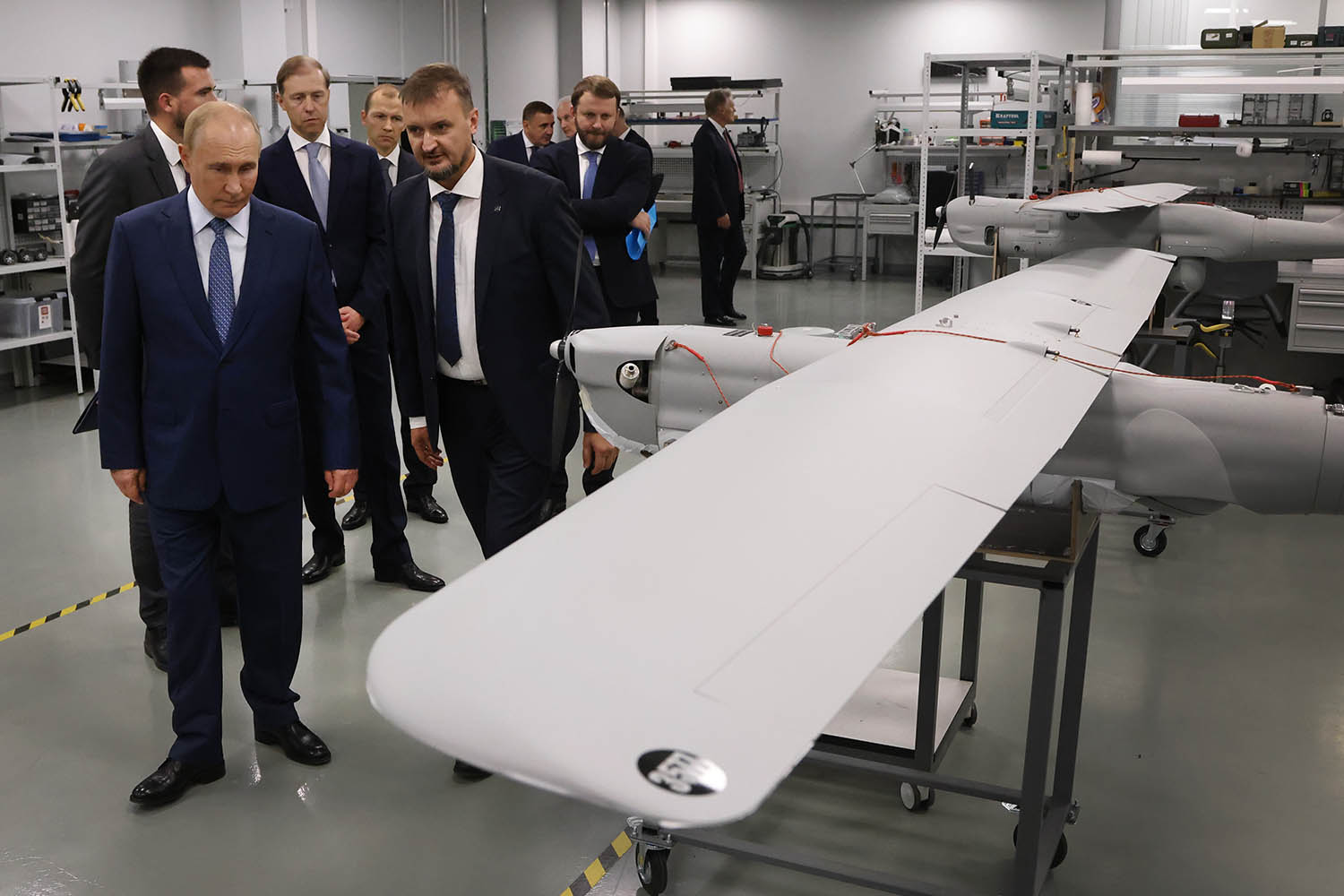
Twenty-five thousand workers would represent a major labor pool for any drone-manufacturing operation. But in Russia, that figure remains an upper-bound estimate rather than a verified headcount. The Multilateral Sanctions Monitoring Team said on September 16 that North Koreans are manufacturing military drones on Russian soil, with as many as 25,000 possibly working in the broader drone industry. The team’s latest findings on North Korea’s overseas labor program also describe a Russian student-visa system used to register workers as students.

The estimate includes employment connected to companies in Alabuga and elsewhere in Tatarstan. Alabuga is associated with Russia’s military-drone production base, making the possible workforce relevant to manufacturing capacity. The monitoring team, however, did not provide a confirmed count for the complex or measure how much drone output if any the North Korean labor channel has added.
Labor can expand capacity, but it does not prove higher output
Manufacturing capacity depends on more than the number of people available. A larger workforce can support additional shifts, material handling, assembly, inspection and other factory functions. Actual output also depends on parts supply, tooling, training, work allocation, quality control and the ability to keep production stations operating without bottlenecks.
That distinction matters here. The possible presence of up to 25,000 workers indicates access to labor at potentially significant scale, but it cannot be converted directly into a drone-production number. It is not clear how many people are assigned to drone work, which companies employ them, what roles they perform or how long they have been in those positions.
The broader estimate for Russia reinforces that uncertainty. The monitoring team calculated that between 15,000 and 30,000 North Koreans were working across Russia as of the end of 2025. If the drone-industry estimate approaches its stated upper limit, military manufacturing would account for a substantial portion of that overseas workforce. The available figures do not establish whether those populations overlap completely, partially or through changing assignments.
The student designation raises a sanctions-monitoring problem
The monitoring team said Russia created a student-visa scheme to camouflage North Korean laborers as students. That classification matters because United Nations measures adopted in 2017 prohibited member states from allowing North Koreans to earn income in their jurisdictions and required income-earning workers to be repatriated by 2019.
For industrial oversight, registration categories can obscure the size and location of a workforce. A person recorded as a student may not appear in labor statistics as a conventional factory employee, complicating attempts to verify staffing levels or identify the businesses receiving the labor. Establishing the real scale would require clearer information about visa status, workplaces, employment arrangements and movement between companies.
The reported arrangement also connects production labor to foreign-currency revenue. Each North Korean worker in Russia generates an estimated average of $7,500 in annual wages, according to the monitoring team. Monthly pay in Russia may be as much as five times higher than in China, depending on the industry.
Across Russia and China, North Korean overseas workers generated an estimated $450 million to $800 million in 2025. The monitoring team said North Korean authorities confiscate 80% to 90% of their wages, and nearly all earnings may ultimately be taken through additional charges. Russia consequently gains workers for industries supporting its war against Ukraine, while Pyongyang receives foreign currency. The labor relationship follows the Comprehensive Strategic Partnership Agreement signed by Russia and North Korea in 2024.
Factory capacity comes with a human-control dimension
The industrial implications cannot be separated from the conditions described for the workers. North Korean authorities tightly monitor overseas citizens’ movement and contact with outsiders, according to the monitoring team. Workers who flee risk reprisals against relatives who remain in North Korea. In some cases, confiscations can exceed a worker’s earnings and leave that person indebted to the state.
The next meaningful measure is therefore not another workforce estimate alone. Verification must establish how many North Koreans are actually employed in drone production, where they work and whether factory output has changed. Until those links are documented, 25,000 is best understood as a warning about the possible scale of Russia’s imported manufacturing labor not a confirmed workforce total or proof of a quantified surge in drone production.
| More aerospace and engineering stories, right in your MSN feed. Follow AMI on MSN |
By Stephen Wallace — Editor for AMI’s aerospace integration and unmanned mobility coverage, focused on drone manufacturing, VTOL systems, autonomous networks, and air-ground mobility links.