Boeing Says 17,000-Worker Strike Could Halt 777-9 Approval, Slow 737 Output
Boeing is trying to increase 737 production while protecting 777-9 certification work, but both efforts now depend on constraints it has not resolved. CEO Kelly Ortberg said on September 16 that a possible strike by 17,000 engineering and technical employees would stop the 777X certification program and likely prevent the company from sustaining its 737 production rates.

No strike is certain. Boeing and the Society of Professional Engineering Employees in Aerospace, or SPEEA, are negotiating a four-year contract, and the union’s negotiating team has recommended accepting Boeing’s latest offer. Represented employees still must vote. If the agreement is rejected and the required conditions are met, the earliest possible strike date is October 7, one day after the existing contracts expire.
The risk is unusually broad because SPEEA represents 13,000 Boeing engineers and scientists as well as 4,000 technicians, analysts and planners. That workforce supports engineering approval, certification and production activity that cannot simply be separated from the aircraft moving through Boeing’s factories.
Ortberg said a strike would mean the 777X “certification programme shuts down until we get the engineers back.” He also warned of a production ripple effect. Boeing has prepared a contingency plan intended to preserve some 737 work, but Ortberg said the company probably would not be able to sustain its production rates during a strike. Its objective would be to keep the line active rather than maintain normal output.
That distinction matters for airlines awaiting aircraft. Certification work determines whether the 777-9 can progress through the approval process, while stable factory output determines how consistently Boeing can build and ultimately deliver 737s. A work stoppage could affect both, but through different mechanisms: unavailable engineering labor on one program and disruption across an already constrained production system on the other.
The 737 ramp has a separate wing bottleneck
Even if Boeing avoids a strike, its planned 737 production increase is not yet secured. Ortberg identified wing manufacturing as the current constraint, saying Boeing has not seen the expected improvements in factory flow.
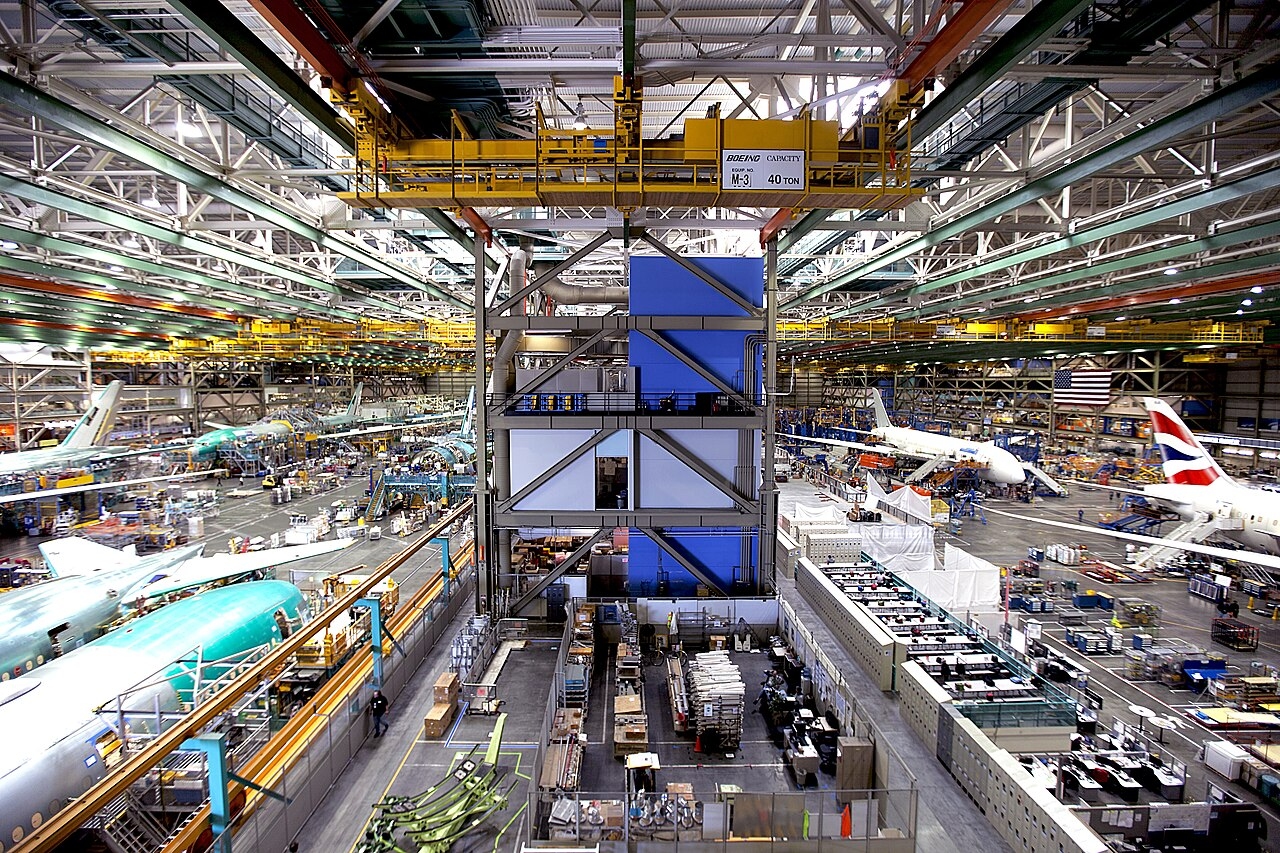
Boeing produces 737 wings in Renton, Washington, for aircraft assembled there and for its second 737 Max line in Everett. That makes the Renton wing shop a shared upstream source: adding another final-assembly line does not by itself create higher output if the wing operation cannot supply both lines at a stable pace.
Boeing said in May that its 737 lines had started running at a planned rate of 47 aircraft per month. Ortberg clarified on September 16 that the company is still working toward that level rather than consistently achieving it. The difference between a target rate and sustained output is central to understanding the ramp. A factory can demonstrate a higher pace temporarily, but Boeing needs repeatable flow before it can treat that pace as stable production capacity.
The company now expects its next planned increase, to 52 aircraft per month, next year. Ortberg said Boeing must first see stability in the wing shop. Its longer-range plans call for 57 and eventually 63 aircraft monthly, but those figures remain targets, not achieved output.
Wing stability matters because an uneven upstream flow can leave final assembly alternately short of major structures and pressured to absorb arriving work. Boeing has not provided a more specific cause for the slower than expected wing flow, so the available information does not establish whether the issue centers on labor, tooling, quality, sequencing or another factory variable.
A contract vote separates risk from shutdown
SPEEA members previously rejected an earlier proposal and authorized strike action. Boeing delivered its latest offer on September 11, and the negotiating team subsequently recommended approval. According to the union’s published voting schedule, voting is set to run from September 24 through October 1.
A rejection would not automatically start a strike. The negotiating teams would seek to return to bargaining, and a walkout could occur only after the contracts expire and the union’s required process is completed. SPEEA’s professional and technical units have gone on strike together only once, in 2000, when the stoppage lasted 40 days.
The immediate milestone is therefore the contract vote, but avoiding a walkout would settle only one of Boeing’s two capacity risks. The 777-9 could keep moving through certification and the 737 lines could avoid strike disruption, yet Boeing still would not raise its 737 target to 52 aircraft per month until the Renton wing shop demonstrates stable flow.
| More aerospace and engineering stories, right in your MSN feed. Follow AMI on MSN |
By David Whitaker — Associate editor for AMI’s aerospace and drone systems desk, translating flight systems, aircraft programs, spaceflight, and UAV developments into accessible technical stories.