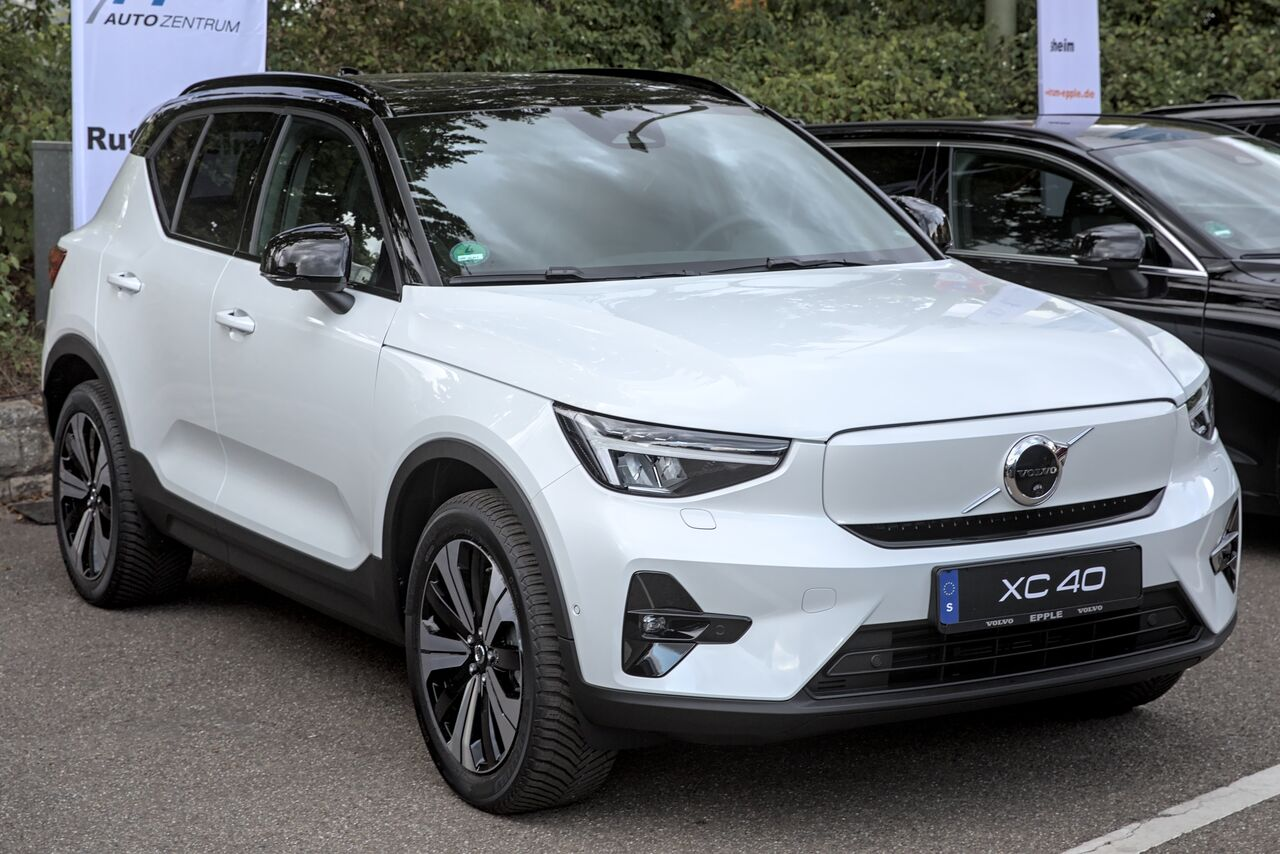
Volvo EX40 Exit Would Raise Cheapest U.S. EV Price to $59,795
Volvo’s withdrawal of the EX40 would lift the starting price of its least-expensive U.S. electric vehicle from $56,545 to $59,795—a $3,250 increase. The replacement entry point, the 2027 EX60 P6 Plus, offers newer charging hardware and more space, but its cited 307-mile range is only 11 miles above the outgoing EX40’s maximum estimate.

Volvo confirmed the EX40’s U.S. cancellation to Car and Driver, which described the 2026 model as the final American version. Other reporting places the model’s removal after the 2027 model year. The precise inventory transition may therefore vary, but the product decision is clear: the updated EX40 will continue in Europe while disappearing from the United States and Canada.
A higher price buys more than 11 miles
On the headline specifications, the immediate trade looks narrow. The 2026 EX40 starts at $56,545 and provides up to 296 miles of EPA-estimated range. The 2027 EX60 P6 Plus costs $59,795 including destination and carries a 307-mile EPA estimate. Comparing those cited configurations produces the $3,250 price increase and 11-mile range gain.
That comparison needs one important boundary: maximum rated range is only one measure of an electric vehicle’s usefulness. The EX60 is a larger, newer vehicle built around Volvo’s latest electrical architecture. Its most consequential technical improvement may be charging rather than the relatively modest increase in distance between charges.
The EX60 uses an 800-volt electrical system, and Volvo says it can add 165 miles of range in 10 minutes. That claim describes a charging result rather than a complete zero-to-full session, but it indicates where the newer platform is intended to improve long-distance operation: reducing the time needed to recover a useful amount of range during a stop.
The EX60 is also Volvo’s first electric vehicle with a built-in North American Charging Standard port. Volvo says that gives drivers adapter-free access to more than 29,000 Tesla Superchargers. Removing the adapter from the charging interface does not change the vehicle’s EPA range, but it simplifies physical compatibility and eliminates another component for an owner to carry, connect and manage.
Those features make the EX60 more than an EX40 with 11 additional rated miles. The higher entry price buys a newer charging architecture, native access to a large charging network and a larger vehicle. For shoppers primarily concerned with purchase price or compact dimensions, however, those improvements do not erase the loss of a lower-priced Volvo EV.
The rumored EX50 does not close the gap yet
A future EX50 could eventually restore a model beneath the EX60, but its role in the United States remains unconfirmed. Automotive News reported that Volvo is developing an electric crossover that could debut by the end of 2027 for less than $50,000. The prospective model is expected to use the same SPA3 platform as the EX60.
There is at least a documented sign that the name is under consideration: Volvo filed an EX50 trademark application with the European Union Intellectual Property Office on July 14, 2026. A trademark filing, however, does not establish a production schedule, final specifications, price or destination market. No confirmed U.S. launch date or guarantee of American availability has been provided.
Until Volvo defines that vehicle and its markets, the EX60 is the relevant comparison for U.S. buyers. Its $59,795 starting price would place Volvo’s electric entry point close to $60,000, while the measurable payoff over the outgoing EX40 is split unevenly: only 11 more miles in the cited range figures, but a substantially newer charging system and adapter-free access to more than 29,000 Superchargers.
| More aerospace and engineering stories, right in your MSN feed. Follow AMI on MSN |
By Thomas Caldwell — AMI’s senior editor for mechanical and mobility engineering, covering vehicle electronics, systems integration, electrification, chassis systems, propulsion, and safety policy.