Ukrainian Drone Strike Halts Yaroslavl Refinery With 73% of Capacity Offline
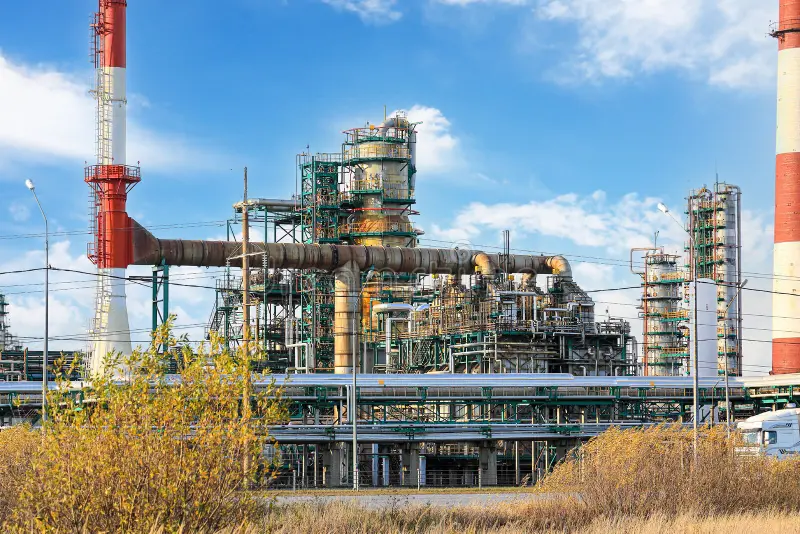
A Ukrainian drone strike reportedly halted crude processing at the Slavneft Yaroslavnefteorgsintez refinery in Russia’s Yaroslavl region on September 18, leaving its two largest primary-processing units unavailable. The immediate industrial problem is not only the newly damaged unit: equipment representing 33% of the plant’s nominal capacity was already under repair when another unit handling about 40% was damaged.

Four industry sources told Reuters that the refinery, commonly called YANOS, stopped processing crude after equipment was damaged. Ukrainian President Volodymyr Zelenskyy said Ukraine struck the facility, about 250 kilometers northeast of Moscow. Regional governor Mikhail Yevrayev said 65 drones were downed, no casualties occurred, the refinery was damaged and fires were being extinguished. The refinery’s press service did not immediately respond to Reuters, and no detailed damage assessment or restart date was available.
Why the 73% figure matters
Crude-distillation units form the front end of a refinery. They separate incoming crude into streams that subsequently feed other processing equipment. If that primary stage is unavailable, having downstream equipment intact does not by itself preserve normal production because the refinery first needs material processed through the crude units.
YANOS has three primary distillation units. The reportedly damaged AVT-3 is rated for 17,140 metric tons per day, about 40% of total nominal capacity. AVT-4 can process 14,300 tons per day, or 33%, but was already being repaired following damage attributed to an August 28 drone attack. Together, those units represent 73% of the refinery’s stated primary-processing capacity.
The remaining AT-4 unit is rated at 11,430 tons per day, equivalent to 27%. On paper, that means the refinery still has one primary unit not identified as damaged or under repair. In practice, the reported halt shows why nominal surviving capacity and immediately usable plant capacity are different measures. The available information does not establish AT-4’s operating status, whether supporting systems were affected or whether the refinery could run that unit independently. It would therefore be premature to assume either a rapid partial restart or a complete long-term loss.
That distinction is central to refinery redundancy. Three crude units offer multiple processing paths under ordinary maintenance conditions, but concurrent outages can remove most of that flexibility. Restarting one unit would materially change the capacity picture; until then, the plant lacks the two processing trains responsible for nearly three-quarters of its nominal front-end throughput.
A large plant disappears from the daily fuel market
YANOS is rated to process 300,000 barrels of crude per day, or 15 million metric tons annually. Industry sources said it processed 14.9 million tons in 2024, close to that stated annual capacity. They attributed 2024 production of 2.6 million tons of gasoline, 4 million tons of diesel and 4.7 million tons of fuel oil to the refinery.
Market participants said YANOS fuel was not offered on Russia’s domestic commodity exchange on Thursday. One day without offers does not establish the duration or ultimate volume of a supply shortfall. It is nevertheless an immediate commercial sign that the processing interruption reached beyond damaged equipment and into product availability.
The outage also arrives during broader pressure on Russian refining. In a September 17 analysis of the sector, the International Energy Agency said Russian throughput fell to 3.8 million barrels per day in June, its lowest level in more than 20 years and about 30% below a year earlier. The IEA said Russia had restricted gasoline, jet-fuel and diesel exports as it sought to protect domestic supply.
That background does not determine the effect of this individual shutdown, but it narrows the system’s room to absorb another major outage. A refinery can sometimes compensate for a disabled unit by changing run rates elsewhere, drawing inventories or moving products between regions. Those responses become harder and costlier when multiple plants are constrained and domestic supply already has priority over exports.
Repair scope is the unresolved variable
The damaged equipment has been identified by industry sources as a crude-distillation unit, but the extent of damage has not been disclosed. The IEA notes that minor damage to such a unit can typically be repaired within one or two weeks, while more complex secondary equipment can require much longer. That sector-level benchmark is not a forecast for YANOS; without an inspection result, it cannot establish this refinery’s schedule.
The next meaningful indicators will be a damage assessment, an operating update for the remaining AT-4 unit, renewed domestic exchange offers and a restart date for either AVT-3 or AVT-4. Until one of the two larger units returns, YANOS faces a reported shutdown with 73% of its nominal primary-processing capacity unavailable and no confirmed timetable for restoring it.
| More aerospace and engineering stories, right in your MSN feed. Follow AMI on MSN |
By Stephen Wallace — Editor for AMI’s aerospace integration and unmanned mobility coverage, focused on drone manufacturing, VTOL systems, autonomous networks, and air-ground mobility links.