Reported Patriot Use Hits 943 Rounds in 96 Hours, Outrunning Production
943 Patriot rounds in 96 hours. That reported expenditure by U.S. and Gulf forces during the opening days of the conflict with Iran exceeded the 620 interceptors Lockheed Martin is said to produce in an entire year. It also surpassed the approximately 840-round combined annual output attributed to production in the United States, Germany and Japan.
The figures, attributed to the Foreign Policy Research Institute, illustrate an industrial problem larger than any single engagement: Patriot consumption can now be measured in hundreds over days, while replacement production remains measured in hundreds over a year. Even if operational demand falls sharply, restoring inventories needed by the United States, Ukraine and other operators could take months or years.
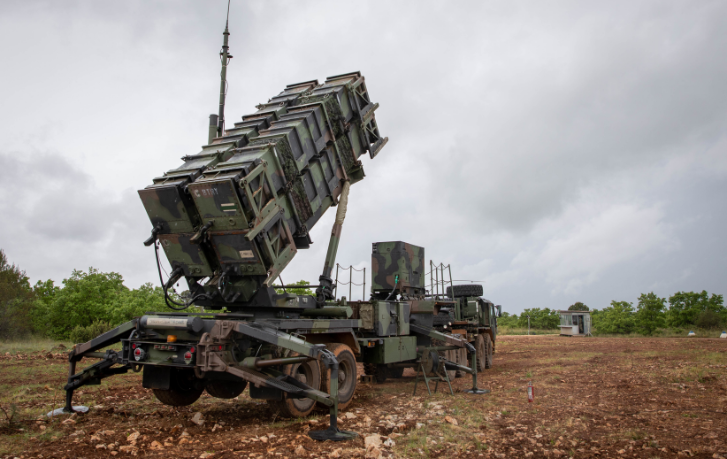
Patriot is a mobile surface-to-air defense system used to counter threats that include ballistic missiles. Nineteen countries besides the United States operate it, protecting cities and military installations across Europe, the Middle East and Asia. That broad customer base does not translate into an equally broad manufacturing base. Almost all operators remain tied to U.S. production and supply chains, with Germany and Japan identified as the only countries licensed to manufacture Patriot interceptors domestically.
One incoming missile can consume several interceptors
The production gap is more severe than a one-for-one comparison suggests. An engagement can require two, three or more defensive interceptors against one incoming missile. That practice may improve the probability of stopping a threat, but it also converts a relatively small number of incoming weapons into a much larger demand for replacement rounds.
This is the central manufacturing constraint: a Patriot battery can be deployed or transferred faster than the industrial system can necessarily refill it. Launchers, radars and crews provide no sustained defensive capacity without compatible interceptors. Readiness therefore depends not only on how many systems an operator possesses, but also on the depth of its missile inventory and the reliability of its replenishment pipeline.
Comparisons between interception rates also require care. The Congressional Research Service was cited as saying Patriot, operating alongside other defenses, intercepted more than 90% of Iranian missiles and drones this year. That figure covers a layered defensive effort and a mix of threats; it does not establish Patriot’s isolated performance or reveal how many interceptors each engagement consumed.
Ukraine shows the readiness consequence
The Guardian has reported that Ukraine exhausted its Patriot supplies and that its ballistic-missile interception rate fell from above 70% to zero. The Financial Times separately reported that Kyiv stopped publishing Russian missile-launch totals to avoid exposing failed interceptions and damaging morale. Those battlefield claims have not been independently confirmed here, but they describe the direct risk created when interceptor stocks become too thin: an installed defense system may be unable to provide its intended coverage.
The industrial imbalance is particularly difficult because demand is shared. Interceptors allocated to rebuild one operator’s inventory cannot simultaneously fill another country’s order or replace rounds consumed elsewhere. The reported 943-round expenditure alone was 103 interceptors greater than the stated combined yearly output of the three producing countries.
Expanding production is underway, but additional factories do not produce immediate inventory. Germany and the United States signed an agreement to expand joint development, licensed manufacturing, production and sustainment capacity. Germany’s MBDA operation is already making older PAC-2 interceptors, while production of the newer PAC-3 MSE is expected to begin at its Schrobenhausen plant later in 2026.
Germany has also pushed for broader European production rights, but licensing is only one part of the problem. A new line needs qualified suppliers, specialized machinery, trained workers, inspection capacity and a stable flow of components. Japan reportedly produces about 30 PAC-3 interceptors annually under license and may be able to double that rate, yet component availability remains a constraint.
Commercial manufacturing capacity may help at the component level. GM Defense delivered its first batch of PAC-3 housing components to Lockheed Martin 22 days after the companies signed their agreement. That is evidence of a faster supplier start, not proof that completed interceptor output can rise at the same pace. Repeated deliveries, acceptable inspection results and integration with propulsion, guidance and other constrained components will determine whether the added supplier materially changes annual production.
The next meaningful milestone is therefore not another production announcement. It is sustained delivery of completed interceptors at a rate that exceeds continuing use and begins rebuilding allied reserves. Until then, the defining Patriot number remains the mismatch: 943 rounds reportedly fired in four days against about 840 made across three countries in a year.
| More aerospace and engineering stories, right in your MSN feed. Follow AMI on MSN |
By David Whitaker — Associate editor for AMI’s aerospace and drone systems desk, translating flight systems, aircraft programs, spaceflight, and UAV developments into accessible technical stories.