SpaceX Launches Astronauts, 130 Payloads and First Falcon Heavy Mission for U.S. Spy Agency
SpaceX closed October 1 with three completed launches spanning nearly the full range of its current orbital business: four astronauts headed to the International Space Station, 130 rideshare payloads deployed from California and a classified National Reconnaissance Office mission launched by Falcon Heavy. The missions used three launch complexes, two rocket configurations and different plans for recovering or expending their boosters.
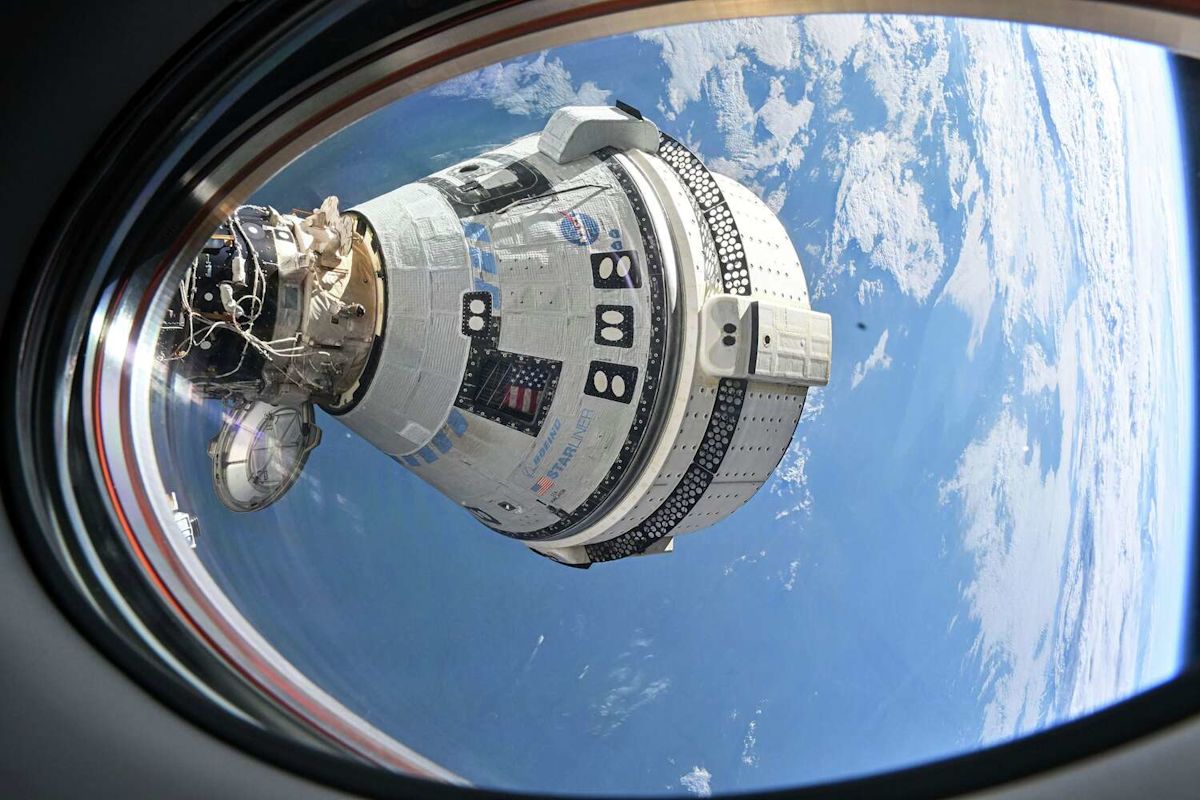
The sequence began at 11:10 a.m. EDT, when Crew-13 lifted off from Space Launch Complex 40 at Cape Canaveral Space Force Station. The NASA mission carried commander Jessica Watkins, pilot Luke Delaney of the U.S. Marine Corps, Canadian Space Agency astronaut Joshua Kutryk and Roscosmos cosmonaut Sergey Teteryatnikov toward the space station.
That launch followed hands-on work inside the Crew Dragon capsule. SpaceX cut into a propellant line to replace a faulty valve before clearing the spacecraft for flight. The repair is an important part of the day’s operational picture: crew transportation imposes spacecraft inspection and human-rating demands that do not apply in the same way to an uncrewed rideshare launch.
The Falcon 9 first-stage booster supporting Crew-13, designated B1101, was making its third flight. It returned to Landing Zone 40 at Cape Canaveral, preserving the stage for possible future use. NASA had planned a roughly seven-hour, 50-minute trip between launch and docking, which the agency said would be the fastest station transit by a U.S. spacecraft.
Transporter-18 shifted the operation to California
SpaceX then moved the day’s launch activity across the country. Transporter-18 departed from Vandenberg Space Force Base and deployed 130 payloads. Instead of carrying one primary spacecraft, the rideshare mission served a broad group of satellite operators sharing a Falcon 9 launch.
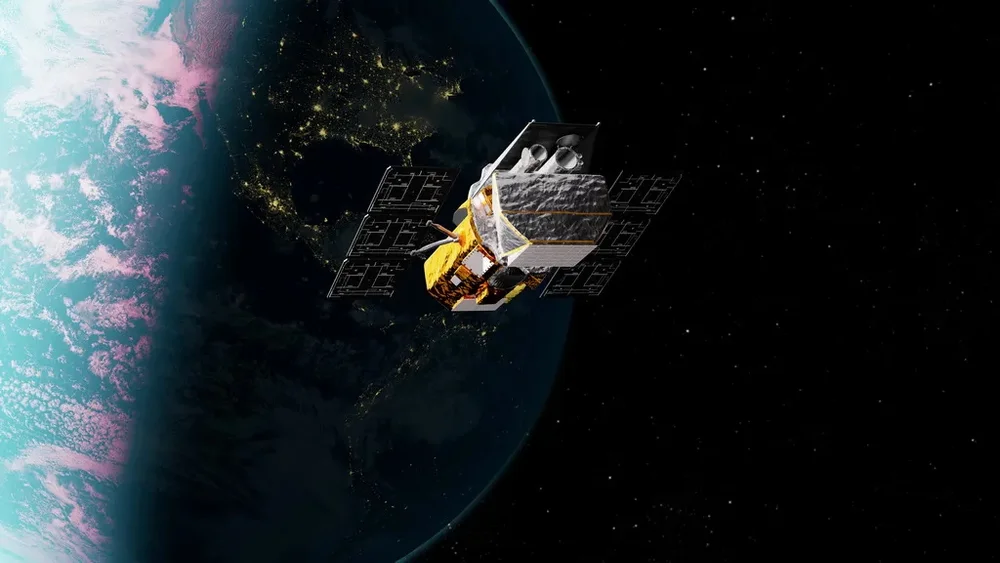
Among those payloads was Starfish Space’s first full-scale Otter satellite-servicing vehicle. Its inclusion illustrates why rideshare missions are operationally different from crew flights or large classified launches: the launch provider must accommodate and release many spacecraft rather than integrate around a single crew capsule or government payload.
The Florida and California missions did not use one shared launch crew or pad. Their same-day timing depended on separate launch infrastructure, regional teams and mission-specific processing. That distinction matters because three launches in a day do not mean one pad or one rocket was rapidly turned around three times. They show that SpaceX can coordinate a distributed launch network while keeping substantially different missions moving through their own countdowns.
Falcon Heavy delivered the national-security milestone
At 11:54 p.m. EDT, Falcon Heavy lifted off from Kennedy Space Center’s Launch Complex 39A with NROL-97. It was the rocket’s 14th flight and its first mission for the National Reconnaissance Office, which had previously launched payloads aboard 22 Falcon 9 rockets. The mission was procured under a National Security Space Launch Phase 3 Lane 2 contract awarded in 2025.
The NROL-97 payload and its destination orbit remain classified. Publicly available information therefore supports no firm conclusion about the spacecraft’s mass, purpose or final operating location. What is confirmed is the NRO’s move from SpaceX’s single-core Falcon 9 to the three-core Falcon Heavy for this mission.
The booster plan also separated NROL-97 from the day’s other flights. Falcon Heavy’s new center core, B1106, was expended rather than recovered. Its two side boosters, B1104 and B1072, returned to Landing Zones 1 and 2 at Cape Canaveral. B1104 was completing its second flight and B1072 its fourth.
Both side boosters had flown only a month earlier on the launch of NASA’s Nancy Grace Roman Space Telescope. Reusing them for NROL-97 demonstrated the practical value of maintaining a recoverable booster fleet, while expending the center core showed the boundary of that strategy: recovery is a mission-level choice, not a requirement applied uniformly to every Falcon Heavy flight.
SpaceX had previously completed three launches within a similarly short period in March 2025, but those were all Falcon 9 missions. October 1 added a different test of organizational reach. The company handled a repaired human-rated capsule, a 130-payload deployment campaign and a classified heavy-lift government mission then finished the day by recovering Falcon Heavy’s side boosters while deliberately giving up its center core.
| More aerospace and engineering stories, right in your MSN feed. Follow AMI on MSN |
By David Whitaker — Associate editor for AMI’s aerospace and drone systems desk, translating flight systems, aircraft programs, spaceflight, and UAV developments into accessible technical stories.