Taiwan Receives Two F-16s; 64 Remain on Delayed $8 Billion Order
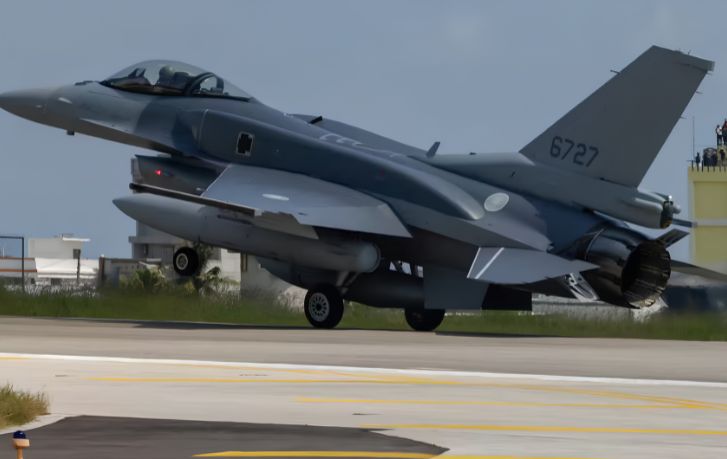
Taiwan has received the first two fighters from its delayed $8 billion order for 66 new F-16s, moving the acquisition from production into physical delivery while leaving 64 aircraft outstanding. The two F-16V Block 70 jets arrived at Chihhang Air Base in Taitung on October 2.
The arrival is a concrete procurement milestone, but not the completion of the program or confirmation that the aircraft are already operationally integrated. Taiwan’s air force still must conduct equipment acceptance, transition training and other preparations before gradually bringing the new jets into service.
Delivery follows a disrupted schedule
Washington approved the 66-aircraft sale in 2019. Deliveries were expected to begin earlier, but the program encountered software-related problems as well as production and supply-chain disruptions. Taiwan repeatedly raised concerns about delays affecting weapons ordered from the United States.
Defense Minister Wellington Koo said more F-16Vs would arrive soon. No firm timetable was provided for the remaining 64 aircraft, making delivery pace the central unresolved issue. A first pair allows acceptance and training work to advance with aircraft in Taiwan, but two jets represent only about 3% of the total order.
The distinction matters for readiness. Fighter procurement does not end when an aircraft lands at its customer’s base. Aircrew conversion, maintenance training, support equipment, spare parts, software configuration and local operating procedures all contribute to the time required to turn delivered hardware into a sustainable fleet capability. The information released with the arrival does not establish when the first aircraft will reach that point.
New-build fighters extend an existing modernization effort
The Block 70 aircraft bring upgraded radar, avionics and weapons systems designed for modern aerial threats. Their active electronically scanned array radar can update and steer its beam electronically rather than relying on a mechanically swept antenna, supporting faster tracking and improved management of multiple contacts. The aircraft also incorporate modern cockpit and electronic-warfare systems.
Taiwan is not introducing the F-16 as an unfamiliar aircraft type. It completed an upgrade of its existing F-16 fleet in 2023, giving the air force a substantial base of experience with the platform and related systems. That continuity can reduce some transition burdens compared with adopting an entirely different fighter, although new-build Block 70 aircraft still require their own acceptance, training and sustainment work.
Once all 66 aircraft are delivered, Taiwan’s F-16 fleet is expected to exceed 200 fighters. The new jets are intended to supplement the upgraded aircraft already in service rather than replace the entire force with a new design. The United States has not supplied Taiwan with the more advanced F-22 or F-35, so the F-16V represents the centerpiece of this phase of its fighter modernization.
Pressure is measured in both capability and availability
Taiwanese forces routinely launch aircraft to monitor Chinese military activity around the island. China’s air force also operates the J-20 stealth fighter, one of the modern threats cited in connection with Taiwan’s demand for improved sensors and avionics. China claims Taiwan as its territory and has repeatedly called on Washington to stop supplying weapons to the island.
Those conditions make aircraft availability as important as specifications. An advanced radar or cockpit adds little immediate capacity while an aircraft remains on a production line or in the delivery pipeline. Conversely, the arrival of two fighters begins local preparation but cannot deliver the scale envisioned by a 66-aircraft purchase.
The program has therefore crossed an important boundary without resolving its largest constraint. Taiwan now has its first newly built F-16s from the 2019 order on the island, and acceptance and training can proceed. The next meaningful measure will be whether subsequent batches arrive quickly enough to turn that first pair into a functioning fleet on a schedule that, for the remaining 64 aircraft, has yet to be disclosed.
| More aerospace and engineering stories, right in your MSN feed. Follow AMI on MSN |
By David Whitaker — Associate editor for AMI’s aerospace and drone systems desk, translating flight systems, aircraft programs, spaceflight, and UAV developments into accessible technical stories.