Boeing Faces Years Reworking Roughly 30 777-9 Jets Built Before Approval
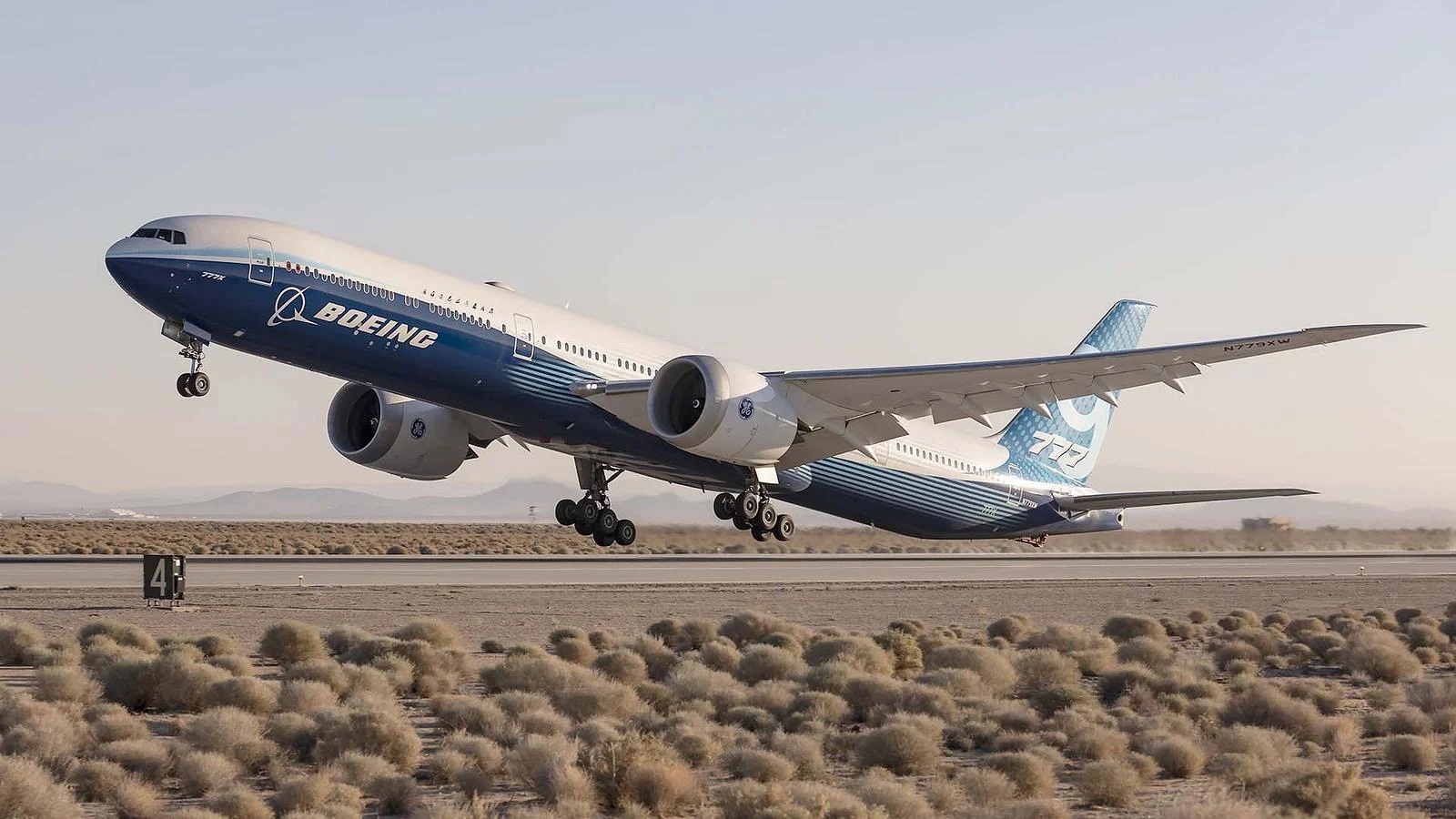
Roughly 30 Boeing 777-9 jets may look complete, but they cannot simply be handed to airlines once the aircraft receives certification. Built at different stages of a design and production system that continued to evolve, each airframe requires its own package of structural, wiring, software, inspection and testing work before delivery.
Boeing calls that process “change incorporation.” The company has established a dedicated organization within Boeing Commercial Airplanes to manage the stored jets, and CEO Kelly Ortberg said in 2026 that the work will take several years. The problem adds another execution challenge to a program originally expected to enter airline service in 2020 and now targeting its first delivery in 2027.
Why a completed aircraft is not necessarily deliverable
Commercial-aircraft manufacturers commonly begin production before certification is finished. Doing so lets factories develop tooling, validate assembly sequences, train workers and gain experience while flight testing continues. That approach can shorten the path from approval to customer deliveries when the design and certification schedule remain relatively stable.
The tradeoff is concurrency: production and certification proceed at the same time. If requirements, engineering designs or manufacturing processes change after an aircraft is assembled, the earlier hardware must be brought forward to the approved delivery configuration. A limited number of changes can be manageable. Years of accumulated revisions create a substantially different problem.
The 777-9 inventory spans aircraft assembled at different points in the program. Consequently, there is no single modification package that can be applied identically across all 30 jets. Older examples generally need more extensive work than newer ones, including structural changes on some airframes. Other affected areas include flight-control software, engine-control software and wiring routes.
Those categories also interact. Replacing or rerouting wiring can require technicians to open finished areas of an aircraft, remove nearby equipment and later restore the installation. A structural modification can generate new inspection requirements. Updated software must be loaded in the correct hardware configuration and then checked through the applicable ground or flight-test process. Even when the final design is common, the route to that design depends on what was installed in each individual aircraft.
Every stored jet becomes a separate engineering project
The dedicated organization therefore must establish the configuration of each airframe, compare it with the required delivery standard and define an aircraft-specific work scope. That is closer to managing a fleet of modification projects than restarting a normal production line.
Access is a major practical constraint. Factory workers can install components efficiently when the fuselage is open and systems are being added in sequence. Rework on an assembled aircraft reverses part of that process. Interiors, panels, equipment or other finished installations may have to be removed to reach the area being changed. The aircraft must then be reassembled, inspected and tested without introducing discrepancies elsewhere.
This helps explain why “completed” is a misleading description of the inventory. The jets have progressed through major assembly, but completion for delivery depends on conformity with the final approved design, supporting documentation and the required verification work. Physical appearance does not establish configuration compliance.
One particularly early airframe illustrates the economic boundary. WH007, the seventh 777-9 built, rolled out in Everett in July 2019 but never flew and never received engines. Boeing dismantled it in late summer 2025 because bringing that early example to the expected production standard was judged uneconomic. Its removal did not represent abandonment of the wider 777-9 program.
Customers and program costs add pressure
Airlines also have their own acceptance considerations. Emirates has 270 777X aircraft on order, but President Tim Clark said at the 2026 Farnborough Airshow that the carrier would not accept the first 10 aircraft from its order because of the extent of their required modifications. That position underscores why configuration history can matter commercially even after an aircraft has been brought to an approved standard.
The prolonged schedule has already carried substantial financial consequences. Boeing recorded a $4.9 billion pretax 777X charge in October 2025 after moving expected first delivery to 2027, pushing cumulative program charges above $15 billion. Boeing maintains its financial filings and quarterly disclosures in its company reports archive. Those figures cover the broader program and should not be interpreted as a disclosed price for modifying the stored aircraft alone.
Certification work has continued alongside the rework planning. Boeing reported that 777-9 flight testing entered the Type Inspection Authorization phase in late 2025, and said in May 2026 that the test fleet had accumulated more than 4,700 flight-test hours. Certification remains the prerequisite for delivery, but approval will not instantly convert the stored inventory into customer-ready aircraft. Boeing must still process roughly 30 distinct configuration histories one airframe, one work package and one verification sequence at a time.
| More aerospace and engineering stories, right in your MSN feed. Follow AMI on MSN |
By Thomas Caldwell — AMI’s senior editor for mechanical and mobility engineering, covering vehicle electronics, systems integration, electrification, chassis systems, propulsion, and safety policy.