Ukrainian Drone-Linked Shutdowns Push Russian Refining Toward 4 Million Barrels Daily
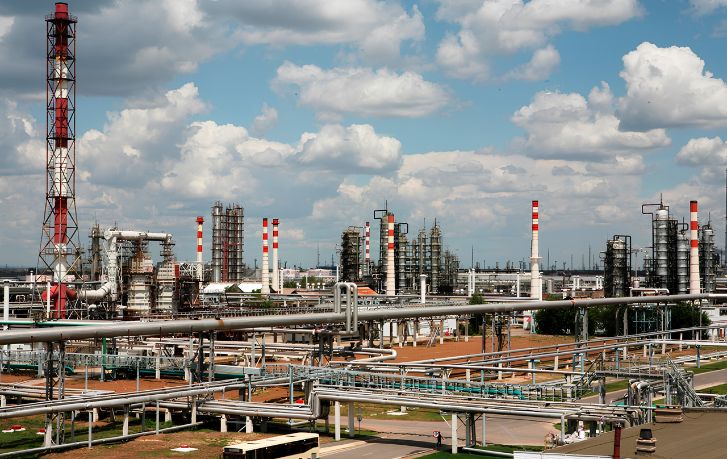
Four million barrels per day is the figure defining the latest pressure on Russia’s oil-refining network. Kpler forecasts that refineries will process roughly that amount in August 2026 as unplanned repairs and shutdowns including outages attributed to Ukrainian drone attacks remove capacity from service.

The estimate is nearly 5% below July’s reported 4.2 million barrels per day and about 2.5% below the June figure of 4.1 million. An industry source cited by Kommersant offered a broader August range of 3.8 million to 4.1 million barrels per day. These remain forecasts and attributed estimates rather than a final, independently verified monthly total.
The important comparison is with Russia’s customary throughput of 5.3 million to 5.5 million barrels per day. A four-million-barrel rate would leave the system operating roughly 1.3 million to 1.5 million barrels per day below that range. That gap is larger than any single reported refinery outage and shows why cumulative disruption, not one incident, is the central industrial issue.
Repeated outages constrain the network
A refinery network can partly compensate for one unavailable plant by increasing activity elsewhere, drawing on inventories, changing maintenance schedules or redirecting products between regions. That flexibility shrinks when multiple facilities are undergoing repairs or operating below normal rates at the same time. Higher utilization at remaining plants can offset only part of the lost processing, while distribution must bridge longer distances between available supply and demand.
The latest reported shutdown involved the Orsknefteorgsintez refinery following an Aug. 11 Ukrainian drone attack. Reuters reported that a fire and equipment damage stopped processing at the facility, which has capacity of approximately 115,000 barrels per day. That account is one attributed element of the broader capacity picture; the operational consequence is the loss of another processing source while the national system is already constrained.
The distinction between crude supply and refinery output also matters. Crude oil is an input, not finished motor fuel. Refineries must convert it into products such as gasoline and diesel that meet operating and quality requirements. When processing capacity falls, having crude available does not by itself keep filling stations supplied.
The industry estimate places the practical danger zone lower, at 3.3 million to 3.5 million barrels per day. Below that range, supplying Russia’s domestic fuel market was described as extremely difficult. The August outlook remains above that threshold, but the margin is only about 500,000 to 700,000 barrels per day at the four-million forecast. That is a meaningful buffer, though not a large one in a national system facing seasonal demand, repair uncertainty and uneven regional distribution.
Motorists are seeing the distribution consequences
In early July, Russian refineries were reportedly producing about 70% of the gasoline required during the seasonal demand period, prompting authorities to arrange imports. Imports can close part of a production gap, but they add transportation and scheduling requirements and may not place fuel where it is needed as quickly as normal domestic production.
The regional controls show how a national processing shortfall can become a local mobility problem. Lipetsk reinstated odd-even gasoline sales from Aug. 13 after canceling the system earlier in the month. Orenburg introduced odd-even sales at all filling stations following the Orsk shutdown. Both regions limited purchases to 30 liters per vehicle. Sochi authorities had also urged residents and tourists to reduce private-vehicle use because supplies at local filling stations were disrupted.
Those measures do not establish that every region faces the same shortage. They do show that the system’s response has moved beyond refinery scheduling into demand management: limiting how much motorists can buy, assigning purchase days and asking drivers to reduce consumption. Freight operators and other fuel-dependent users face the same underlying constraint even when regional rules differ.
A quick recovery would still leave a large deficit
The industry source projected September processing between 4 million and 4.3 million barrels per day. Even the top of that range would remain about 1 million barrels per day below the lower end of customary operations. The source did not expect a return to 5.3 million to 5.5 million barrels per day for the foreseeable future.
That outlook is consistent with the cumulative-reliability problem described in a later International Energy Agency assessment. The agency said repeated damage and repair cycles were increasing restoration work while the effect on refinery reliability remained uncertain. It subsequently placed average Russian throughput near 4 million barrels per day for the remainder of 2026 and for 2027.
The immediate engineering and logistics challenge is therefore not simply restarting one plant. Russia must restore enough dependable processing capacity across the network to rebuild product supply, reduce reliance on imports and remove regional purchase controls. At the forecast four-million-barrel rate, the system remains above the cited critical threshold but far below the throughput on which customary domestic supply was built.
| More aerospace and engineering stories, right in your MSN feed. Follow AMI on MSN |
By Stephen Wallace — Editor for AMI’s aerospace integration and unmanned mobility coverage, focused on drone manufacturing, VTOL systems, autonomous networks, and air-ground mobility links.