Air Force Plans $1.7 Billion to Keep B-1B and B-2 Bombers Flying
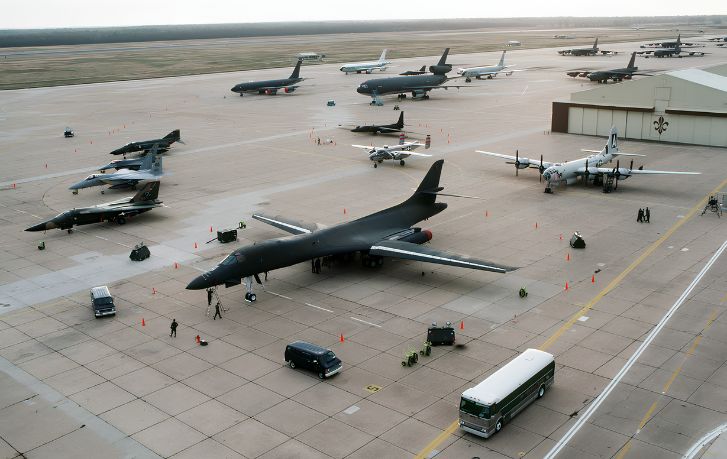
The U.S. Air Force faces a fleet-management problem that cannot be solved simply by retiring its oldest bombers. It plans approximately $1.692 billion in B-1B Lancer and B-2 Spirit upgrades from fiscal 2027 through 2031, preserving long-range aircraft while the new B-21 Raider enters service and the B-52 fleet undergoes a major overhaul.

The planned total consists of $342 million for B-1 modernization and $1.35 billion for upgrades to the 19-aircraft B-2 fleet. Budget language says the B-1 work is intended to ensure the aircraft’s “lethality and relevance through 2037.” The cited budget documents do not provide a retirement date for the B-2.
That spending marks a shift from earlier plans that anticipated retiring both aircraft types in the early 2030s as the B-21 arrived. Air Force Global Strike Command has since confirmed that the B-1 and B-2 will be extended, although it has not announced precisely how long each fleet will remain in service.
Three bomber transitions are overlapping
The central issue is not merely the age of the B-1 and B-2. It is the timing of three major fleet transitions. The B-21 will incrementally replace both aircraft, but a new bomber does not create a full operational fleet as soon as its first examples reach a base. Aircraft must be delivered, tested, maintained and supported while aircrews and ground personnel build experience with the new platform.
The first operational B-21s are planned for Ellsworth Air Force Base in 2027, with Whiteman Air Force Base designated as the second operating base. The Air Force describes the B-21 as the future backbone of its bomber fleet, but its availability will necessarily grow in stages rather than appearing all at once.
Global Strike Command summarized the operating tension directly: As we field the B-21, the requirement exists to simultaneously train and perform operational missions. That means the service needs enough aircraft not only for operational assignments, but also for conversion training, testing, maintenance and the development of new support systems.
At the same time, the B-52 force is entering extensive modernization. Its planned changes include replacement engines and a new radar, with modified aircraft passing through engineering, installation and test work. Those improvements are intended to support decades of additional service, but aircraft undergoing modification or testing are not interchangeable with fully available operational aircraft. The B-1 and B-2 therefore act as a bridge across two other programs’ periods of limited availability.
The money buys time, not a permanent expansion
For taxpayers, nearly $1.7 billion is a substantial commitment to aircraft once expected to retire sooner. The relevant comparison, however, is not between spending money and spending nothing. Retiring the fleets before enough B-21s are available could reduce the number of long-range bombers ready for training and operational duties while B-52s cycle through upgrades.
The distribution of the funding also reflects the distinct roles and sizes of the two fleets. The B-1 receives the smaller allocation and now has an official relevance objective extending through 2037. The B-2 receives $1.35 billion despite comprising only 19 aircraft, underscoring the cost of maintaining and updating a small, specialized fleet. It remains the Air Force’s only fully operational penetrating stealth bomber until B-21 capacity grows.
Keeping aging aircraft available also carries practical constraints that a budget line cannot erase. Older fleets require maintenance capacity, spare parts, trained technicians and depot time. Extending them overlaps those demands with the staffing and infrastructure needed to introduce the B-21 and modernize the B-52. The plan consequently protects aircraft capacity, but it also increases the number of configurations and support pipelines the Air Force must manage during the transition.
Retired Air Force Col. Mark Gunzinger has argued that rising demand for bomber capacity makes continued investment in the B-1 and B-2 sensible. His expectation that the B-2 could outlast the B-1 is an expert assessment, not an announced Air Force schedule. Suggestions that B-2s could remain in service into the 2050s likewise remain speculation.
The official position is narrower: Global Strike Command says the B-2 will continue operating from Whiteman for as long as national-security requirements demand. For now, the firm milestones are the planned 2027 arrival of operational B-21s at Ellsworth, the B-1’s stated relevance target of 2037 and nearly $1.7 billion intended to keep the two legacy fleets viable while the wider bomber force is rebuilt around them.
| More aerospace and engineering stories, right in your MSN feed. Follow AMI on MSN |
By David Whitaker — Associate editor for AMI’s aerospace and drone systems desk, translating flight systems, aircraft programs, spaceflight, and UAV developments into accessible technical stories.