


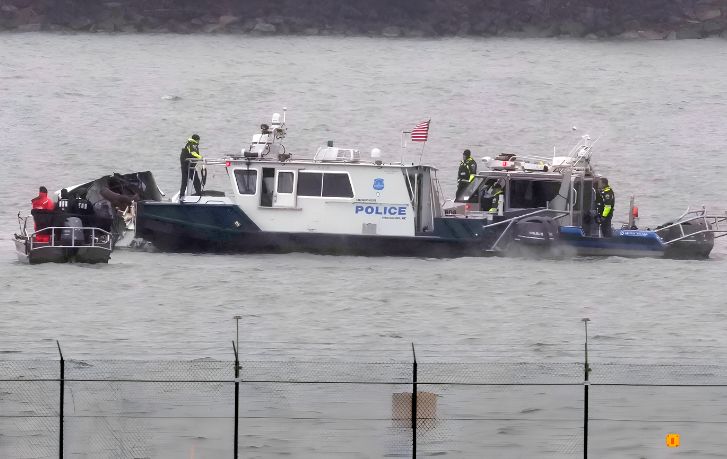
Army Report Finds Layered Safety Failures Before Black Hawk Collision Killed 67
A newly public U.S. Army investigation found that multiple safety layers failed before a Black Hawk helicopter and an American Airlines regional jet collided near Ronald Reagan Washington National Airport on January 29, 2025. All 67 people aboard the two aircraft were killed.
The 50-page document, dated May 14, 2026, found no mechanical failure involving the Black Hawk and determined that its crew was qualified. Instead, Army investigator Lt. General Michael McCurry identified interacting communications, instrumentation, visibility, weather and procedural problems. The report concluded: Simultaneously, the layers of structural, procedural and technical risk mitigation failed to prevent a collision.
No single barrier carried the full safety burden
That finding is important because collision prevention in congested airspace does not depend on one instrument or one person. It relies on overlapping defenses: accurate aircraft instruments, clear radio calls, air traffic procedures, visual acquisition, route design and electronic traffic information. A layered system is intended to remain safe when one component performs poorly. Here, the Army found that problems emerged across several layers at the same time.
The report cited “broken radio communications, instrumentation inaccuracies, intense urban lighting while operating under night vision goggles, and gusty winds with turbulence.” Those conditions made it more difficult for the helicopter crew to see the regional jet and maintain separation. The finding that the helicopter had no mechanical failure therefore does not mean the broader aviation system functioned as intended; it narrows the issue away from a conventional hardware breakdown and toward the way equipment, procedures, people and operating conditions interacted.
Instrumentation accuracy matters particularly in airspace where helicopters and fixed-wing aircraft operate close to one another vertically. Urban lighting can also reduce the usefulness of unaided visual separation when crews are using night-vision goggles, while turbulence adds workload and complicates precise flight-path control. Broken or incomplete radio transmissions can then remove information that might otherwise compensate for those limitations.
The Army’s conclusion is systemic, but it is not an assignment of individual responsibility. The report makes prevention recommendations without detailing disciplinary action. That distinction has frustrated some victims’ relatives. Tim Lilley, whose son Sam was the regional jet’s first officer, said recommendations were not a substitute for accountability and called for a fuller explanation of how the risks persisted.
Location broadcasting is one additional defense, not a complete solution
Investigators found that the Black Hawk was not transmitting its location through Automatic Dependent Surveillance-Broadcast, or ADS-B, on the night of the collision. ADS-B Out broadcasts information such as an aircraft’s position and altitude. ADS-B In receives traffic information for display to a crew.
The Army report recommends requiring ADS-B Out near Washington, D.C., and using ADS-B In aboard Army aircraft operating in busy urban environments. Receiving traffic data could improve situational awareness when visual identification or radio communication is degraded, while transmission makes an aircraft’s position available to compatible ground and airborne systems.
However, the report does not establish that ADS-B by itself would certainly have prevented the collision. Traffic information must be transmitted, received, presented clearly and acted upon with enough time to matter. Equipment compatibility, cockpit integration, alerting, crew workload and training all affect how much protection the technology provides. The Army’s own description of simultaneous failures supports treating ADS-B as another independent layer rather than a replacement for reliable communications, accurate instruments or safe airspace procedures.
Recommendations have not become a fleetwide mandate
The Army’s proposals also should not be confused with completed nationwide requirements. The service has taken steps that include inspecting rotary-wing aircraft to verify settings supporting ADS-B Out functionality, sharing data with the Federal Aviation Administration and enhancing training for crews operating near Reagan National. It has also authorized the purchase of ADS-B In units. Those actions indicate movement toward broader use, but they do not amount to a confirmed fleetwide ADS-B In mandate.
Congress has separately considered legislation addressing the same technology. The House-passed ALERT Act would make ADS-B Out the default for Defense Department helicopters in national airspace, subject to operational-security exceptions, and would require integrated ADS-B In on most Defense Department aircraft by the end of 2031. A separate Senate measure has also passed, but the two approaches remain unreconciled.
The unresolved policy question is therefore not whether electronic traffic awareness has safety value. It is how broadly and quickly it should be required, how it should be integrated with cockpit alerts and training, and how narrowly military exceptions should be drawn. Victims’ families are pressing lawmakers to settle those questions, but the Army report’s central finding is broader: 67 people died even though the helicopter had no mechanical failure, because multiple defenses that were supposed to compensate for one another did not hold.
| More aerospace and engineering stories, right in your MSN feed. Follow AMI on MSN |
By Thomas Caldwell — AMI’s senior editor for mechanical and mobility engineering, covering vehicle electronics, systems integration, electrification, chassis systems, propulsion, and safety policy.



