Ukraine Fields Jet Interceptor as Russian Attack Drones Reach 600 Kilometers Per Hour
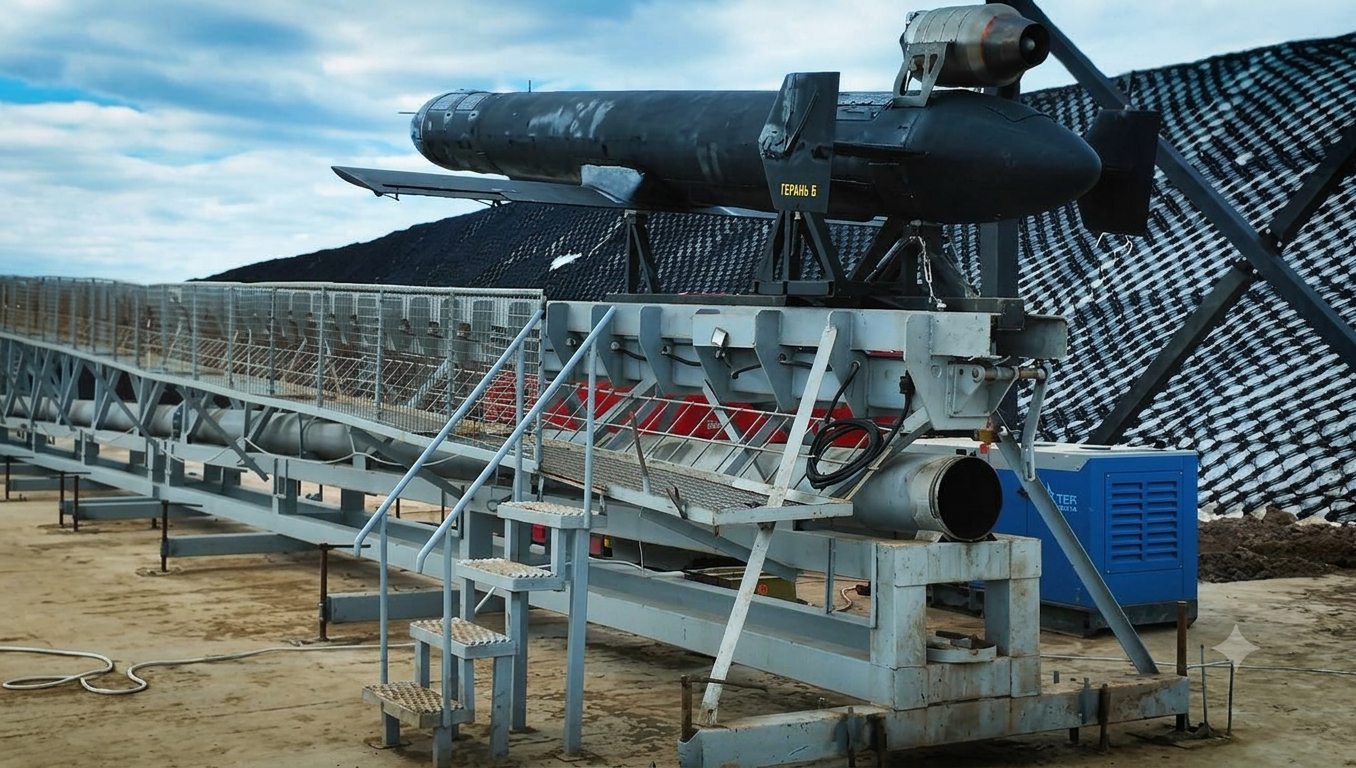
Ukraine’s low-cost drone-defense model faces a widening speed gap. Russian Geran-4 and Geran-5 attack drones reportedly reach about 500 and 600 kilometers per hour, respectively, outpacing many of the inexpensive interceptors developed for earlier propeller-driven aircraft. Ukraine is responding with faster designs: its Defense Ministry announced on Aug. 21 that the turbojet-powered Alexa Spatium interceptor had entered service.
The change matters because Ukraine has relied on relatively inexpensive interceptor drones to preserve scarce, more costly air-defense weapons. A typical Wild Hornets STING interceptor costs around $2,300, while Ukraine’s reported interception rate against attacks dominated by slower piston-powered drones peaked near 95%. Jet propulsion now threatens that favorable cost structure by forcing defenders to field aircraft with greater speed without making each defensive launch prohibitively expensive.
A propulsion change creates a readiness gap
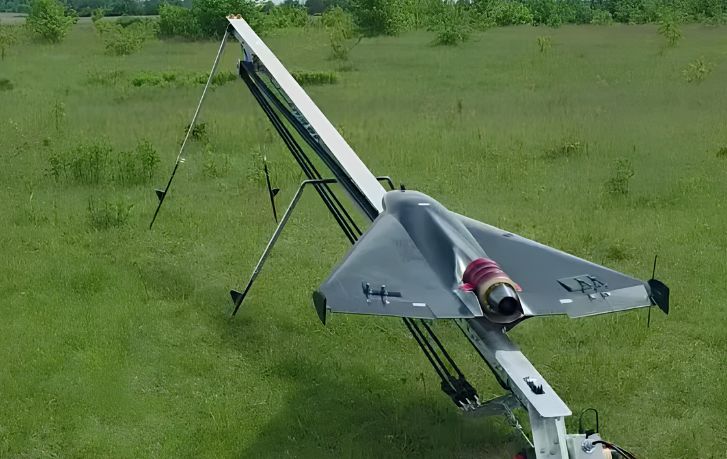
The earlier Geran-2, Russia’s name for its localized version of the Iranian Shahed-136, has a reported maximum speed of about 185 kilometers per hour. Russia initially imported assembled Shahed-131 and Shahed-136 drones in 2022 before localizing and scaling production at its Yelabuga facility in Tatarstan.
Moving from a piston engine and propeller to jet propulsion changes more than the figure on a specification sheet. A faster target covers more distance while sensors, command systems and interceptor operators are detecting, classifying and responding to it. An interceptor also needs enough usable speed and endurance to reach an effective position rather than merely matching the target’s advertised maximum.
That makes speed a system-level requirement. Detection, communications, command decisions, launch readiness and guidance all have to fit within a shorter timeline. Faster airframes alone cannot preserve the low-cost layer if they arrive in small quantities, depend on scarce engines or cannot be integrated with the wider air-defense network.
The scale of the reported transition adds pressure. Colonel Yurii Ihnat of Ukraine’s Air Force Command said Ukraine recorded five times as many jet-powered drones in July as in June. He also said jet aircraft sometimes represented two-thirds of the drones launched during daytime attacks. These are Ukrainian wartime assessments, but they indicate that the faster designs are no longer being treated as isolated prototypes.
Production is as important as top speed
Ukraine’s military intelligence reportedly estimates that Russia produces around 3,000 Geran-4 and Geran-5 drones per month and that output of jet-powered attack drones had surpassed Geran-2 production by August. Those figures cannot be independently confirmed here, but they define the industrial problem Ukraine is planning against: an interceptor must be affordable and manufacturable in volumes approaching the threat, not simply fast enough in a demonstration.
Ukraine has confirmed several stages of its response. Former Defense Minister Mykhailo Fedorov said on Aug. 14 that jet-powered interceptors capable of 600 kilometers per hour were undergoing combat testing. An anonymous senior Ukrainian engineer also said sufficiently fast prototypes existed and were not significantly more expensive than interceptor models already in serial production.
The Alexa Spatium’s acceptance into service moves one design beyond the prototype stage, although it does not establish how many aircraft are available or at what production rate. The Defense Ministry described it as reusable when it does not engage a target, an important attribute for controlling operating costs. Its manufacturer was not disclosed.
Later updates show that service acceptance has not closed the capacity gap. Ukraine was testing five high-speed interceptor types, with one model expected to reach production of around 400 units by the end of October. The other four remained in testing. President Volodymyr Zelensky also identified imported-engine availability and insufficient domestic engine production as constraints.
That bottleneck illustrates the cost of moving into a higher-speed class. Jet propulsion can supply the required performance, but it introduces a more demanding engine supply chain. Designs that use high-output electric or propeller propulsion may offer another path, though any such aircraft still has to balance short bursts of speed against endurance and production practicality.
The affordable-defense model is being tested
Ukraine’s challenge is therefore not to build one interceptor that can reach 600 kilometers per hour. It is to manufacture enough dependable aircraft, connect them to detection and control systems, train crews and keep engines and other components flowing all while maintaining a favorable cost comparison with the incoming drones.
The performance gap is already visible in official Ukrainian claims. Zelensky said in late September that 57% of jet-powered Shahed-type drones were being intercepted, well below the rates reported against predominantly piston-powered variants. That figure remains an attributed wartime estimate, but it explains the urgency behind the production push.
Alexa Spatium establishes that Ukraine has placed a jet-powered interceptor in service. The decisive next milestone is whether one of the emerging designs can reach the planned output of roughly 400 units by the end of October without surrendering the affordability that made interceptor drones valuable in the first place.
| More aerospace and engineering stories, right in your MSN feed. Follow AMI on MSN |
By Stephen Wallace — Editor for AMI’s aerospace integration and unmanned mobility coverage, focused on drone manufacturing, VTOL systems, autonomous networks, and air-ground mobility links.