


GM, Ram and Ford Extend V8 Lineups as Hybrids Gain
Detroit automakers are putting fresh money and product capacity behind V8 engines just as higher gasoline prices and rising hybrid sales strengthen the case for more efficient powertrains. General Motors has announced two new V8s for its 2027 Chevrolet Silverado and GMC Sierra, Ram has restored its Hemi and revived the V8-powered TRX, and Ford is retaining the V8 across its updated 2027 F-150 lineup.

The strategy preserves familiar towing, hauling and performance choices for buyers, but it also exposes manufacturers and owners to the V8’s defining operating cost: eight-cylinder gasoline engines generally consume more fuel than smaller engines or hybrid systems. Relaxed federal requirements have made these products easier for automakers to justify, while pump prices and changing buyer preferences could still limit demand.
GM is backing the decision with factory investment
GM’s commitment extends well beyond adding two engines to a specification sheet. The automaker invested roughly $830 million in U.S. propulsion plants and separately redirected its Western New York propulsion facility toward V8 truck-engine production through an $888 million investment. The plant had stopped producing electric-vehicle batteries in May.
That conversion is a consequential manufacturing decision. Engine plants require specialized machining, assembly, testing and supplier support, so shifting a facility from battery work to V8 production commits capital and labor to a gasoline-powered product cycle. It also reflects the slower-than-anticipated pace of the industry’s transition to fully electric vehicles.
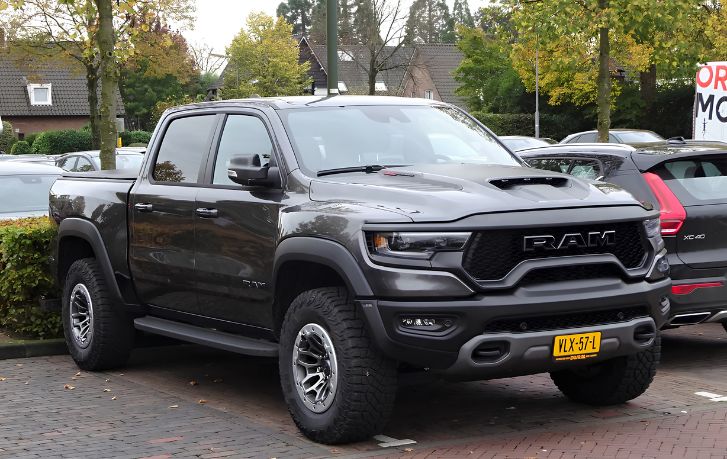
Ram has made its own reversal. The brand restored the Hemi V8 in August, one year after discontinuing it, and relaunched the V8-powered TRX performance pickup. Ford, meanwhile, is broadening availability rather than merely keeping one specialty model alive. Its 2027 F-150 powertrain plan returns the 5.0-liter V8 to King Ranch and Platinum models for the first time since 2023, making the engine available from XL through Platinum. Ford rates it at 400 horsepower and 410 pound-feet of torque.
Ford is not treating the V8 as the only answer. The same F-150 range includes turbocharged six-cylinder engines and a PowerBoost hybrid, giving customers different combinations of torque, towing capacity, fuel consumption and onboard electrical power. Ford has also said it plans a faster SC trim for the V8-powered Mustang Dark Horse lineup, extending the engine’s role beyond pickups.
Policy changed the business calculation
The renewed investment follows changes to federal emissions and fuel-economy policy, including relaxed requirements, the elimination of companywide fuel-efficiency fines and the end of the federal electric-vehicle tax credit. CarGurus market-intelligence director Kevin Roberts summarized the effect on product planning: Consumers wanted these cars. It was just a challenging economic choice because of the regulations that previously existed. But there are different rules now.
Demand for full-size pickups supplies the other half of the calculation. Cox Automotive reported that U.S. consumers spent about $15 billion on the segment in December alone. These trucks remain major profit generators, and a V8 option can support towing, hauling and performance variants for customers who prioritize immediate response and conventional gasoline refueling.
Yet the market is not moving in only one direction. JD Power told Business Insider that hybrids represented 15.9% of vehicle sales in July, up 2.5% from the same month in 2025. More recent data reported by Reuters placed hybrids at 19% of U.S. retail sales in August, compared with about 16% in the preceding months. In May, their share reached 20%.
For buyers, the choice is therefore broader but not cost-neutral. A V8 can provide the response and power customers associate with heavy work or performance driving, while a hybrid can reduce fuel use without requiring an entirely electric operating model. GM, Ram and Ford are betting that enough customers will continue to value the former. The next test will come in showrooms, where the 2027 trucks must compete not only on horsepower and torque, but against every rise in the price displayed at the pump.
| More aerospace and engineering stories, right in your MSN feed. Follow AMI on MSN |
By Thomas Caldwell — AMI’s senior editor for mechanical and mobility engineering, covering vehicle electronics, systems integration, electrification, chassis systems, propulsion, and safety policy.



